
In an era when the smartphone has swallowed every kind of photo, a 28mm prime-lens point-and-shoot with no zoom and no 4K video costs over 1.5 million won. And yet the Ricoh GR is still a "cult." Using the GR IV, which arrived in the autumn of 2025, as a lens, I looked into why the 28mm focal length and the object that is a "small camera" still earn their keep.
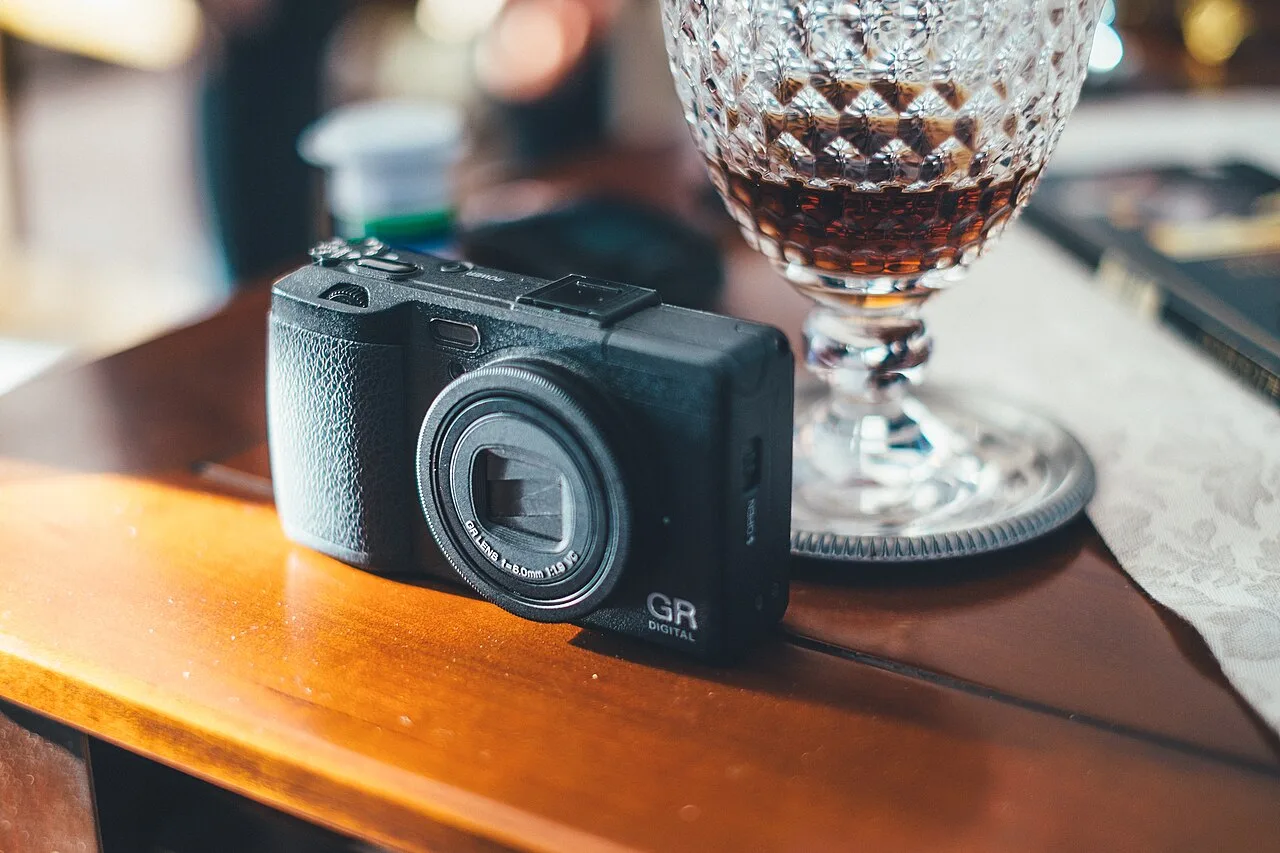
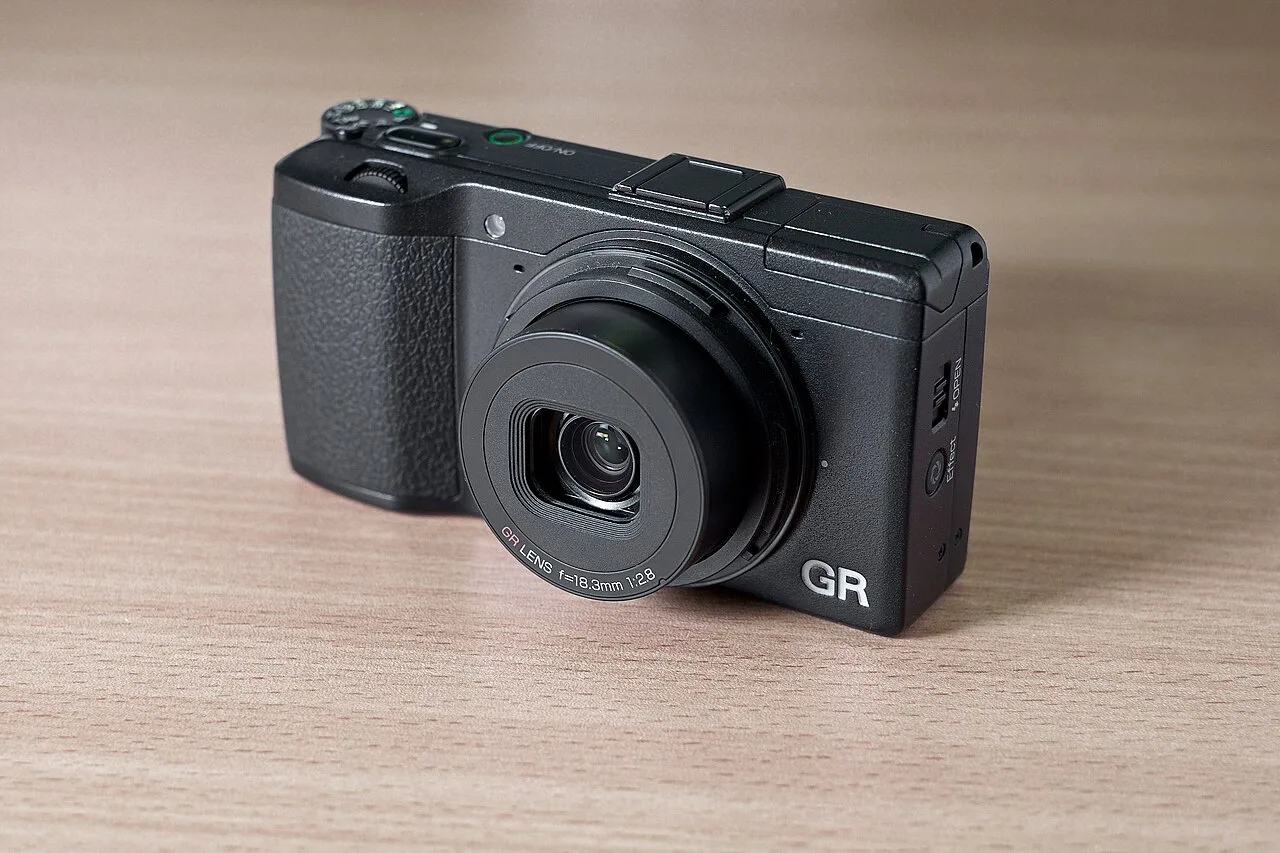
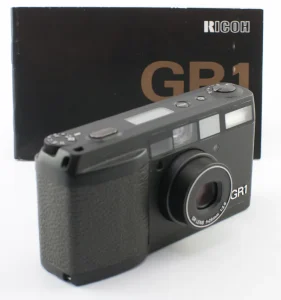
The Ricoh GR series started with the film compact "GR1" in 1996, then crossed over to APS-C digital in 2013, and through the GR, GR II, and GR III it has held to a single stubborn idea for nearly 30 years. A size that fits in your pocket, operation you can finish with one hand, and a single, unchangeable 28mm prime lens. The GR IV is the latest in this lineage, and while leaving the exterior the same, it has swapped out almost everything inside.
What the GR IV has newly changed
The GR IV redesigned all three core elements — lens, sensor, and image engine. Resolution rose to about 25.74 megapixels (APS-C back-illuminated BSI CMOS), and ISO expanded up to a maximum of 204800. Image stabilization changed from 3-axis to 5-axis, correcting up to 6 stops. And yet the body became even slimmer than its predecessor (about 109.4 × 61.1 × 32.7mm).
What's missing, on the other hand, is just as clear. There's no 4K video (Full HD 1080/60p at most), no electronic viewfinder, no tilting LCD, and no weather sealing. The GR IV is a camera that chose "doing what it does well even better" over "filling in what it can't do." Whether you like that choice or not is, in effect, what divides whether you should buy this camera.
Why 28mm, of all things
If you reduce the GR's identity to a single thing, in the end it's the 28mm angle of view. 28mm is a wide angle that captures a touch wider than the human eye. Unlike a telephoto that carves out a single subject, it draws into one frame the person, the distance they stand in, the signs, and the alley. That's why street photographers say 28mm "feels like casting a wide net." When you want to turn an entire scene into a story, few focal lengths match 28mm.
This focal length brings the photographer in close. To fill the frame with a person at 28mm, you have to get within 2 meters. The GR enforces, through its lens, the maxim left by war photographer Robert Capa: "If your pictures aren't good enough, you're not close enough." Instead of hiding far off and stealing shots with a telephoto, it's a camera that makes you walk into the scene.

Snap Focus — the feel of a film camera
The GR's real weapon, paired with 28mm, is Snap Focus. You set the focusing distance in advance — say 1m, 1.5m, or 2m — and the instant you press the shutter, it focuses immediately at that distance. It's the same idea as zone focusing on a Leica M rangefinder, eliminating any window for autofocus to hunt.
The combination of wide angle plus stopping down the aperture makes this possible. Stop the 28mm lens down to F8 and you get a deep depth of field where most everything from about 1.5m to infinity is in focus. It means that as long as you roughly estimate the distance, you can shoot from the hip without looking at the screen (no-finder) and still get the shot most of the time. That's why Snap Focus shines in low-light street shooting, where AF actually gets in the way.
Because of this handling, the GR IV is often called the "digital GR1." Physical dials you can work with your fingertips without diving deep into menus, a clutter-free interface, and film-like color have transferred the tactile feel of an analog camera intact. As masters of Japanese street photography took up the GR, the series earned the nickname "the street camera," and that identity carries over to the GR IV intact.

The limits of 28mm, and the 40mm option
28mm isn't all-purpose. Because of the perspective distortion characteristic of wide angles, it's tricky for portraits that close in on a face alone, and it can't pull in distant subjects. The GR IV mimics 35mm and 50mm angles with in-camera crop, but since this ultimately cuts pixels, a loss in resolution comes with it.
That's why Ricoh, in the previous generation, separately released a 40mm-equivalent lens version called the GR IIIx. 40mm is a more natural angle for portraits, table shots, and everyday snaps. That's why the summary "28mm for the street, 40mm for portraits and compression" took hold among GR III generation users. If you want the openness of 28mm, the GR (28mm); if you want a tidier angle one step back, the IIIx (40mm) — think of them as two branches of the same philosophy.

So where does a "camera's" worth come from?
The GR IV's suggested US price is $1,499.95. That's a roughly 60-percent increase over the GR III's launch price, so there's clearly pushback of "no 4K even at this price?" (the price you feel domestically varies with exchange rates and distribution). Even so, the grounds for saying the GR earns its keep lie outside the spec sheet.
The first is portability. The truly good camera is "the camera that's in your hand right now." The GR IV fits in a jeans pocket, powers on in about 0.6 seconds, and shoots immediately. The results from a mirrorless you carry in a bag but never end up taking out, versus a GR you always carry and so end up pressing the shutter with, are bound to differ.
The second is being unobtrusive. With a lens that barely protrudes and restrained branding, the GR looks like a "point-and-shoot." When you point a big camera at people, they freeze, but in front of a GR they relax, leaving natural scenes. The operating sound is quiet too. This "not standing out" is an asset in street photography that doesn't convert into specs.
Ricoh has also differentiated this value through its lineup. From the Monochrome, which gives up color and goes all in on black-and-white expression, to the HDF with a filter that gently scatters highlights — on the same 28mm and the same body, it divides by "the user's taste."
| Model | Key difference | US suggested price |
|---|---|---|
| GR IV | base model · color · 28mm F2.8 | $1,499.95 |
| GR IV HDF | highlight diffusion filter + electronic shutter (up to 1/16000 sec) | $1,599.95 |
| GR IV Monochrome | black-and-white-only sensor (color filter removed) | $2,199.95 |
10 hands-on reviews from Japanese users
The GR is a camera especially deeply loved in Japan. Below are translations and summaries of GR IV user reviews posted on Japan's Kakaku.com, note, personal blogs, and social media. The wording isn't copied verbatim but organized around meaning, and both positive and negative views are included.
The look is blunt, but you can feel it's gotten a touch more compact than its predecessor. At 25.74 megapixels the image-quality balance is good, and even pushing ISO doesn't bother me much, so night shooting is fun too. I especially like being able to adjust exposure intuitively with the exposure-compensation button.
Even coming from the flagship body, I have no complaints about the GR IV's image quality and handling. It can't zoom, but its image quality and operation are top-class, and the fact that it pulls that off in a thickness of 262g that fits in a jeans pocket is astonishing. I feel it's worth using even after paying 175,000 yen.
For someone who wants a high-image-quality camera always on them to record daily life, there's nothing quite like this. No matter how hard I look for compact models, I realize every time that the GR's portability is overwhelming. A camera that fits in your pocket yet shoots this well is, in practice, only the GR.
Honestly, it's hard to call the battery good. Maybe because it was midwinter, the gauge sometimes dropped a notch after about 30 shots. To shoot for a long stretch, a spare battery or a power bank is practically essential, and on this point I didn't feel any evolution over the predecessor.
The roughly 0.6-second startup speed and full-press snap are truly outstanding. It really does live up to calling itself a "snapshooter." That said, AF feels like you tap directly where you want to focus, so there are times when the camera's judgment and my intent diverge — this remains a challenge.
The points that frustrated me on the GR III — AF speed, battery, corner image quality — were improved head-on. It's less a big innovation than an "orthodox evolution." However, it still lacks 4K video, an EVF, and weather sealing, so it's hard to recommend to anyone for whom video, bad weather, or a viewfinder matters.
It's clearly a polished, orthodox evolution, but the price tops 200,000 yen, so buying takes courage. In the end, the fork is "can you put that kind of value on this performance gap?" If you're price-sensitive or want a 40mm angle, a used GR III or IIIx is also a perfectly reasonable choice.
When I used the GR III, 28mm felt too wide, and the sense of distance of "I want to get closer here" kept clashing with the angle. So I moved to the 40mm IIIx. The GR IV itself is excellent, but 28mm versus 40mm is ultimately a point where taste divides greatly.
The built-in memory enlarged to 53GB and the newly added app raise convenience substantially. The communication features were broadly reworked too. That said, switching to microSD and dropping the control dial are changes that existing GR users will need to get used to.
The performance itself, I grant. The problem is "so where do you buy it?" A supply shortage has continued since release, so encountering stock at all is close to luck. There are reviews of people who decided on the spot because a store happened to have one in stock — to the point that the purchase difficulty is as much a talking point as the rating.
Summary — for whom does it earn its keep
- Those who want to carry it always and shoot everyday and travel snaps
- Those drawn to 28mm street photography that captures the whole scene
- Those who prefer physical dials and a film-like handling over menus
- Those who want to carry top image quality in the smallest possible bulk
- Those whose mainstay is zoom, telephoto, and portrait close-ups
- Those who absolutely need 4K video, a viewfinder, or weather sealing
- Those who need fast continuous AF to chase movement
- Those who prioritize price-to-spec "value" above all
The GR IV isn't a camera for everyone. Rather, it's closer to a tool whittled clearly in one direction. To someone who accepts the 28mm angle of view and knows how to translate the freedom of a small body into worth, the GR IV earns its keep in the parts a spec sheet can't explain. Because "a camera's value," in the end, is not a matter of how many pixels or how many K, but of how many more times that object makes you press the shutter.
· Amateur Photographer · Digital Camera World · Lens & Shutter — GR IV reviews
· Luminous Landscape · PetaPixel · DPReview — price, lineup, and spec analysis
· Japanese user reviews: Kakaku.com reviews and forums · note · personal blogs, etc. (translated and summarized, originals not quoted)
· Images: Wikimedia Commons (author and license noted in each photo caption)


댓글 0
첫 댓글을 남겨보세요.