Now that smartphone main cameras have converged on 24–28mm, "28mm" is no longer an unfamiliar focal length. But back in the day, cramming a 28mm prime lens into a tiny point-and-shoot that fit in one hand was a kind of stubbornness, even a philosophy. On the street, on a trip, in the snapshots of everyday life. Here we trace why the 28mm point-and-shoot has been loved for decades — from the great film machines to the latest digital cameras.
WHY 28MMWhy 28mm, of all things?
On a 35mm full-frame basis, 28mm is a so-called "semi-wide-angle," a touch wider than the human field of view. If 50mm resembles a single point as seen by the eye, 28mm captures the context and the space in which that scene sits as well. A narrow alley, a café interior, a group of companions, a building and the sky — all fit into the frame without taking a step back.
That's why 28mm has long held its place as the standard focal length for documentary, street, and travel photography. Add "a size that fits in your pocket," and it becomes an EDC (Every Day Carry) camera — one you always have with you and that you press the shutter on without hesitation. The appeal of the 28mm point-and-shoot lies exactly here, at the meeting point of wide-angle storytelling and portability.
Because it captures so much, your subject gets buried unless you move in close. That's the homework 28mm sets you. So the 28mm point-and-shoot is sometimes called the focal length that "makes the photographer step in one more time." It's a tool for closing distance, not keeping it.
FILM ERA · 1990sThe great 28mm machines of the film era
In the 1990s, at the tail end of Japan's bubble economy, camera companies plunged into a competition to make "SLR-grade image quality in a pocket size." What emerged was the so-called legion of premium compacts. Among them, the models that chose a 28mm prime are still worshipped by enthusiasts today, and their prices on the used market are climbing steeply.
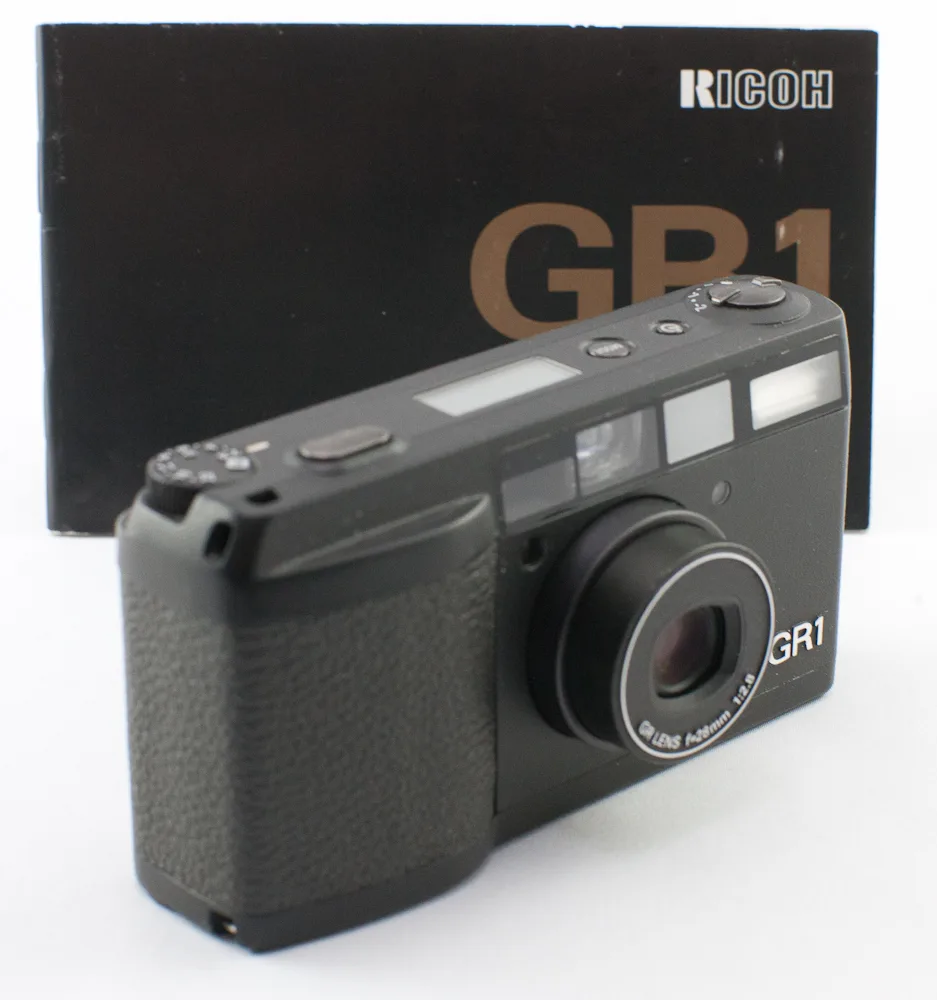
The Ricoh GR1 series — the textbook 28mm point-and-shoot
This is the reference point of the genre. For the GR1, Ricoh designed a 28mm f/2.8 lens corrected to near perfection, and it won the 1997 TIPA award for best 35mm compact. So confident in that lens were the engineers that they even made a limited-edition GR 28mm lens for the Leica screw mount (LTM). With snap focus, an exposure-compensation dial, and aperture-priority mode, it was a "pro's point-and-shoot," and its DNA carried straight over to the digital GR.
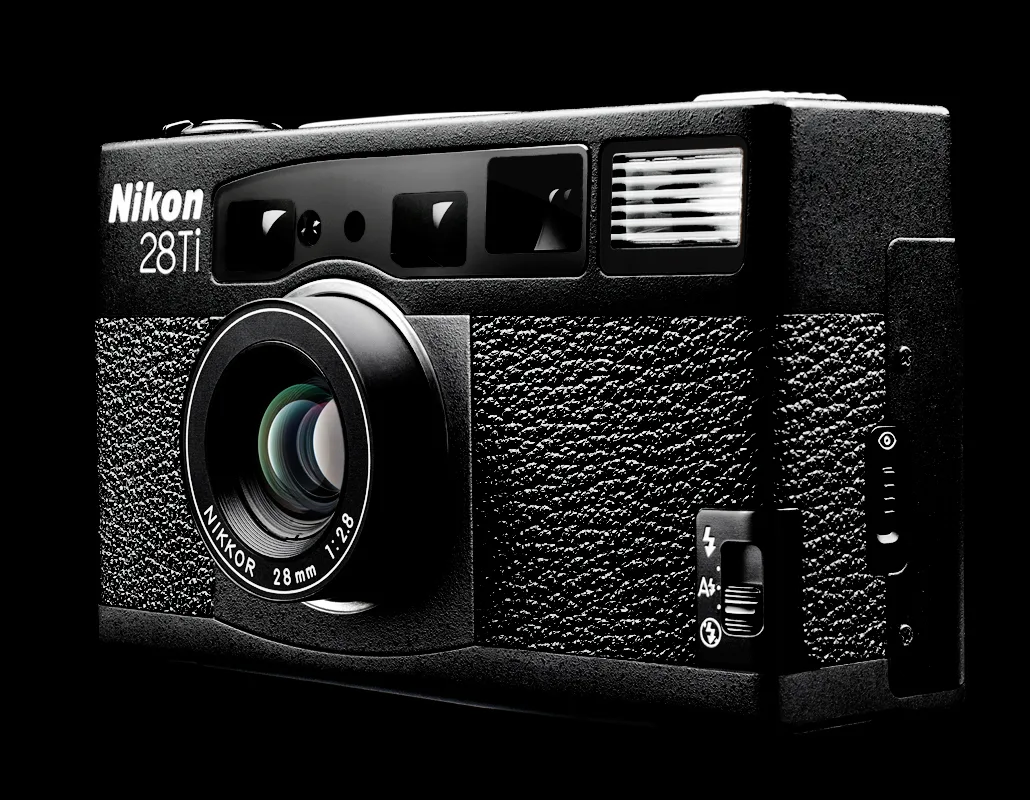
Nikon 28Ti — titanium that looks like a wristwatch
A black titanium 28mm version released as the successor to the 1993 35Ti (35mm, silver). Its biggest feature is the analog needle gauges on the top plate — aperture, focal distance, exposure compensation, and frame count are all shown with needles, like a watch. It was a luxury closer to sentiment than function, but for that very reason the 28Ti became a collector's piece. At launch it cost about $1,000.
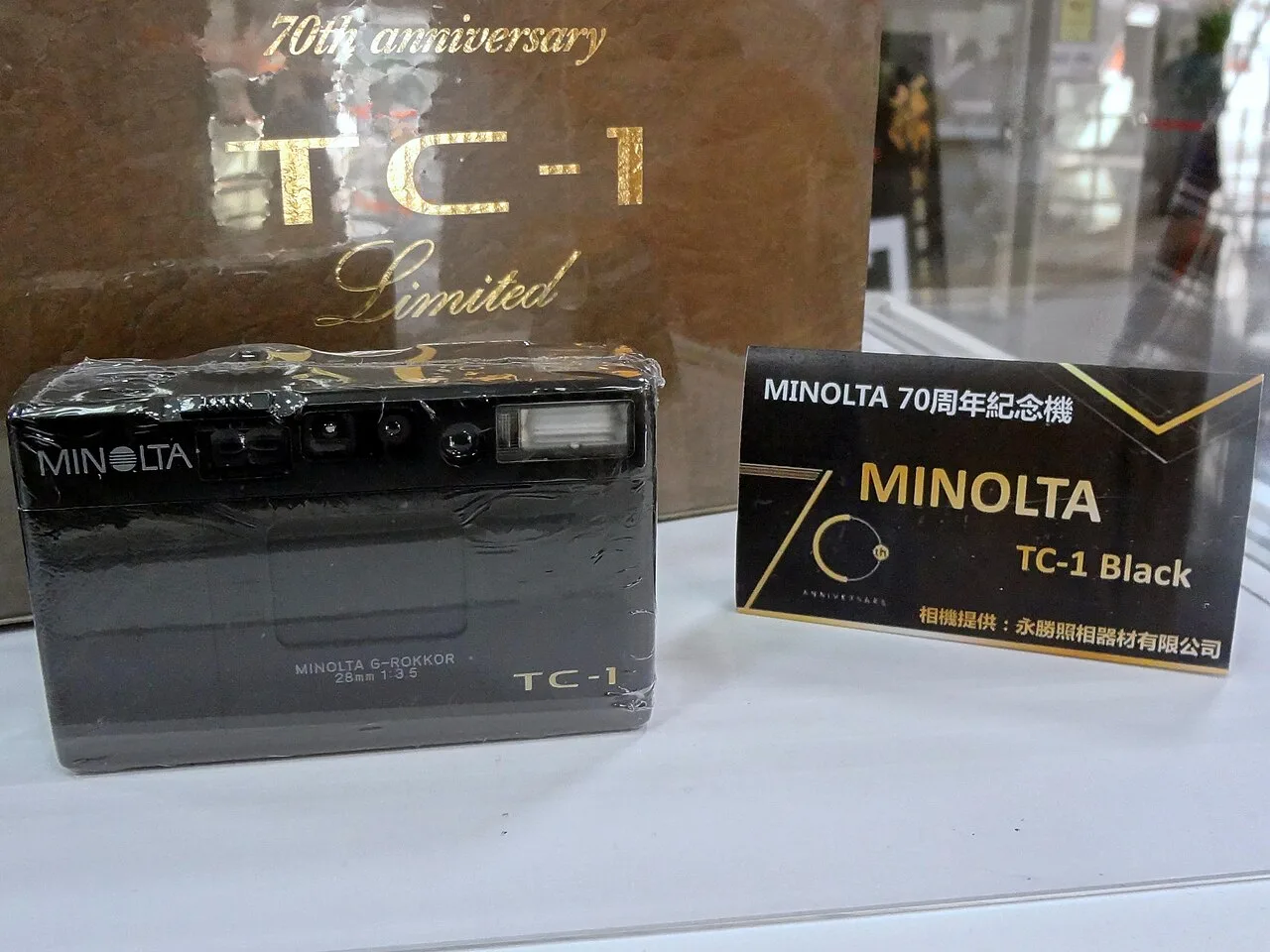
Minolta TC-1 — the smallest full-frame in the world
A camera born from an engineer's question: "Why must the SLR be too big, and the compact give up image quality?" Some 150 tiny parts were assembled by hand, by a skilled craftsman, taking 45 minutes per unit, and its volume is no more than about three 35mm film canisters. The lens is the legendary G-Rokkor 28mm. Its aperture works by directly swapping in ground circular holes, which is distinctive but divides opinion. It launched as a high-end item at 148,000 yen, and it has only grown rarer since.
Besides these three, the brighter-lensed Fuji Klasse W (28mm f/2.8) and the night-snap-friendly Fuji Natura (24mm f/1.9) are also mentioned together in the "wide-angle compact around 28mm" family. The 35mm Contax T2/T3 and the Leica Minilux (40mm) are more famous, but in terms of focal length alone, those three are the orthodox lineage of the 28mm film point-and-shoot.
DIGITAL ERA · 2005~The 28mm point-and-shoot in the digital era
As film faded, the philosophy of the 28mm point-and-shoot moved over to digital. The core was "small body + big sensor + fixed 28mm prime." The place that has kept this combination the longest and most faithfully is, once again, Ricoh.
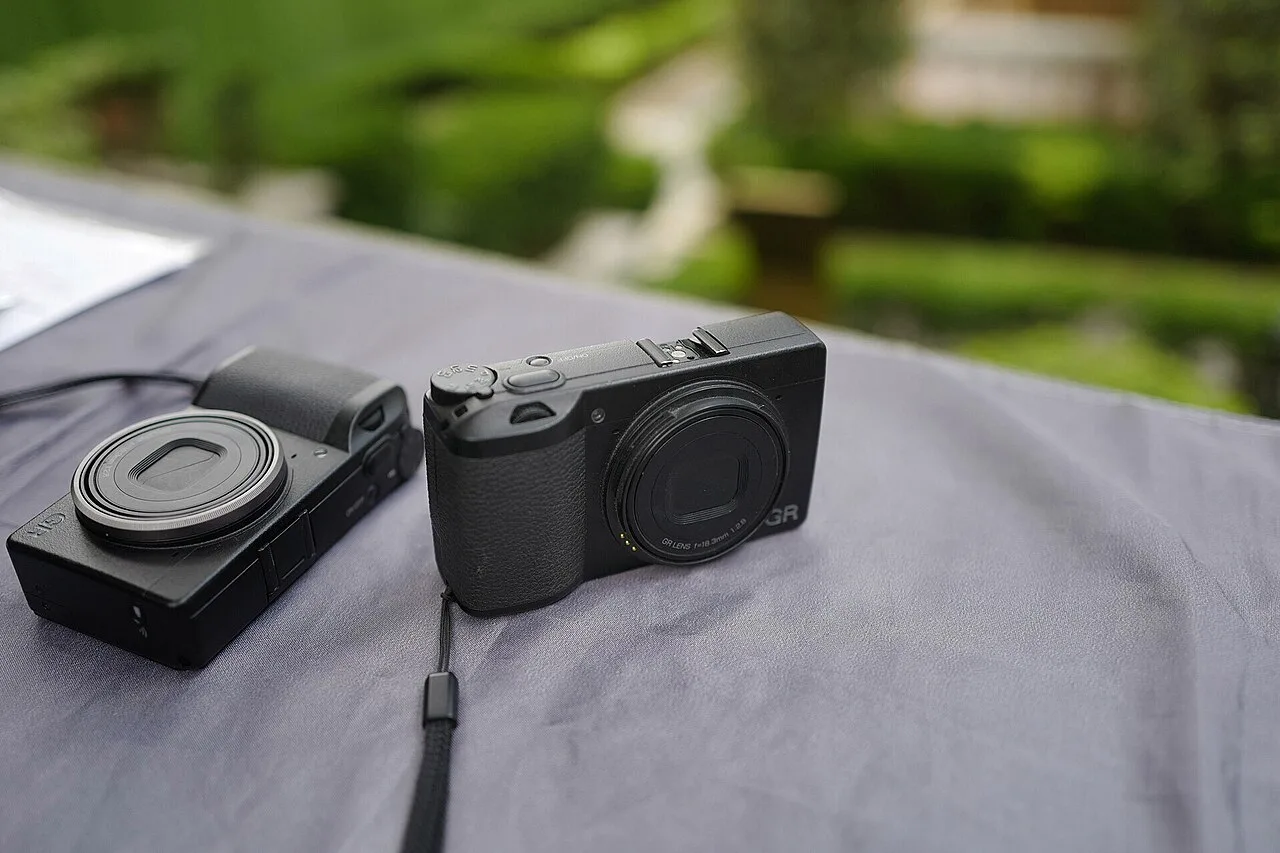
The Ricoh GR series — an APS-C that fits in a jeans pocket
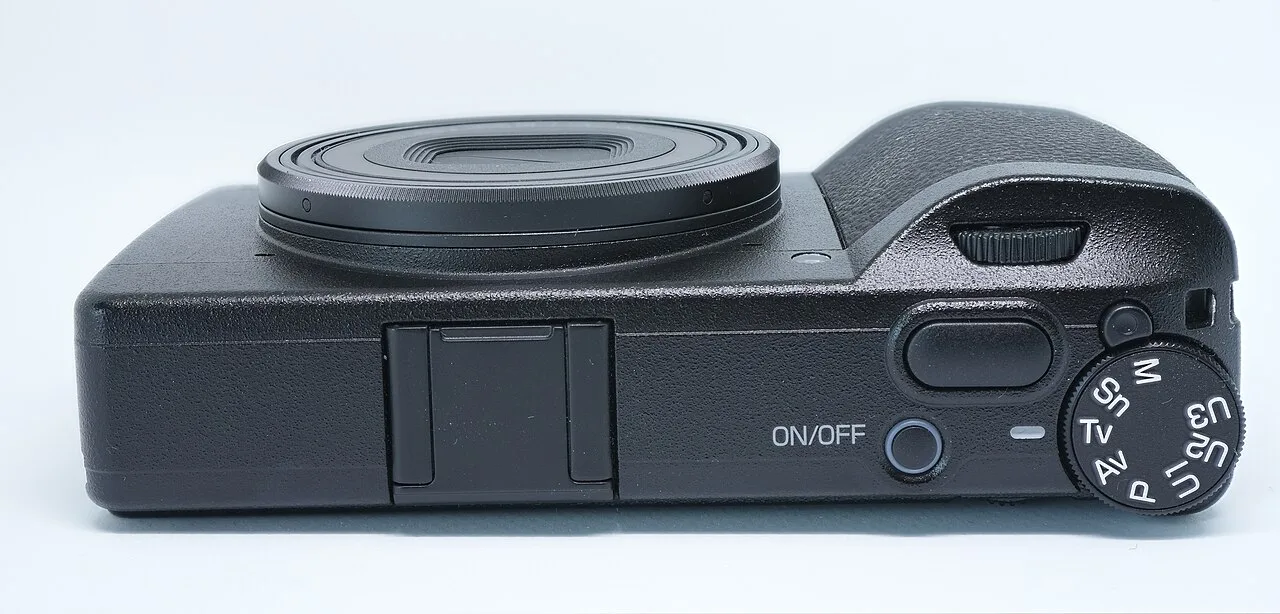
Starting in 2013 with the GR, which carried an APS-C sensor, it ran through the GR II (2015) and GR III (2019) all the way to the GR IV in the autumn of 2025. It has consistently held to a 28mm-equivalent f/2.8 prime lens and kept to a size that really does fit in a jeans pocket. Its enthusiast base is solid enough that even a black-and-white-only GR IV Monochrome (suggested price around $2,199) has appeared. For reference, the GR IIIx, which changes only the focal length to 40mm equivalent, is not 28mm, so in this lineage it's something of a cousin.
Fujifilm X70 · Nikon Coolpix A — the forgotten challengers
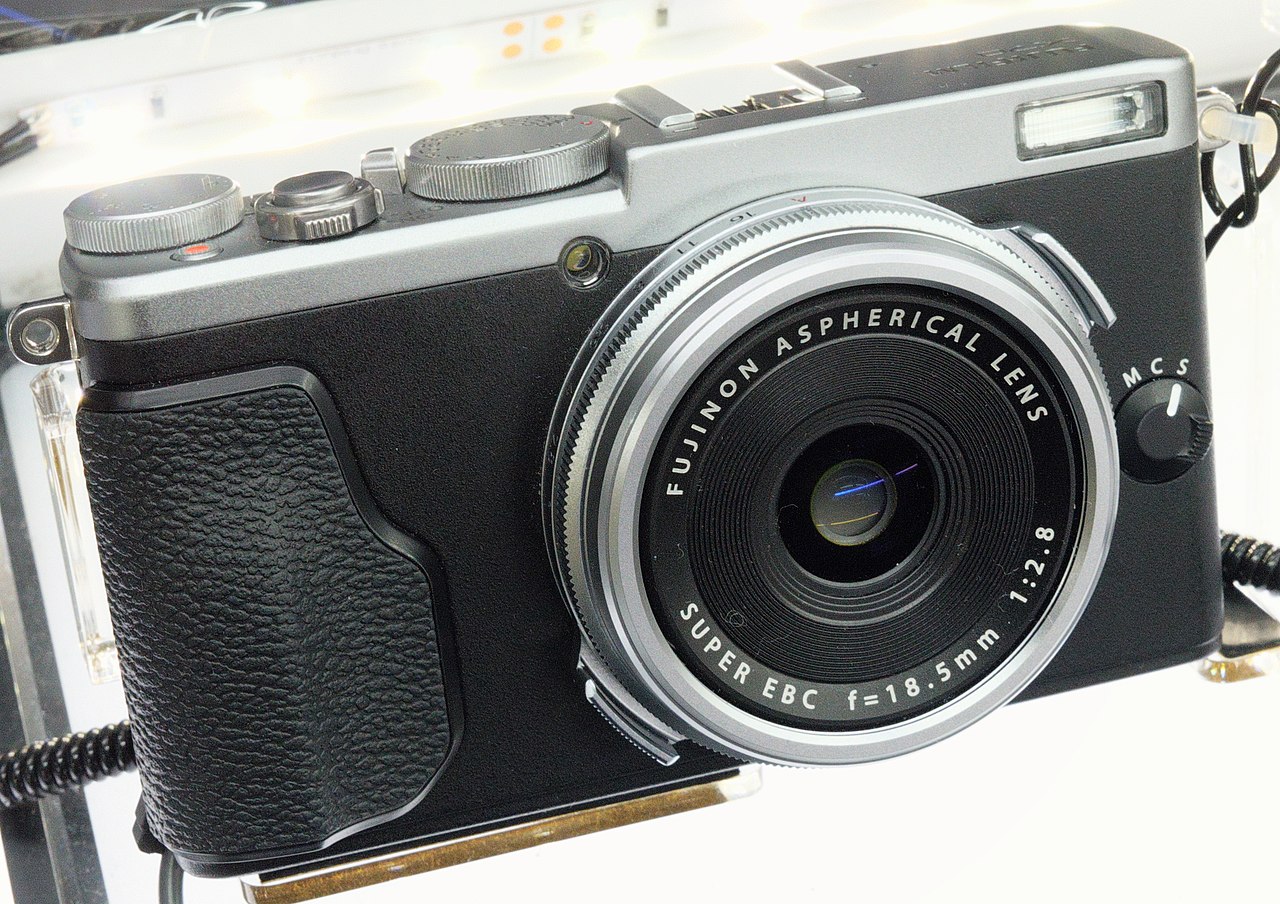
Two models that challenged Ricoh's solo run. The X70 had a design that looked like a shrunken X100 series, with an added aperture ring and a tilting touch LCD, while the Coolpix A was Nikon's first APS-C compact but failed to find its place in the market due to slow AF and a high price (about $1,099). Both were discontinued, but they were meaningful attempts that showed the diversity of the 28mm point-and-shoot.
The Sigma DP1 series can't be left out here either. It put a distinctive Foveon sensor behind a 28mm-equivalent prime. It's slow to operate, but in return for that it earned an overwhelming sense of resolution, and it still commands a thick base of fans today.

The Leica Q series — the ultimate 28mm point-and-shoot
It's big and heavy to call a "point-and-shoot," but the philosophy is the same — one body, one lens, fixed 28mm. The Q3 fitted a bright f/1.7 Summilux 28mm to the 60MP full-frame sensor carried over from the M11, and it also supports digital framing cropped to 35, 50, 75, and 90mm. Optical image stabilization, hybrid AF, even 8K video — it's the most lavish form of the fixed 28mm prime. The price matches (the body starts at around €5,950).
AT A GLANCEA side-by-side comparison
| Model | Era | Lens / focal length | Sensor / medium | Notable features |
|---|---|---|---|---|
| Ricoh GR1 | 1996 | 28mm f/2.8 | 35mm film | The archetype of the genre, ultra-light magnesium |
| Nikon 28Ti | 1994 | 28mm f/2.8 | 35mm film | Titanium, analog gauges |
| Minolta TC-1 | 1996 | 28mm f/3.5 | 35mm film | Smallest-volume full-frame, hand assembled |
| Ricoh GR IV | 2025 | 28mm equivalent f/2.8 | APS-C 26MP | A digital GR that fits in your pocket |
| Fuji X70 | 2016 | 28mm equivalent f/2.8 | APS-C 16MP | Aperture ring, tilting LCD (discontinued) |
| Nikon Coolpix A | 2013 | 28mm equivalent f/2.8 | APS-C 16MP | Nikon's first APS-C compact (discontinued) |
| Leica Q3 | 2023 | 28mm f/1.7 | Full-frame 60MP | Bright Summilux, 8K, the ultimate |
HOW TO CHOOSESo which one should you pick?
- If you want one to carry right now — the Ricoh GR IV (or a used GR III). It strikes the most balanced fulfillment of the essence of the 28mm point-and-shoot: portability, image quality, and snapshot handling.
- If you want the texture of film and the romance of ownership — the Ricoh GR1 (practical), the Nikon 28Ti (sentimental), the Minolta TC-1 (collectible). Just note that there may be marks of age such as a dead LCD or aged cells, so choose a unit whose operation has been verified.
- If uncompromising image quality and a bright lens are your top priority — the Leica Q3. If you can accept the weight and the price, it's the pinnacle of the 28mm prime experience.
- If you want something with a different grain — the Sigma DP1 (Foveon's resolution) and the Fuji X70 (discontinued, but with a distinctive control layout) are also worth hunting for used.
In the end, the 28mm point-and-shoot is not a camera you rank by spec sheets. It's a tool you always hold in your hand, one that makes you step in one more time. Film or digital, the moment you take it out of your pocket and press the shutter — that's where the lineage carries on once more.
Sources and image credits
References: Wikipedia (Ricoh GR film/digital cameras, Nikon Ti cameras, Minolta TC-1, Leica Q3), Casual Photophile, 35mmc, Japan Camera Hunter, Lomography, DPReview, B&H Photo. · Specs and prices may vary by period and market.Images: all from Wikimedia Commons (photographer and license noted beneath each photo). Used under CC BY / CC BY-SA with attribution per their terms.


댓글 0
첫 댓글을 남겨보세요.