
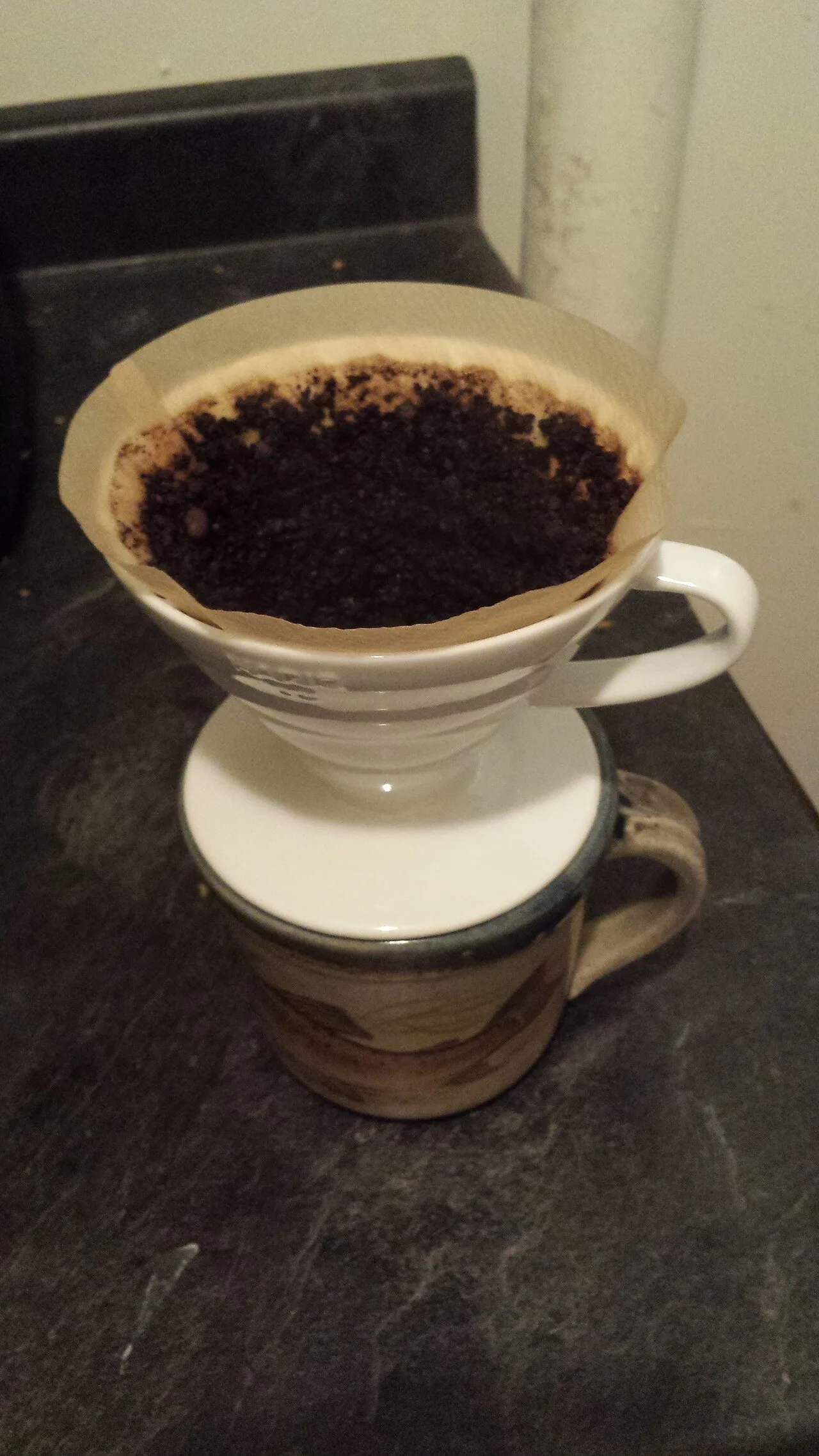
"I bought a Kalita, but it turns out I actually liked a cleaner taste." "When I brew with a Hario, the taste comes out different every time." These are the most common gripes you'll see in Japan's coffee community. Even with the same beans, the same grind, and the same water, change just one thing — the shape of the dripper — and the taste of the cup clearly changes. Kalita and Hario are the two camps that show that difference most starkly.
This article is based on data from Japanese coffee media, bloggers, and roasters who brewed both drippers themselves under identical conditions and compared them. These aren't gut feelings — they're the conclusions of people who timed the extraction and drank the same beans side by side.
01Different from the structure up — cone vs. trapezoid
The root of the flavor difference is simple. The point that Japanese media consistently make is that "the shape of the extraction outlet (the bottom) has the biggest effect on flavor, followed by the shape of the ribs (the inner grooves)." Kalita and Hario are opposites in both of these.
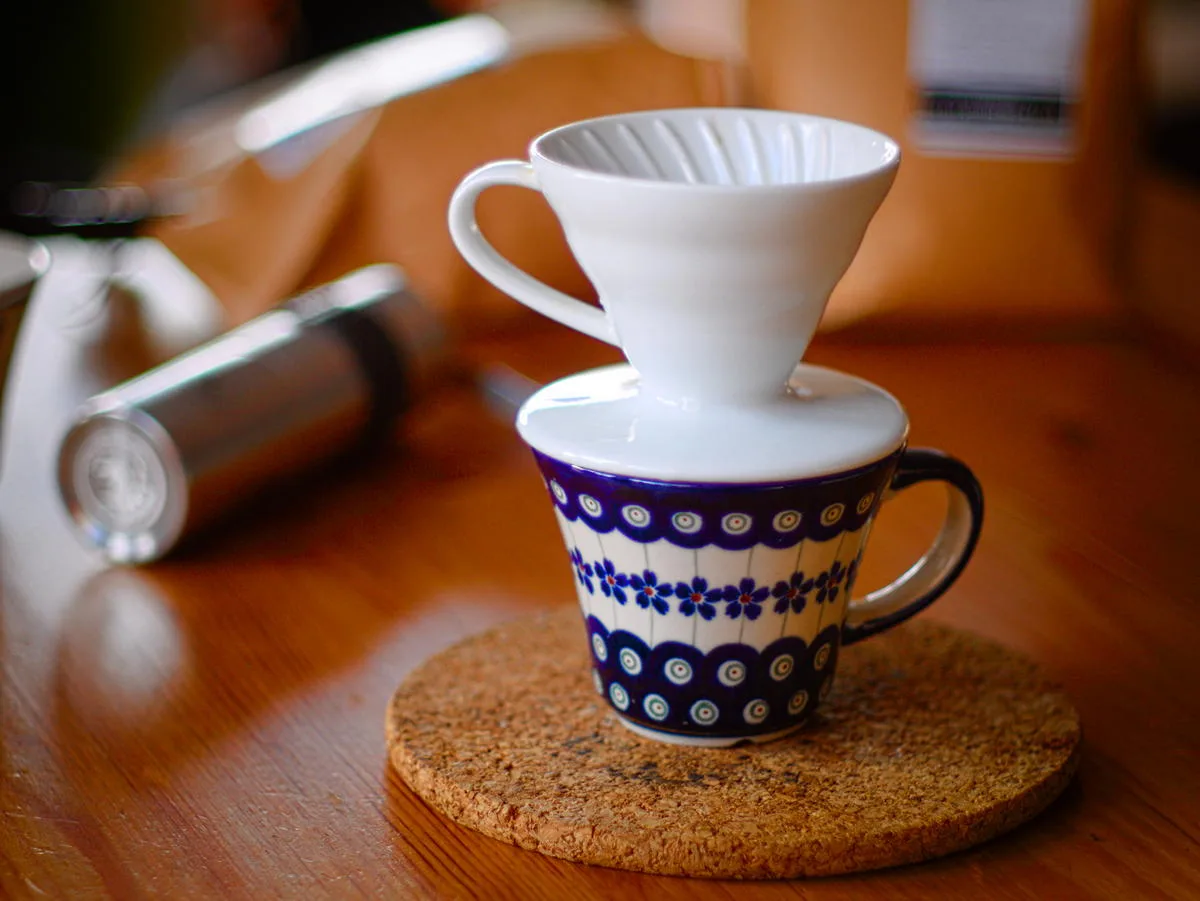
The Hario V60 is a 60-degree cone with one large hole in the bottom and spiral ribs rising along the walls. Because the water gathers to a single point and drains quickly, the coffee doesn't pool at the bottom but flows on down, so it tends to fall into a clean taste. In exchange, you can directly control the extraction speed with the thickness and pace of the stream you pour — the greater the potential, the greater the variables.
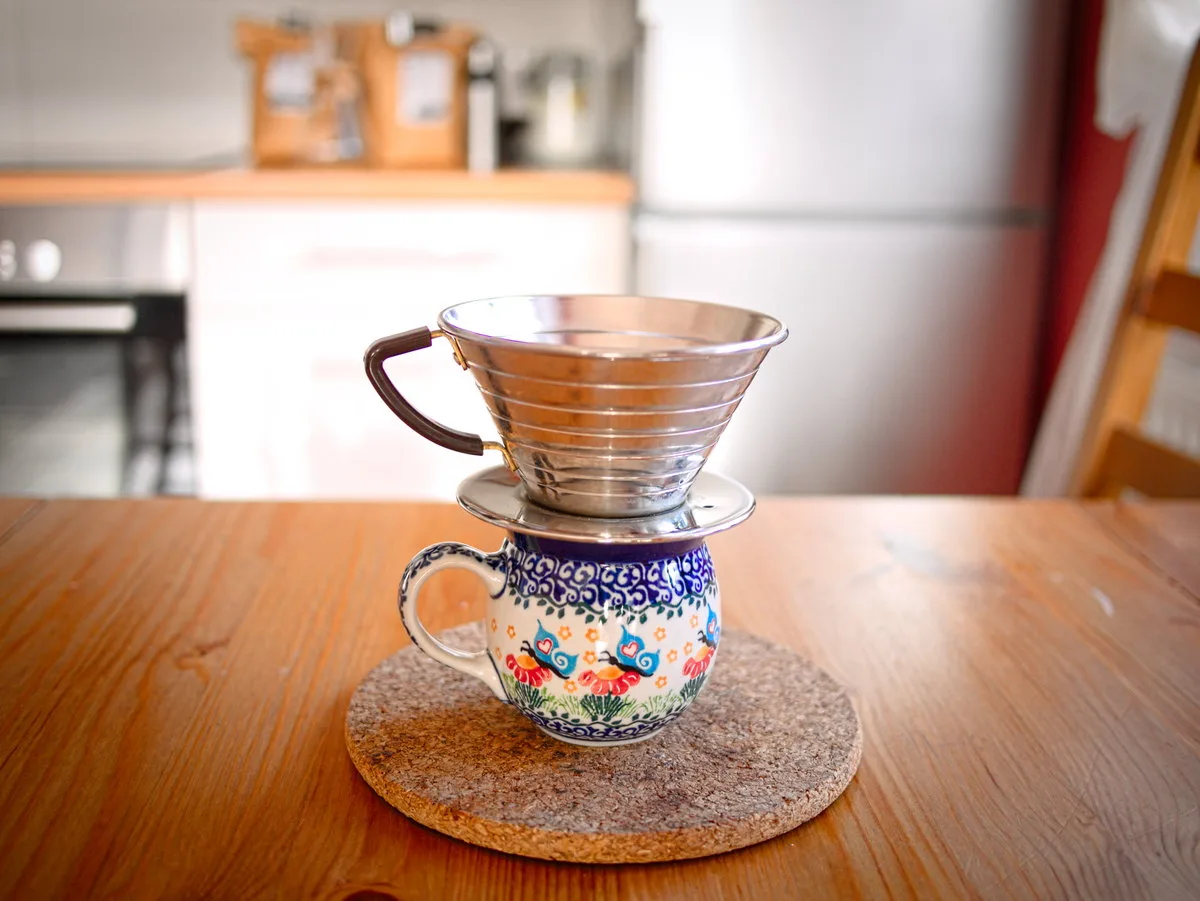
Whether it's the traditional trapezoidal three-hole (101/102) or the flat-bottomed Wave, the Kalita commonly has a flat bottom and three small holes. The extracted water first pools at the bottom (湯だまり) and then drains slowly through the three small holes. No matter how thick you pour the water, the size of the holes governs the flow, so the swing in flavor is small — but for that very reason you get a stable, highly reproducible extraction.
| Item | Hario V60 | Kalita (Wave / trapezoid) |
|---|---|---|
| Bottom shape | Conical (pointed) | Flat bottom |
| Extraction hole | One large hole | Three small holes |
| Ribs (inner grooves) | Spiral · long ribs | Short straight ribs |
| Water flow | Fast · no pooling | Pools, then slow |
| Flavor control | Adjustable by the stream (wide swing) | Held by the holes (narrow swing) |
| Difficulty | Needs practice · upper-intermediate | Stable · beginner to intermediate |
02We measured the extraction time — same conditions, different speeds
The Japanese specialty platform CROWD ROASTER brewed both drippers side by side with the same beans, the same grind, and the same water temperature, and measured the time. Even after matching the conditions as closely as possible, the extraction times split noticeably.
- Beans30 g
- Yield450 ml
- Water temp89 ℃
- Bloom (蒸らし)45 sec
Brewing the same amount, the Kalita took about 45 seconds longer. That's because its structure lets the water pool at the bottom before draining, which lengthens the contact time between the coffee grounds and the water. The color of the brew was also a touch lighter on the Hario side.
03So how does the taste actually differ?
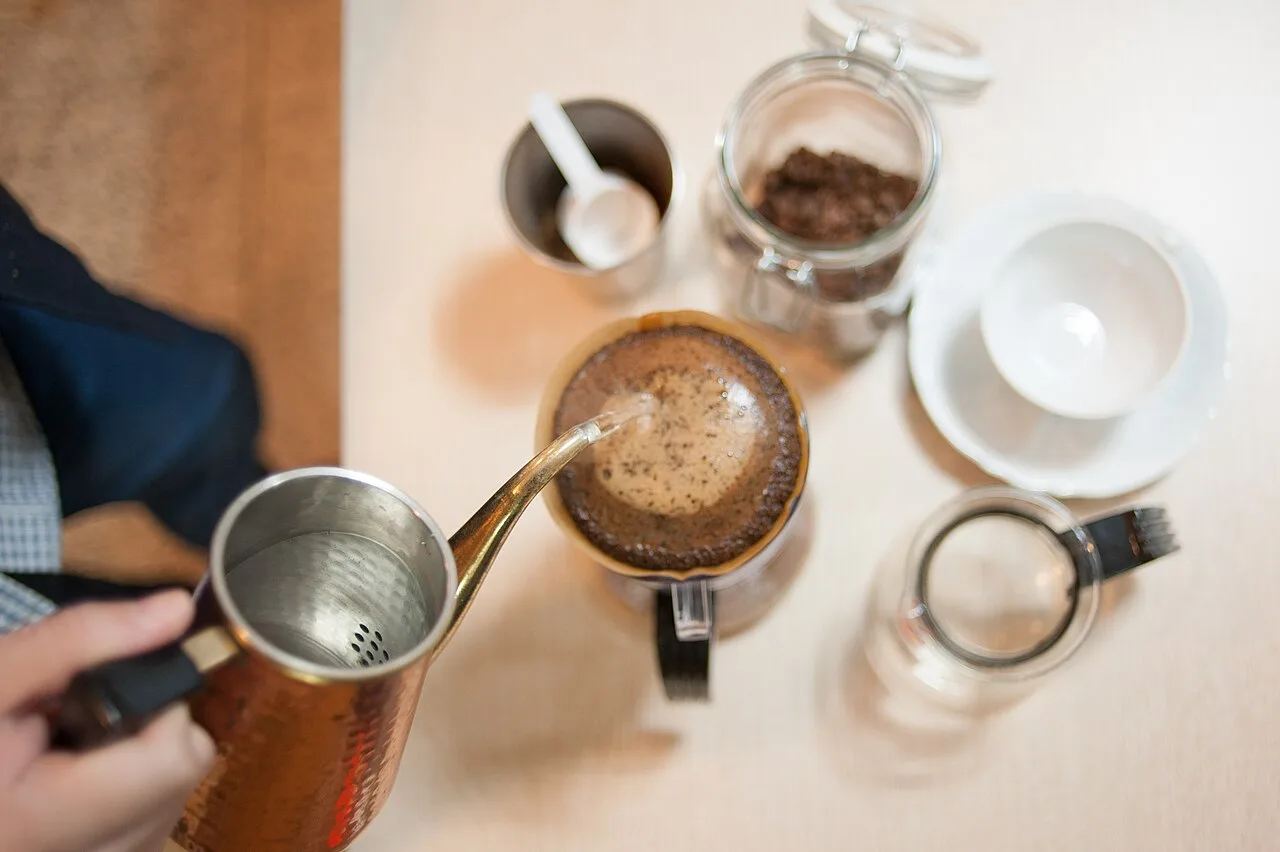
Across many comparative tastings, the descriptions are remarkably consistent. Kalita is "a smooth taste with no sharp edges," while Hario is "a taste that comes out clear and strong."
- Falls high in aroma and clean (すっきり)
- Acidity, fruitiness, and clarity come alive
- Few off-flavors, a transparent impression
- But the aftertaste can be somewhat light and monotonous
- A voluminous body, a mild impression
- Round sweetness · a weighty finish
- A cup "rich in information," with many flavors layered
- But faint astringency and off-flavors can come through too
What explains this difference most cleanly is the principle of extraction. In coffee, acidity dissolves out first, bitterness later. So the cone (Hario), where the contact between water and coffee is short, leans toward acidity, while the trapezoid (Kalita), where the contact is long, adds bitterness and body on top of the acidity.
When you want to bring out a washed bean or a fresh, bright flavor, the Hario suited it well; when you want to emphasize a natural-process bean or a deep sweetness, the Kalita was the better match, they say.
04So which one should I use?
People who drink it black · light-roast, acidic coffees · those who want to enjoy aroma and clarity · upper-intermediate brewers who want to control the extraction themselves
People who add sugar or milk · dark-roast blends · those who like a weighty body and sweetness · beginner-to-intermediate brewers who want a consistent cup every time
In practice, the bloggers' conclusion was crystal clear. If you're drinking it black, Hario; if you're adding sugar or milk, Kalita. The reading is that the Hario's recent worldwide popularity also lined up with the trend of drinking specialty, light-roast coffee black.
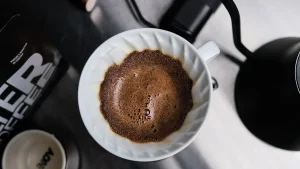
The traditional Kalita is a trapezoid with three holes. But as light-roast specialty coffee came into fashion, the flat-bottomed Kalita Wave appeared, designed to let the water drain (抜け) more freely even within a trapezoidal form. It's a compromise that keeps the stability of the trapezoid while letting the water flow through more easily. The comparison photo in this article is that Wave model too.
05In the end, you have to taste it yourself
The difference between the two drippers is real, but honestly, it's a difference you can only barely notice when you put them side by side and taste. Almost no one who normally drinks with a Kalita feels that "there's an off-flavor." It's only when you do a side-by-side comparison that you can see, "ah, this one is a little cleaner."
So if someone asks, "Which one is better?" there's only one answer. Do you add sugar? Then Kalita. Do you drink it black? Then Hario. And if you can, brew the same beans through both drippers once each and taste them yourself. The fun of coffee lies not in someone else's answer, but in the one your own tongue arrives at.
Image credits Pour-over — GorillaWarfare (CC BY-SA) · Hario V60 / Kalita Wave — Olgierd Rudak (CC BY 2.0) · drip extraction — Kim Sanso (CC0). All from Wikimedia Commons.
댓글 0
첫 댓글을 남겨보세요.