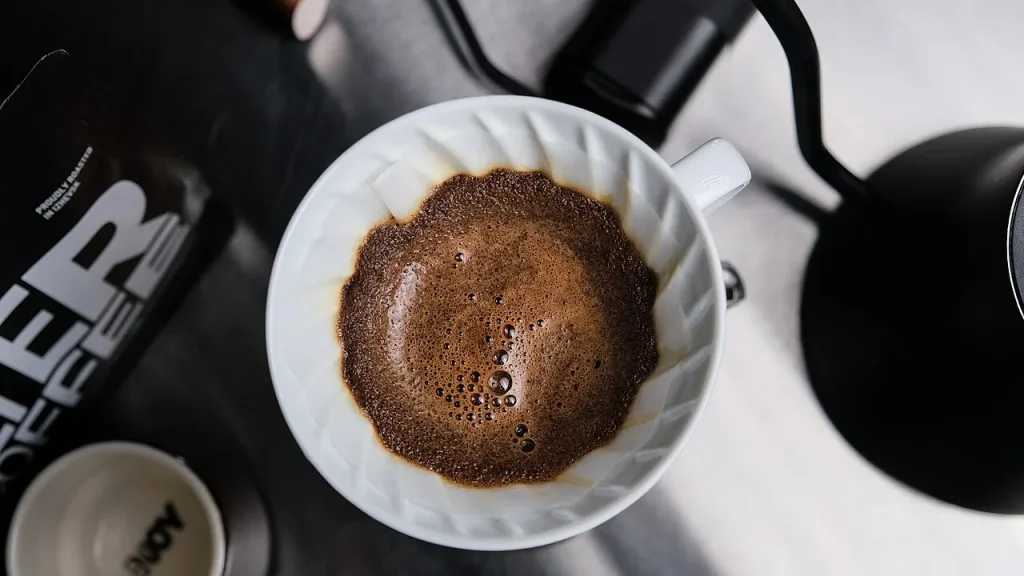
Change the dripper and the taste changes. Change the grinder, change the beans, even change the water, and it changes. But which one changes it, and by how much? Anyone who has agonized over "should I buy a pricey dripper first, or a good grinder first" has surely wondered this at some point. Fortunately, over the past few years physicists and food scientists have dug into this question quite seriously. Let's sort it out with data, not gut feeling.
To give the conclusion first, almost every variable surrounding coffee actually converges into a single game. That game is extraction. Whatever equipment you use, what we're really touching in the end is just one thing: "how much of the compounds inside the beans, and in what proportion, do we dissolve into the water." So to compare the influence of the variables, we first have to look at the rules of this game.
A single game called extraction
Taste is a question of "how much has dissolved"
A single roasted coffee bean contains more than 1,500 flavor compounds. As water passes through the bean, it dissolves these compounds in order. First come the light, easily soluble compounds like acids and fruit aromas; then sweetness and body; and last, the heavy compounds that give bitterness and astringency.
The proportion of the total bean weight that dissolves into the water is called the extraction yield (EY). The "brewing control chart," which the specialty industry has long used as a standard, regards roughly the 18–22% range as the tastiest spot. Dissolve less than this range (under-extraction) and sour, green flavors stand out; dissolve more (over-extraction) and bitter, dull flavors come to the fore.
Dripper, grinder, beans, water, temperature — all of these variables ultimately gather into a single question: "where do you set the extraction yield, and how evenly do you carry out that process." So the influence of a variable has to be weighed on two axes: "how greatly does it swing the taste" and "how much does it govern reproducibility (whether the same taste comes out every time)."
Influence rank #1
01The grinder and grind size — the handle that moves the taste the most
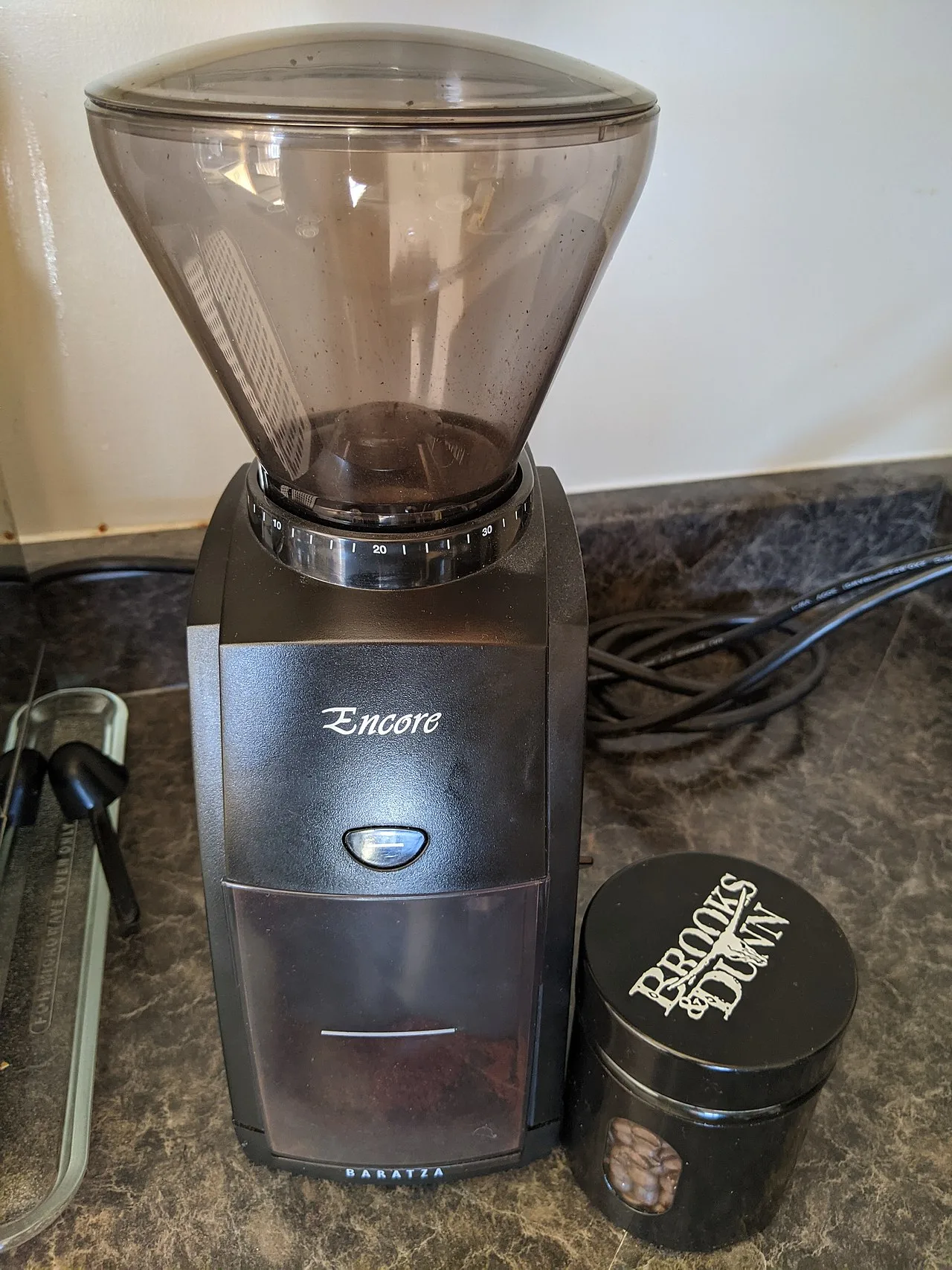
When you grind beans, the surface area increases explosively. A single whole bean is broken into thousands of particles as the cell walls open, and the larger the area in contact with water, the faster the compounds dissolve. So even when brewed with the same time and the same water, a finer grind extracts more and a coarser grind extracts less. That's why grind size is the coarsest gradation on the "extraction dial."
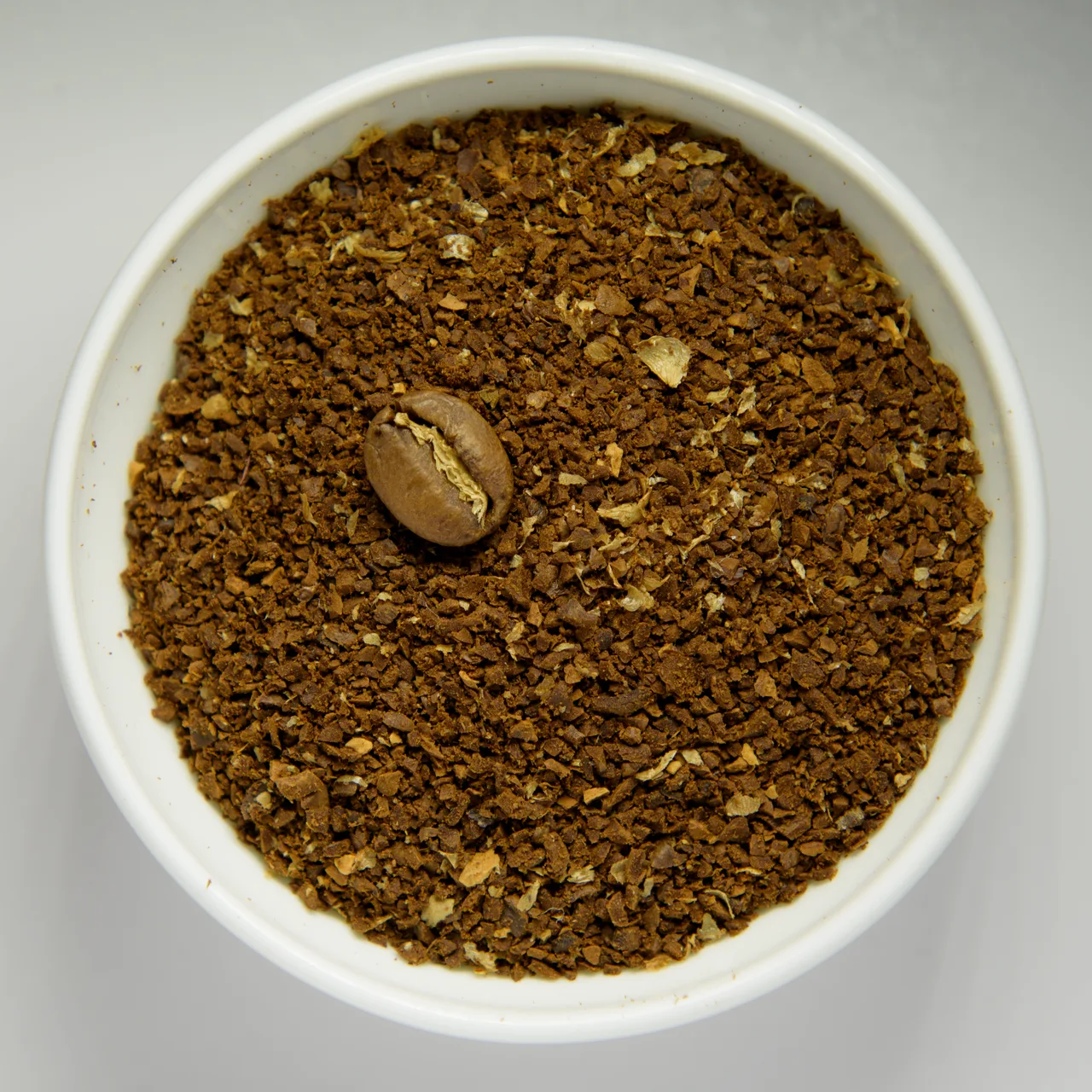
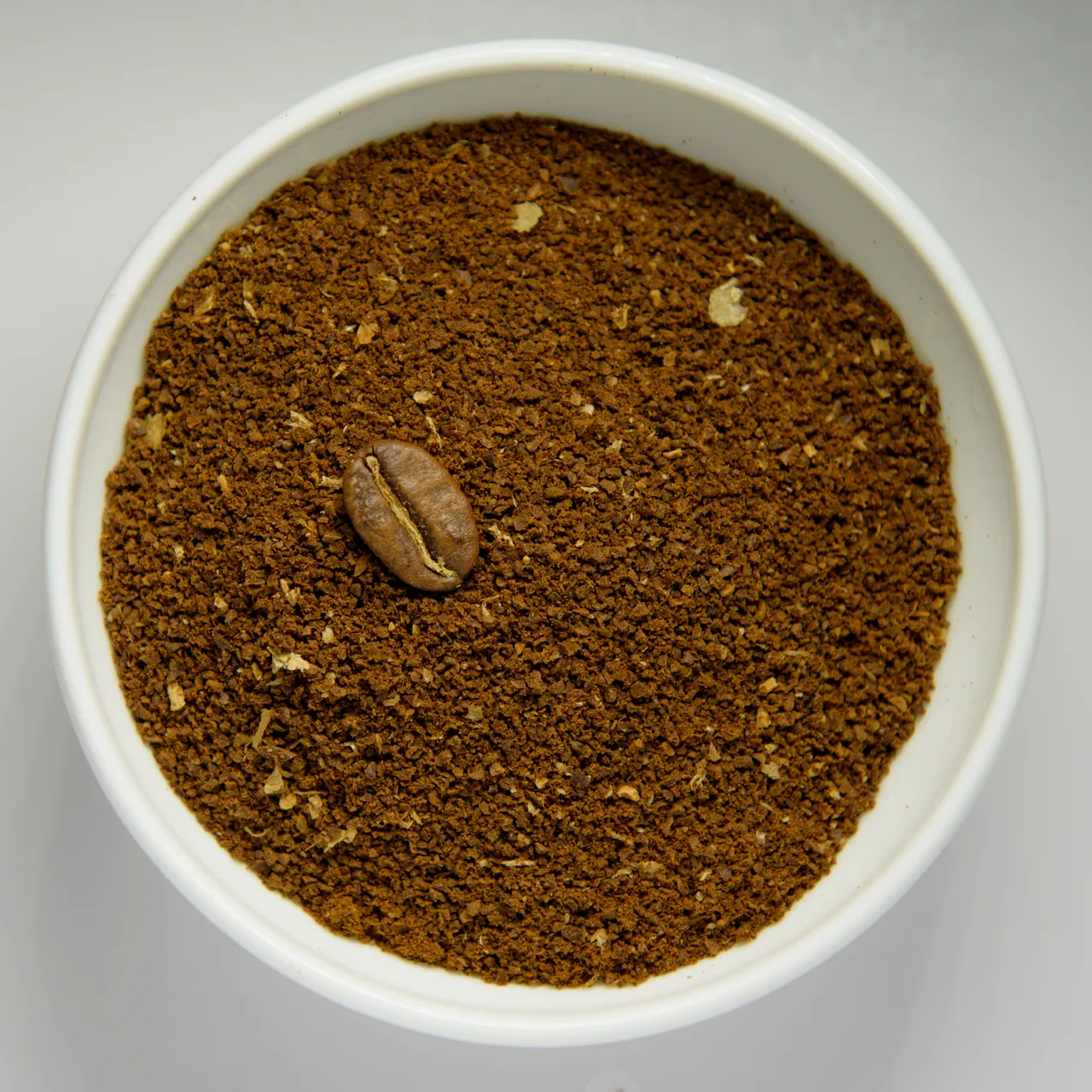
But here common sense gets turned on its head. The received wisdom that "the finer you grind, the more is extracted" breaks down at a certain point. In many extraction experiments, the graph of extraction yield against grind size doesn't rise monotonically — it forms a "peak" shape, hitting its apex at a medium grind and then actually falling off in the too-fine region.
The reason is "channeling." When the particles are too fine and there are too many fine particles (fines, under 100µm), the coffee bed can't let the water pass through evenly. As the water rushes through the paths of least resistance, some parts get over-extracted and some are barely extracted at all. The overall average yield drops, and above all, the result becomes uneven every time. So the value of a good grinder lies not simply in "grinding fine" but in "making particle size uniform and keeping fines few." A 2024 study also confirmed that, even at the same average grind size, the proportion of fines varies greatly depending on the grinder.
Grind size is the variable that swings the taste the most, and at the same time the variable to nail down first. When you switch to new beans or a new dripper, the answer to "why is it sour / why is it bitter" usually lies in the grind size. And before you upgrade your dripper, checking the grinder first gives you a bigger bang for your buck.
Influence rank #2
02The beans — origin, roast, and freshness set the "ceiling"
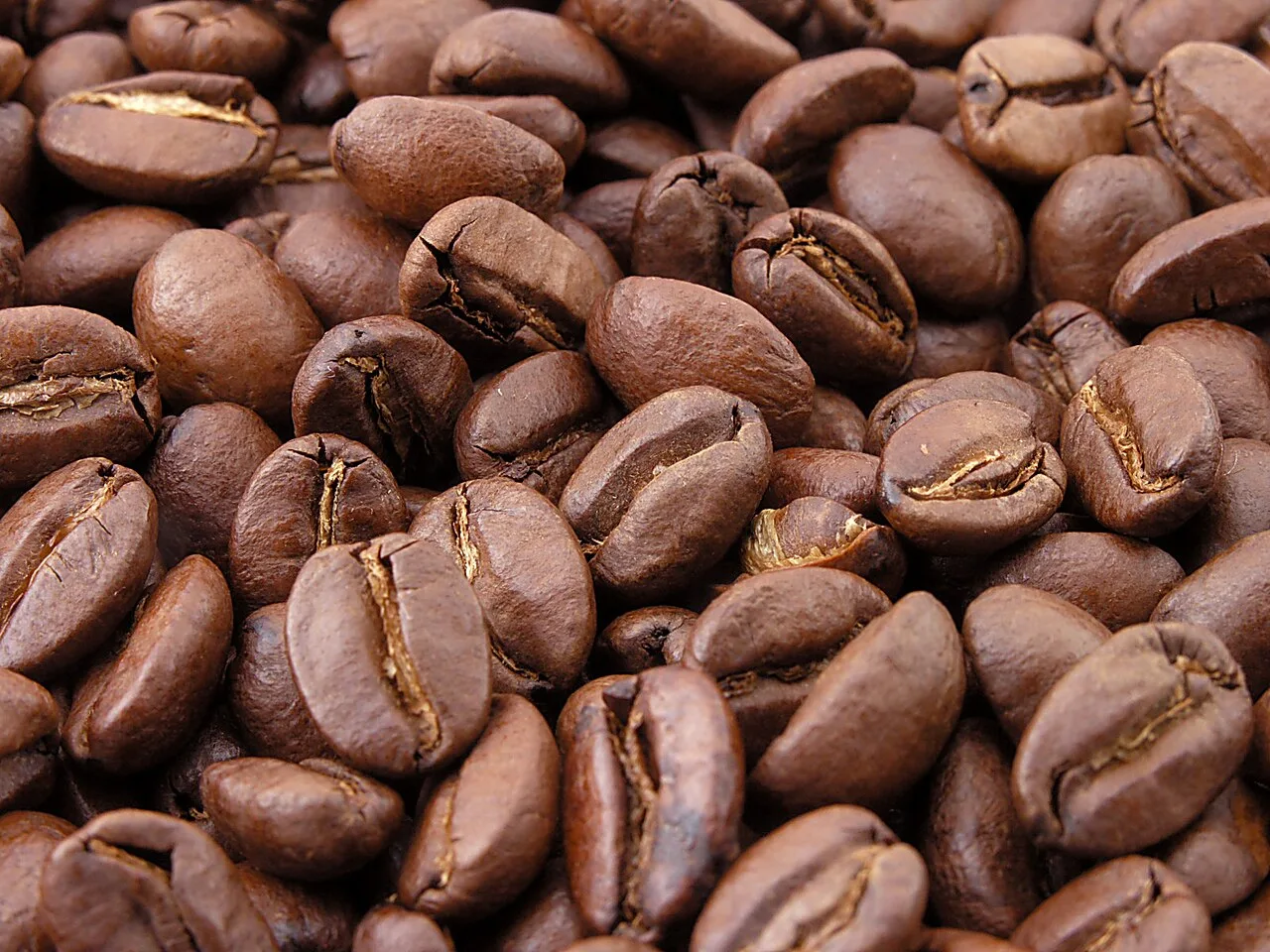
If the grinder is the most powerful "adjustment dial," the beans set the ceiling and floor of the taste that dial can reach. Origin, variety, and processing method (washed/natural/honey) draw the underdrawing of the flavor, and no matter how precise the extraction, it cannot create an aroma the beans don't have.
Roast — the same extraction gives different results
The degree of roast changes the very solubility of the compounds. In a 2025 study of Indian Arabica and Robusta, even when brewed under identical pour-over conditions (1:17, 92℃), light and medium roasts showed an extraction yield of about 19–21%, whereas dark roasts scattered widely, from 17.8% to over 23%. Because dark roasts have a more brittle cell structure, the compounds dissolve faster, so with the same recipe they more easily cross into over-extraction territory. So the conventional advice to go finer and hotter for light roasts and coarser at a slightly lower temperature for dark roasts has a scientific basis.
Freshness and degassing — the myth that "freshly roasted is best"
Once roasting is done, the beans slowly release, over several days, the carbon dioxide (CO2) trapped inside. This degassing process is the heart of freshness. In pour-over, the "bloom" where the grounds swell up when you pour water is precisely the scene of this CO2 escaping.
This is exactly why roasters wait several days to a week after roasting before selling. Generally the window where flavor stabilizes is seen as 7–10 days after roasting (sometimes up to 14–21 days); dark roasts open up sooner (1–3 days) while light roasts need a longer rest to give their full aroma. Conversely, leave them too long and oxygen penetrates, oxidation sets in, and the aroma flattens out. Oxygen is freshness's number-one enemy, so a bag with a one-way valve and airtight storage are recommended.
The beans are less a "real-time adjustment variable" and closer to a "precondition." That said, freshness (the roast date) makes the taste of even the same beans vary sharply depending on which day you brew them, so in the end it's a variable the user touches every time, too.
Influence rank #3
03The dripper and the pour — geometry changes the flow
The dripper is often dismissed as "a matter of taste," but physically it determines how long and how evenly the water contacts the coffee bed. Whether conical (V60), trapezoidal (Kalita), or flat-bottomed (Origami/flat), whether the outlet is large or small, and how the ribs are structured all change the water's dwell time and flow path. And that leads straight to extraction yield and uniformity.
A pour-over fluid-dynamics study published in Physics of Fluids by a University of Pennsylvania team in 2025 adds an interesting fact here. Observing the moment the stream strikes the coffee bed with transparent particles and a high-speed camera, they found a phenomenon in which the stream burrows into the coffee bed and stirs the grounds in a kind of "avalanche" effect. The stronger this mixing, the more even and efficient the extraction.
The team's recommendation was clear: within the limit that keeps the stream unbroken (laminar flow maintained), raise the pouring height as much as possible and use the thick stream characteristic of a gooseneck kettle. Doing so let them use fewer beans while producing the same taste. In other words, pouring thick from a sufficient height is more advantageous for mixing and extraction than trickling it thin.
That said, the influence of the dripper and the pour is not as great as that of grind size or beans. With the same grind and the same beans, the difference in taste you get by switching drippers clearly exists, but compared to the change from turning the grind a click or two, it's closer to fine-tuning. The dripper is less a variable that sets the "big picture" and more one that refines an extraction you've already dialed in.
Influence rank #4
04Water — temperature is surprisingly small, and water quality is bigger than you think
Coffee is 98–99% water. So it's only natural that water governs the taste — but exactly "which part" matters is a bit different from common belief.
Temperature — the plot-twist variable
Everyone has surely heard the SCA recommendation that "the brew temperature should be 92–96℃." Yet one precise sensory experiment produced a surprising result. With the brew concentration (TDS) and yield (EY) matched identically, they brewed drip at 87℃, 90℃, and 93℃ respectively and compared them — and while TDS and EY had a clear effect on the sensory profile, temperature itself made almost no difference to the taste. That is, the reading is that temperature seemed to matter because it changes the "amount extracted," not because of any magic in the temperature itself. If you reach the same extraction amount through grind size or time, a difference of a few degrees may be a smaller variable than you'd think.
Water quality — minerals are the real variable
By contrast, the minerals dissolved in the water change the taste dramatically. What many experiments, including the work of Colonna-Dashwood and Hendon (Water for Coffee), say with one voice is this. Magnesium (Mg²⁺) helps extract flavor compounds and brings out body and sweetness, whereas bicarbonate (HCO₃⁻, alkalinity) buffers acid, suppressing acidity and flattening the complexity. Water made high in sodium by a filter or softener did not help the taste. However, when even magnesium and calcium concentrations go well past 100ppm (above 300ppm), a chalky off-flavor arises and they actually become harmful — the right level is key.
What really matters in water is not the thermometer but the water quality. The habit of reaching the same extraction amount every time, and water of moderate hardness and low alkalinity, make a bigger difference in the cup than fighting over 0.5℃ of temperature.
The exception
05Espresso — the reversal of the belief that finer is better
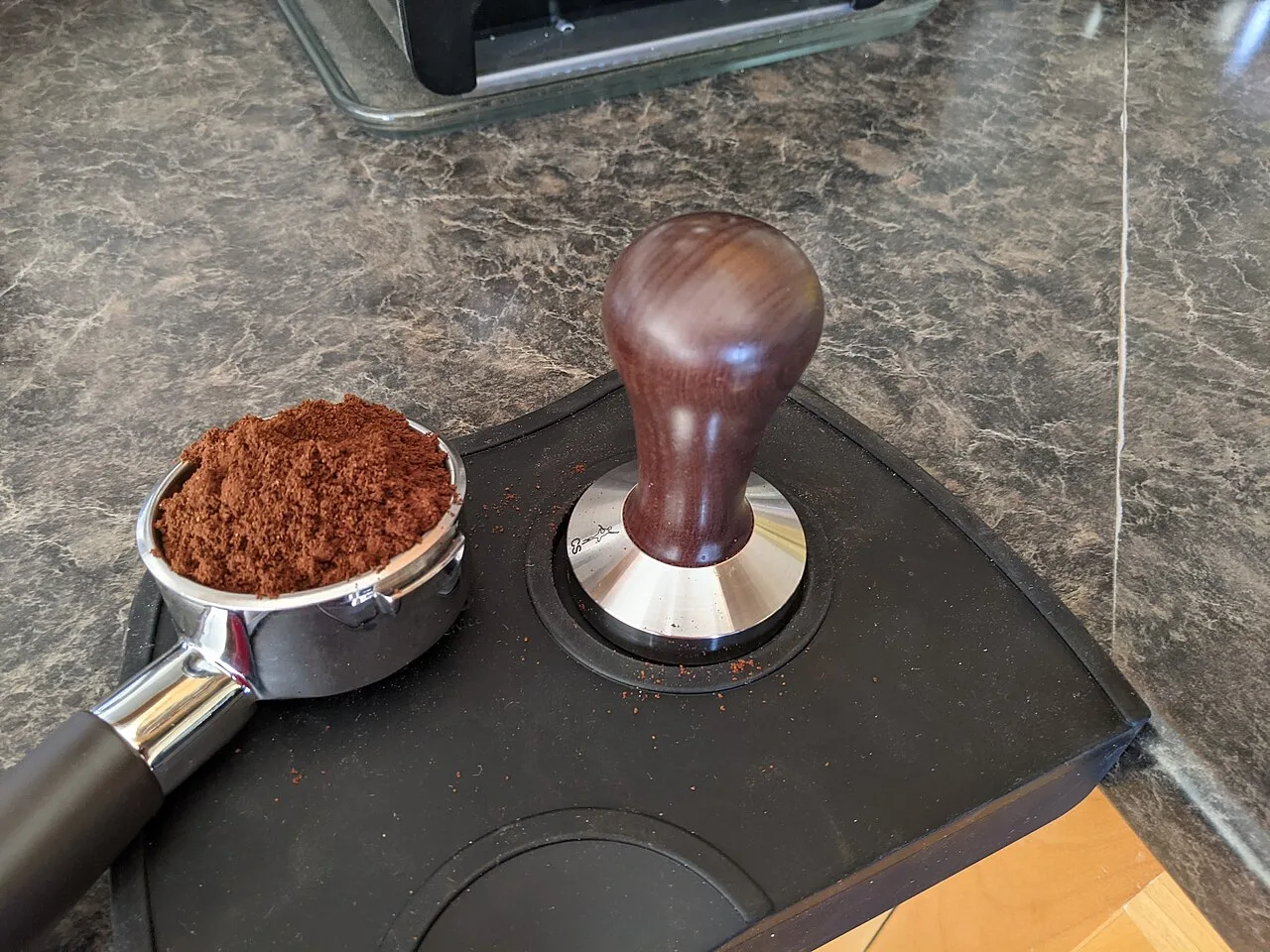
Espresso is a special method that forces water in at 9 bar, so it responds far more sensitively to small variables. A study published in Matter in 2020 by Cameron, Hendon, and others took direct aim at a long-held piece of barista common sense. The received wisdom was "you should grind around 20g of beans as fine as possible to increase the surface area for good extraction," but the model and the experimental results were the exact opposite.
Grind too fine and the water can't flow evenly through the coffee puck, channeling occurs, and as a result the extraction yield drops and the taste varies from shot to shot. The solution the researchers offered was unexpected. While maintaining the same taste (extraction yield), grind coarser and reduce the water slightly, or cut the dose outright from 20g to 15g and grind much coarser. Applied for a year at a café in Eugene, USA, this cut the bean usage per shot by up to 25% while keeping the taste consistent.
"Finer and more" is not always the right answer. In espresso too, what overwhelmingly governs reproducibility is the grinder (grind uniformity) and grind size. The quality of the grinder governs the consistency of the cup more than the machine's price tag.
The bottom line
So, what's the influence ranking?
The variables are intertwined, so it's hard to rank them as if cutting with a knife. Still, gathering where the studies point, on the basis of "how greatly it swings the taste × how much it governs reproducibility," roughly this picture emerges.
| Variable | Effect on taste | Character |
|---|---|---|
| Grind size · grinder quality | The most powerful adjustment dial + the heart of reproducibility | |
| Beans (roast · freshness) | The precondition that sets the ceiling of the taste | |
| Brew ratio · water amount | Directly determines the concentration | |
| Water quality (minerals) | Changes flavor extraction and the perception of acidity | |
| Dripper geometry · pour | Fine-tuning that refines flow and mixing | |
| Water temperature (at fixed extraction amount) | Acts indirectly through the extraction amount — surprisingly small |
※ The bars are a conceptual comparison based on research trends, not absolute figures. Since the variables interact with one another, the actual felt difference varies by recipe and beans.
If you're opening your wallet, in this order
A uniform grind is the foundation of every variable. Before a drip machine or a dripper.
Check the roast date and observe a rest period suited to the roast level.
The habit of reaching the same extraction amount every time with a scale and timer.
Moderate hardness, low alkalinity. Minerals over the thermometer.
The final step of refining to taste, after the big picture is set.
In closing — "extraction sense" over "gear acquisition syndrome"
A new dripper is fun. But the conclusion the studies point to is clear. What makes the biggest difference in the cup is not flashy equipment, but the fundamentals of grinding uniformly, using fresh beans, in a consistent ratio, dissolved into the right water. Once you understand the rules of the single game called extraction, you can see which variable to touch and when. From that point on, coffee becomes design, not luck.
- Reference — Cameron, Hendon et al., "Systematically Improving Espresso," Matter (2020). cell.com
- Park, Young, Mathijssen, "Pour-over coffee: mixing by a water jet…," Physics of Fluids 37 (2025). pubs.aip.org
- "Brew temperature… has little impact on the sensory profile of drip brew coffee," Sci. Reports. PMC7536440
- "The role of fines in espresso extraction dynamics," Scientific Reports (2024). nature.com
- Roast level, grind size, and extraction study (Indian Arabica/Robusta, 2025), Biochem. Journal. biochemjournal.com
- Water quality: Colonna-Dashwood & Hendon, Water for Coffee, and related sensory experiments.
- Images: Wikimedia Commons (CC BY / CC BY-SA / Public Domain).

댓글 0
첫 댓글을 남겨보세요.