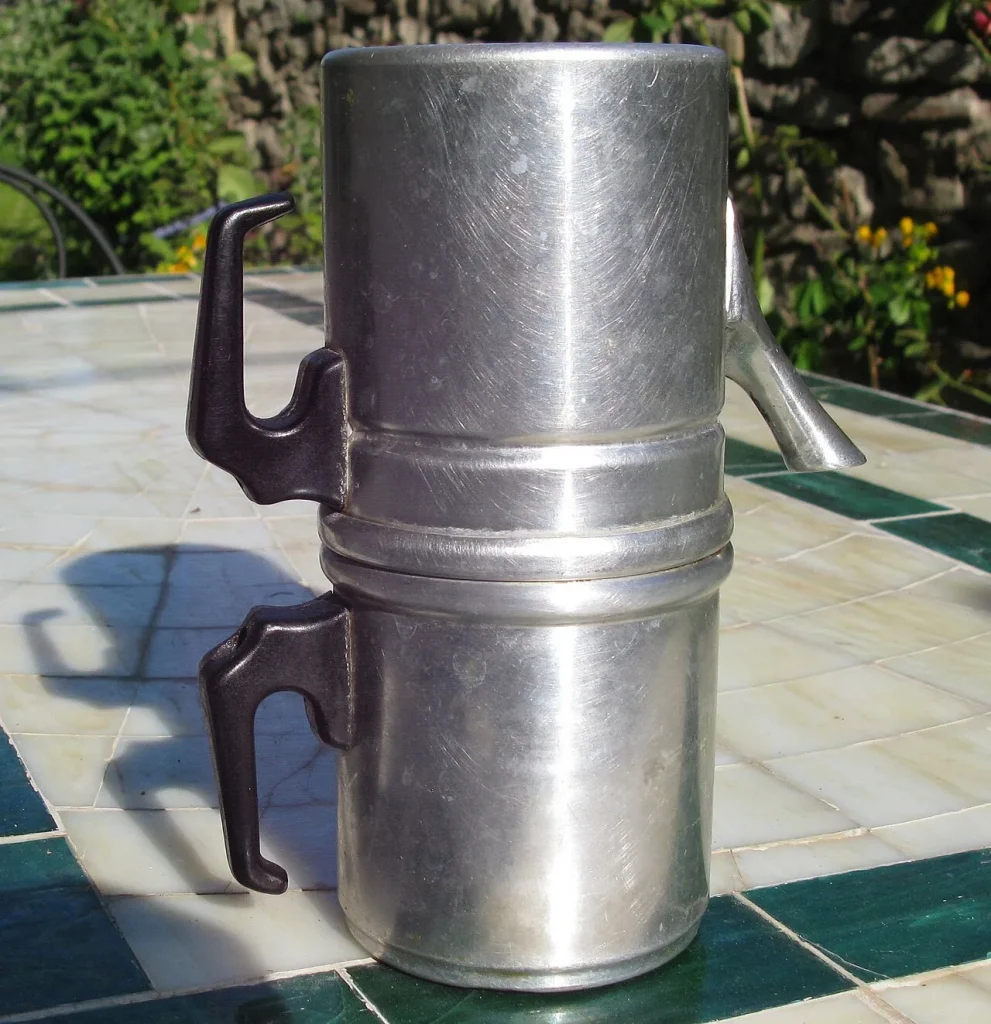
Coffee in an Italian home essentially comes from one of two things. The Bialetti moka pot, which conquered the whole country, and the caffettiera napoletana, which Naples never let go of — the flip-over coffee pot known locally as the "cuccumella." The brand that has become synonymous with the napoletana today is Turin's ILSA. Two pots, on the same stovetop, with the same beans, using opposite physics. How do Italians rate these two?
The Cuccumella, Naples' Flip-Over Coffee Pot
The napoletana's birthplace is, surprisingly, not Naples. Its prototype was the "flip-over pot" invented in 1819 by the Parisian tinsmith Jean-Louis Morize — a drip-style stovetop brewer that passed water through the coffee bed not by steam pressure but by gravity. This device was wildly loved in Naples, where it earned the nickname "cuccumella" for resembling a jar (cuccuma), and after refinements in Naples it spread for a time as the standard brewing method across Italy. It was originally made of copper, then aluminum, and later stainless steel.

ILSA — Heir to the Napoletana, Born in Postwar Turin
ILSA is the acronym for an aluminum rolling and pressing company (Industria Laminazione Stampaggio Alluminio) founded in Turin in 1946. Founder Alfredo Rosso, looking at a city left in ruins by war, decided to make the things that had vanished from Italian kitchens during the war — pots, pans, and coffee makers — and the very first product of the ILSA brand was a 99%-pure aluminum napoletana. At Italian tables that had been getting by on coffee substitutes and were finally drinking real coffee again after the war, this pot became a symbol of "regained abundance," the company records.
What looks like a simple piece of kitchenware is in fact a demanding object: the body alone takes some 60 processes combining casting and machining. The napoletana is still produced today at the Collegno factory in Turin, and the lineup continues with classic aluminum and diamond-cut (spazzettata) versions, an 18/10 stainless steel version, and more recently induction-ready models. Sizes range from 2 to 12 cups (by cup-count designation).
The Moka Pot — 1933, an Invention That Replaced the Standard
The protagonist on the other side is the Moka Express, created in 1933 by Alfonso Bialetti in Crusinallo, Piedmont. As the famous anecdote goes, he conceived it after watching how, in an early washing machine called the "lisciveuse," boiling water rose through a tube to spread detergent. It's a pressurized brewer that pushes water up by steam pressure and forces it through the coffee bed. After the war, his son Renato Bialetti drove industrial production and exports forward, and the moka pot ended up in roughly 90% of Italian homes, with cumulative production estimated at around 300 million units. Faster, and with no need to flip it, the moka pot quickly pushed the napoletana aside.

Opposite Physics — Steam Pressure vs. Gravity
The difference between the two pots can be summed up in a single sentence. The moka pushes up with pressure; the napoletana drips down with gravity. In the moka, the steam pressure in the lower boiler forces hot water up over the coffee basket, and in the process the water temperature can exceed 100°C. With the napoletana, you turn off the heat once the water boils and steam comes out of a small hole next to the spout, then flip the whole pot over. Then water at around 100°C slowly soaks through the coffee bed without pressure and drips down into the server below. The extraction takes anywhere from 2 minutes to as long as 5–10, depending on the grind, after you flip it.
| ILSA Napoletana (cuccumella) | Moka Pot (Bialetti) | |
|---|---|---|
| Brewing principle | Gravity percolation (unpressurized drip) | Steam-pressure brewing |
| Water temperature | holds around 100°C | can exceed 100°C |
| Grind size | coarser than moka (about 500–700µm) | fine (slightly coarser than espresso) |
| Time required | long — needs time to flip and wait | short — set it on the heat and you're done |
| Gasket (rubber seal) | none → almost no maintenance | yes → needs periodic replacement |
| Difficulty | the flip timing is key (after checking for steam) | very easy |
| Induction | standard model no (separate ILSA induction-only model) | aluminum no, stainless/dedicated models yes |
The fact that the grind size differs is a point surprisingly often missed. The napoletana's filter holes are larger than the moka's, so a grind one notch coarser than for moka is essential; use a fine moka grind as-is and the grounds settle at the bottom of the cup. ILSA's official guide also stresses filling the water only to about 5mm below the body's steam hole, and never flipping before steam comes out of the hole.
The Italian Verdict — "Takes 5 Minutes Longer, but the Taste Is a Cut Above"
So which one tastes better? The verdict from Italian media and reviews leans to one side to an interesting degree.
On the character of the taste, the European coffee-goods shop Crema puts it concisely. Cuccumella coffee is richer and heavier than espresso, but its aroma, while less intense, is more complex. It's the distinct grain of coffee that has steeped slowly without pressure. Taken together, the local consensus boils down to this — convenience is a landslide win for the moka, but on smoothness, sweetness, and lower bitterness, the voices siding with the napoletana are unmistakable.
The Coffee Monologue — Why Naples Can't Give Up the Cuccumella
The napoletana's rise from a mere brewing tool to a cultural-heritage symbol owes much to a single scene. In Act 2 of the Naples playwright Eduardo De Filippo's 1945 comedy Questi fantasmi! (These Ghosts!), the protagonist Pasquale Lojacono sits on his balcony brewing coffee with a cuccumella and holds forth on his philosophy of coffee to the "Professor" across the way — the so-called "coffee monologue."
Pasquale boasts of his personal trick, the "cuppetiello" — a paper cone rolled and fitted over the spout to keep the aroma from escaping — and likens all this labor of making coffee to a little poem of life. The very act of grinding, waiting, and flipping by hand, that slow ritual, brings peace of mind. He even laments that the younger generation has lost this habit — a scene that, 80 years ago, already summed up what the napoletana stands for in the age of the moka and the espresso machine. This is why, for the people of Naples, the cuccumella remains the "queen of Neapolitan coffee."

So Why Did the Moka Win?
The reason the napoletana — which holds its own on taste — ceded its place to the moka from the 1930s on is clear. Speed, safety, and marketing. The napoletana, which required flipping a boiling pot by bare hand, was cumbersome and carried a risk of burns, whereas the moka just needed to be set on the heat. Add to that Renato Bialetti's aggressive postwar industrialization and the "little mustached man" advertising, and the moka became Italy's de facto national standard. What's interesting is that even Bialetti still produces a napoletana model separately to this day.

Which to Bring Home — A Practical Guide
☕ Who the ILSA Napoletana Suits
Those who find the moka's bitterness and burnt notes off-putting; those who want a rich coffee where smoothness and sweetness stand out; those who enjoy the brewing process itself as a ritual. With no gasket to replace, maintenance is simple too. Just note: a grinder that can hit a coarser grind than for moka (about 500–700µm) is essential.
⚡ Who the Moka Pot Suits
Those who can't spare a minute in the morning; those who want a strong, punchy espresso style; those who mostly drink it mixed with milk. The range of sizes, materials, and accessory ecosystem is also overwhelmingly broader.
Benjamin J's Take
Put the Italian verdict in one line and it goes like this — "The everyday coffee is moka; the Sunday-morning coffee is napoletana."
The age of efficiency made the moka the standard, but on the grain of the taste alone, local opinion converges on the unpressurized, 100°C napoletana brewing a smoother, less bitter coffee.
If you already have a moka pot, the ILSA Napoletana is the most Italian choice for a "second pot." An experience where the same beans show a completely different face —
and those few minutes waiting for the steam before you flip might just be the time we need.


댓글 0
첫 댓글을 남겨보세요.