When you first put whisky to your lips, have you ever set the glass back down thinking, "Huh? This tastes like hospital antiseptic"? That distinctive aroma that brings to mind iodine antiseptic, sticking plasters, iodine, even an ashtray. To get straight to the point: this is not a defect but an intended character, and its identity is precisely peat. In this article, we'll slowly unpack the identity of that antiseptic taste, what peat is, and why on earth it gives off such an aroma.

That taste isn't a "defect" — what is peat?A peat crafted over thousands of years
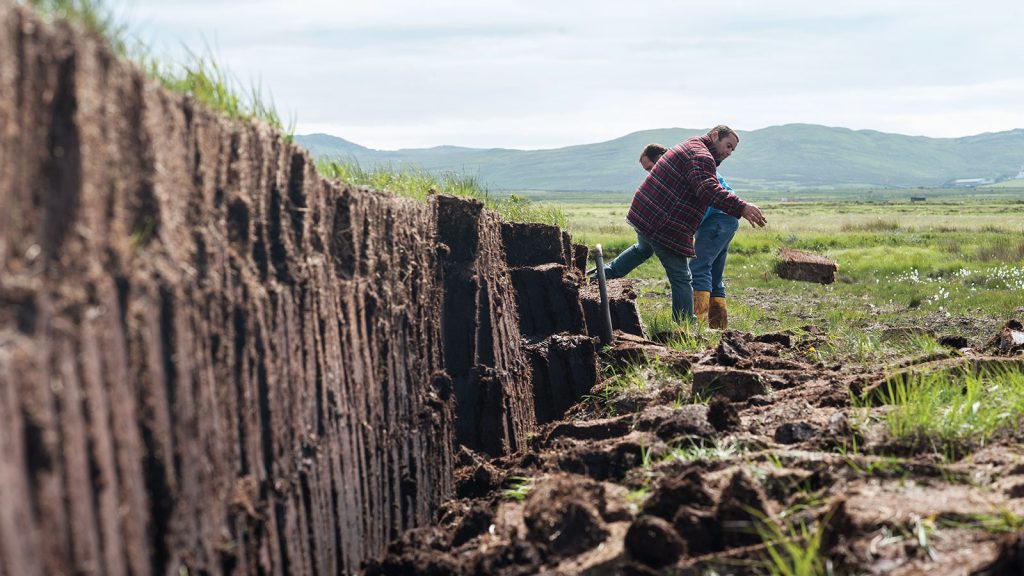
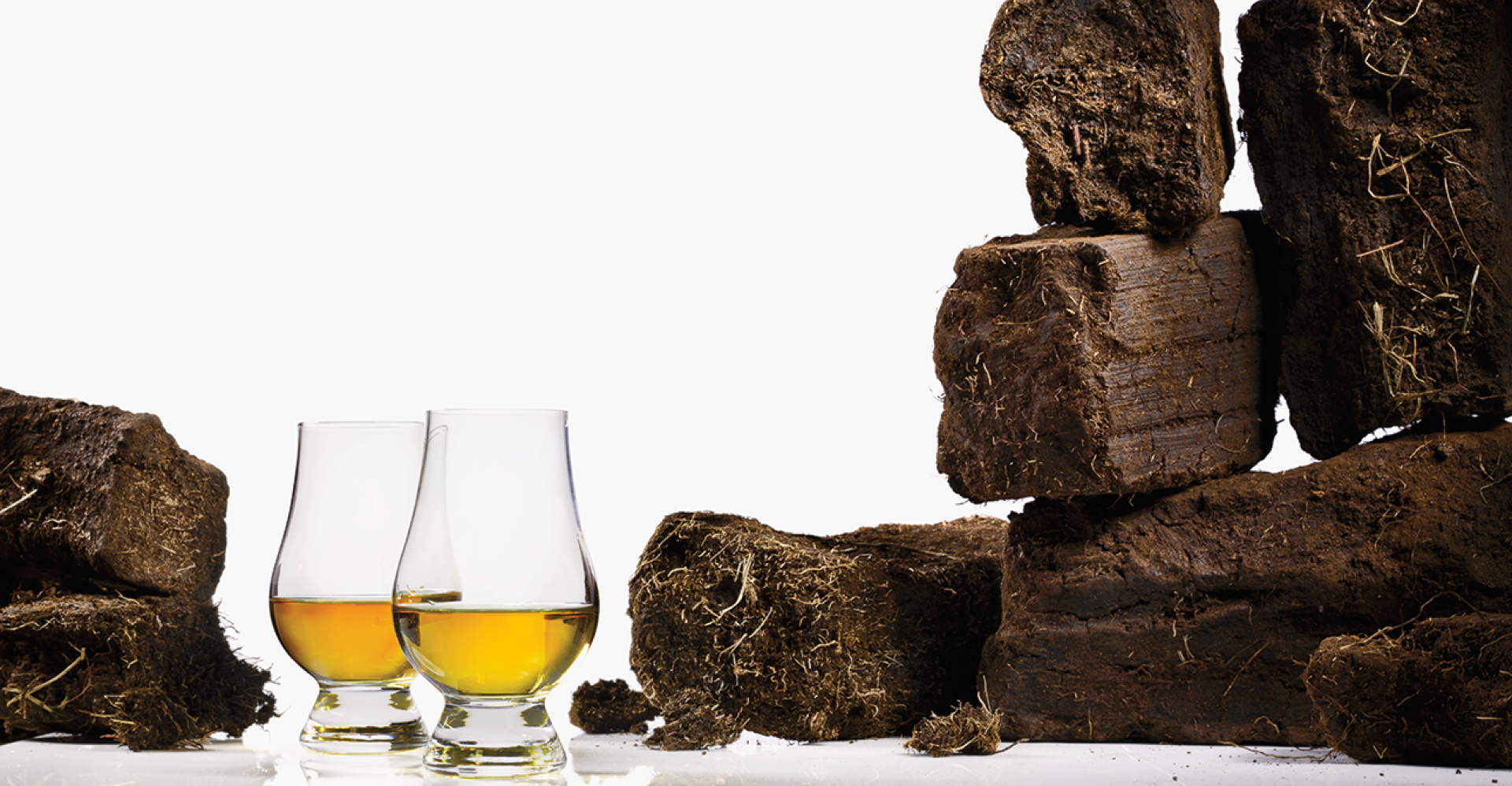
Peat is, in Korean, itan (泥炭). In the bogs of cool, damp regions like Scotland, plants such as moss, heather, and grasses die and then, in oxygen-starved water, fail to fully decay and pile up, layer upon pressed layer, over thousands of years into a sedimentary stratum. In a sense, it's a plant fossil at the stage just before becoming coal.
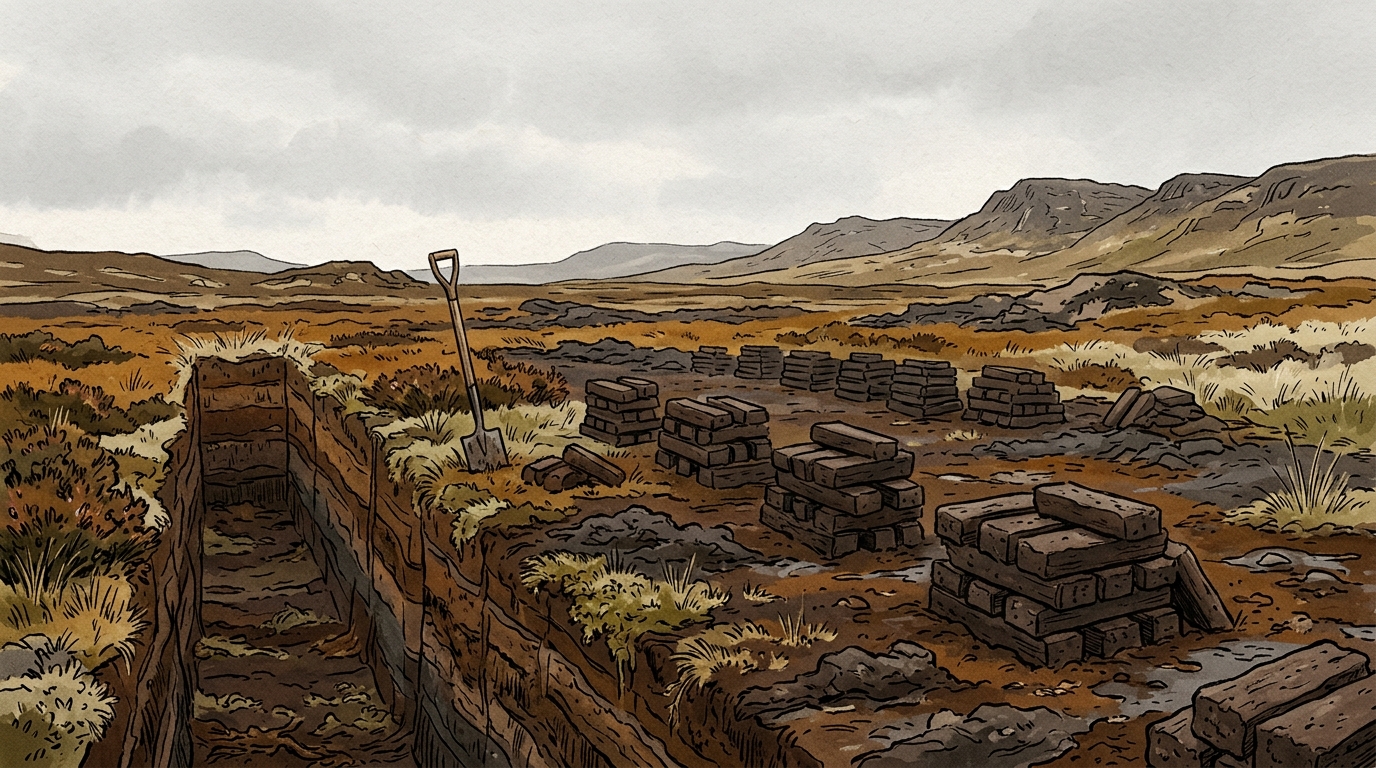
Locally, this peat is cut into brick shapes, dried, and used as fuel. In Scotland's island regions, where firewood was scarce, peat was long the fuel for heating and cooking. And it's precisely this act of "burning peat" that leaves a decisive mark on whisky.
How does peat get into whisky?Drying the malt "with smoke"
Whisky is made from malt, which is barley that has been sprouted. The sprouted barley has to be dried to halt germination, and when you dry it in a kiln with smoke from burning peat, magic happens. The aromatic compounds in the smoke cling right onto the surface of the damp malt.
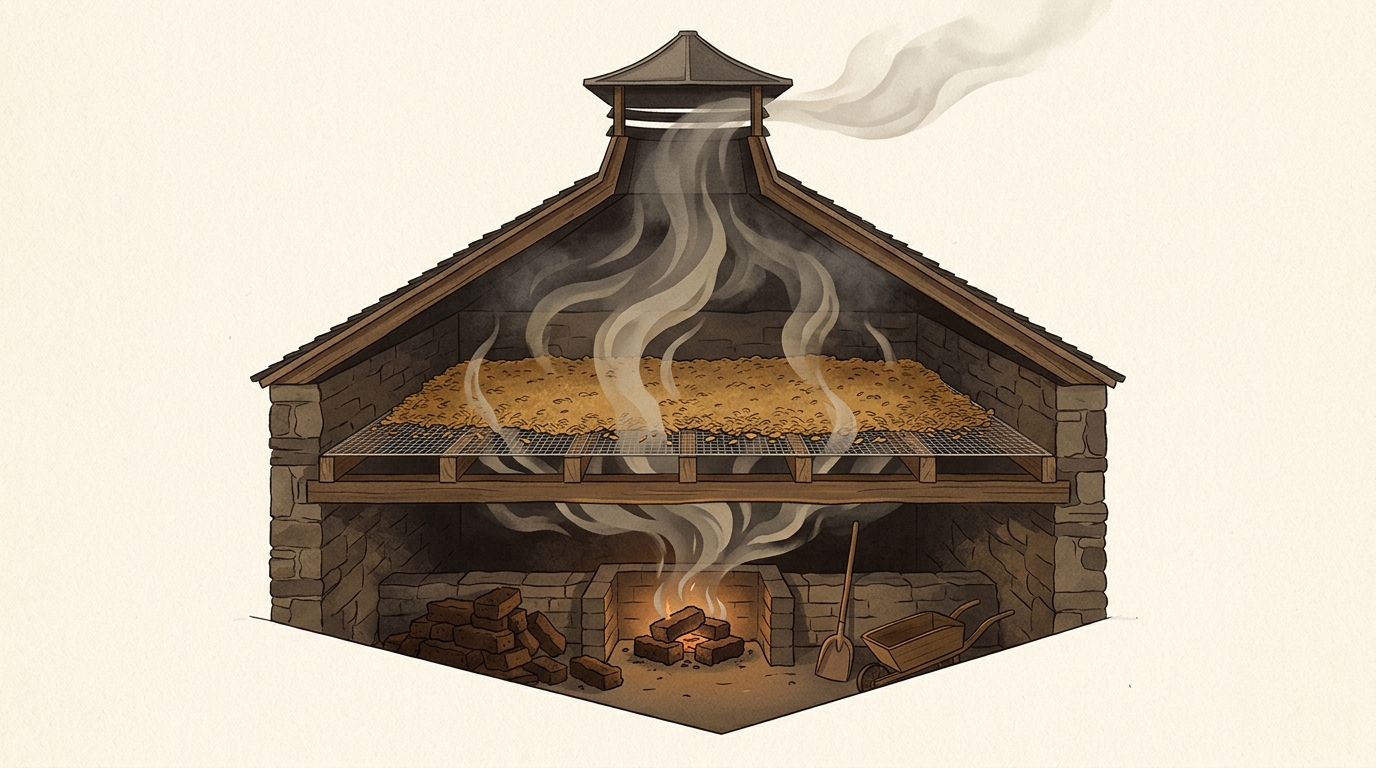
- Burn the peatBurning damp peat beneath the kiln sends up thick smoke.
- The smoke passes through the maltThe smoke rises over the wet malt, and the aromatic compounds in the smoke are adsorbed onto its surface.
- The phenols remainThe phenol-family compounds in the smoke soak into the malt and survive as aroma even after passing through every later process.
- Into the glassThrough mashing, fermentation, distillation, and maturation, that smoky, medicinal aroma is finally captured in a single glass.
Made from malt with no peat at all, it becomes a clean, smooth "unpeated" whisky; coat it with peat smoke and it becomes a "peated" whisky. The antiseptic aroma is determined entirely at this peat-drying stage.
Why "antiseptic" of all things?The culprit is phenolic compounds
The key is the phenol-family compounds in the peat smoke. It isn't a single kind but a blend of several siblings. Representatively — guaiacol gives campfire, smoked, and burnt notes; cresol and xylenol give a medicinal, tarry feel; and phenol itself gives off that very antiseptic and sticking-plaster aroma we know.
"It's like antiseptic" isn't a mistake.
They really are molecules of the same family.
Phenol (carbolic acid) is a substance that has been actually used as an antiseptic since the 19th century. The surgeon Joseph Lister famously introduced carbolic acid for disinfecting the operating room. So when your nose catches the phenol aroma in whisky, your brain naturally pulls up the memory of "hospital antiseptic." That's why a whisky like Laphroaig gives off such a strong sense of sticking plaster, iodine, and antiseptic cotton.
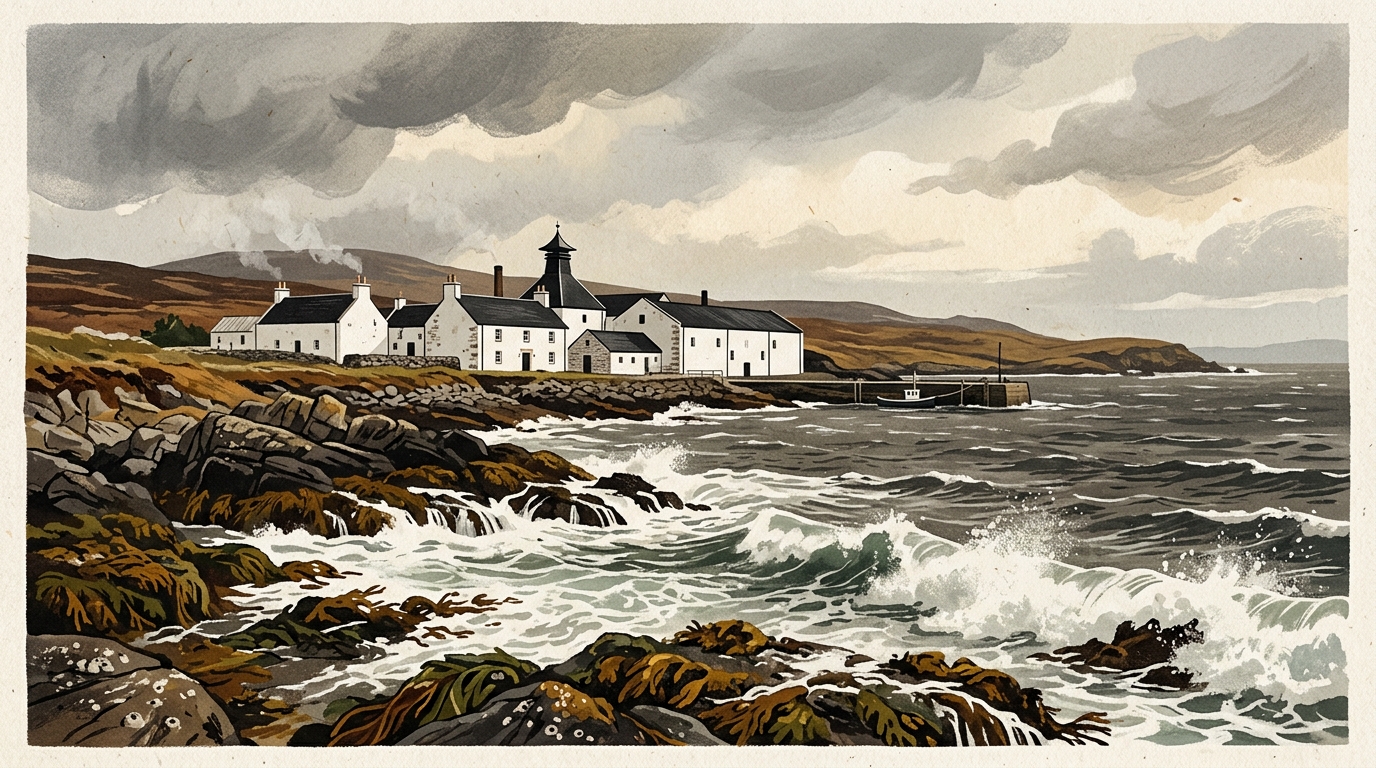
There's one more secret of the island of Islay. This island's peat forms in coastal wetlands and holds seaweed and salt. So on top of its smokiness, Islay whisky layers on a salty, iodine-like sea aroma, taking on an even more intense "antiseptic and sea" character. Laphroaig, Lagavulin, and Ardbeg all hail from this Islay.
The number called "PPM"The unit that measures peat intensity
As you seek out peated whiskies, you'll come across a number called PPM. It stands for phenol parts per million — that is, the concentration of phenol that has soaked into the malt. The bigger the number, the heavier the peat applied. To get a rough sense:
| Whisky (example) | Approx. PPM | Characteristics |
|---|---|---|
| Octomore (Bruichladdich) | 80–300+ | The strongest peat in the world. The 8.3 recorded about 309 ppm |
| Ardbeg | About 50–55 | Islay's representative heavy peat, dense smoke |
| Laphroaig | About 40–45 | The byword for antiseptic and iodine notes |
| Lagavulin | About 35 | Balanced, weighty smokiness |
| Typical unpeated (Speyside, etc.) | 0–3 | Almost no peat, smooth and fruity |
PPM is a value measured on the "malt," not the final concentration in the whisky in the glass. The actual smokiness you perceive varies greatly depending on which fraction is taken during distillation (the cut), how many years it was matured, and which kinds of phenol are abundant. In other words, a high PPM doesn't necessarily mean it will feel stronger.
So, how do you enjoy it?An appeal that transcends like-or-dislike
Peated whisky is the genre in the whisky world where opinions split most extremely. The first sip may have you thinking, "Why would anyone drink this?" but the moment it starts to come across as aromas like campfire, smoked bacon, and barbecue, it becomes hard to break free.
Unpeated
- Almost no peat aroma
- Smooth, with fruit, honey, and vanilla
- Beginner-friendly
- Speyside, etc.
Peated
- Smoky, antiseptic, iodine
- Intense and strongly characterful
- Strongly love-it-or-hate-it
- Islay is the standard-bearer
· Start with the milder ones — begin with mid-peat whiskies like Talisker and Bowmore, then work up to stronger.
· A few drops of water — adding water gently opens up the phenol aromas that had been closed off.
· Take it slow — there comes a moment when the "antiseptic" of the first sip turns into "campfire" by the second or third glass.
The next time whisky tastes like antiseptic, that's not a poorly made spirit — it's proof that smoke from burning thousand-year-old bog soil is alive in your glass. Knowing that, take one more sip, and the same aroma will surely feel different.
#WhiskyBasics#PeatedWhisky#AntisepticTaste#Phenol#IslayWhisky#SmokyWhisky#PPM
🥃

댓글 0
첫 댓글을 남겨보세요.