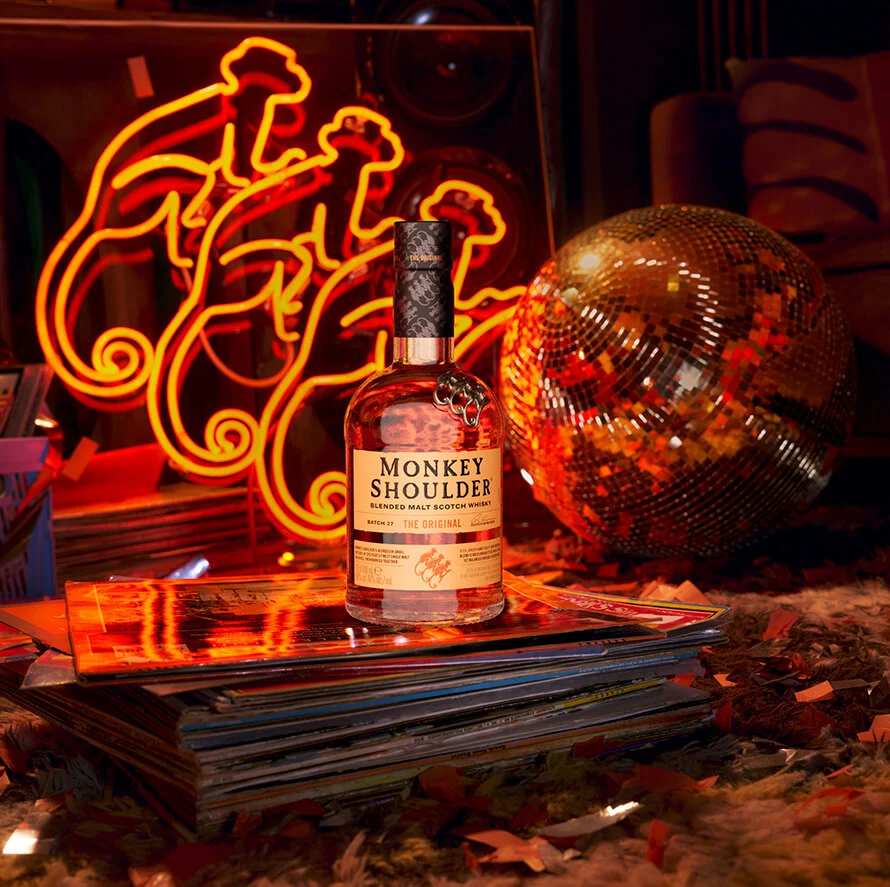
At the bar, someone pulls out a whisky bottle with three brass monkeys clinging to its shoulder. The name? Monkey Shoulder — a "monkey's shoulder," of all things. Why on earth was a whisky given a name like this? The answer isn't all cute. The name comes from over a century ago, from a genuine occupational injury of the people who turned and roasted the malt. Today we take a trip back in time to the most grueling and most human stage of all, before grains of barley become whisky.
Dawn at a malting houseThe people who wake the barley
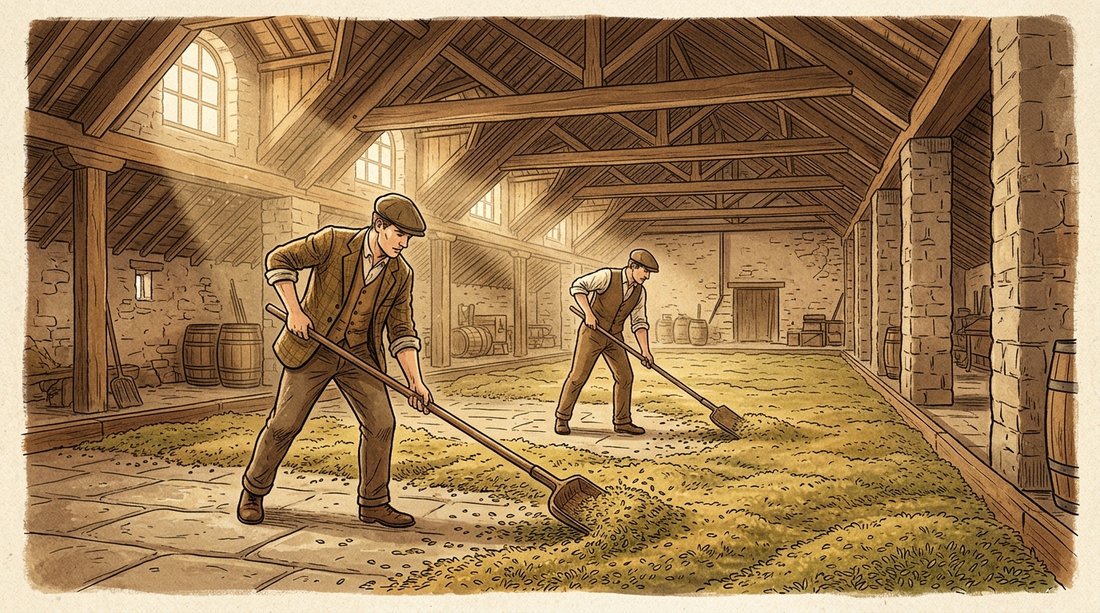
In the early 1900s, a malting house in Speyside, Scotland. Before dawn even breaks, the maltmen come to work. Barley, soaked in water, is spread ankle-deep across a vast stone floor. The barley is just waking from sleep and sprouting. In this germination process, the enzymes that will convert starch into sugar are created. It's the moment whisky's sweetness begins.
But living barley gives off heat. Left alone, the middle gets hot and the young roots tangle together and clump like a rice cake. So several times a day, the maltman has to turn this entire barley field over with a wooden shovel and rake.
The work of "turning and roasting" the maltFloor malting and kilning
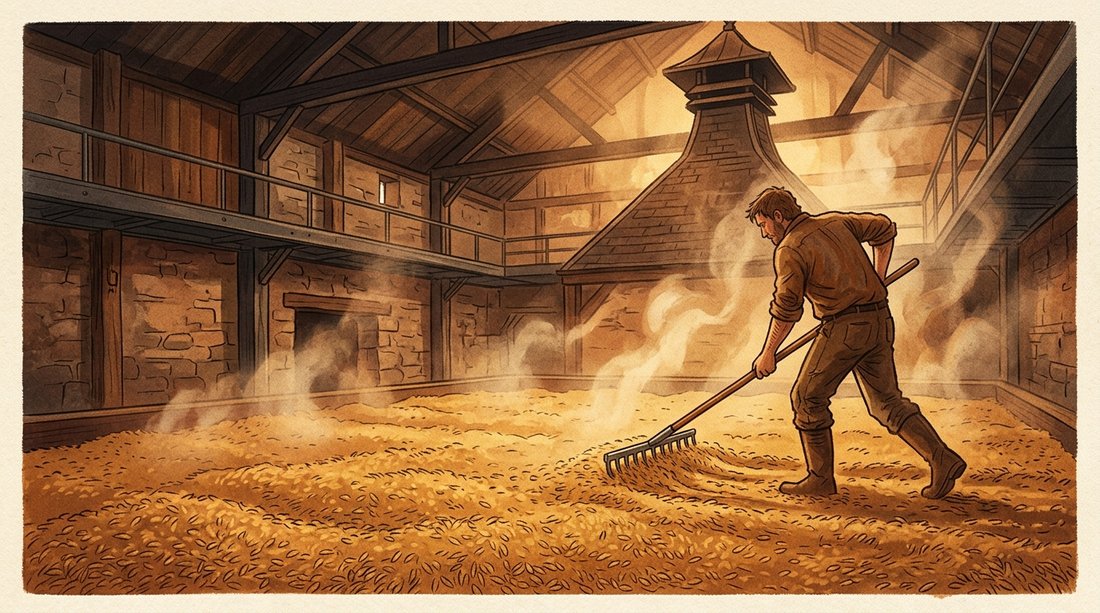
This floor malting wasn't simple labor but a craft of fine-tuned senses. They gauged the temperature with the palm of a hand, bit into a grain of barley to check the degree of germination, and tended it over 4 to 7 days so it grew neither too much nor too little. And once the germination was just right, they moved it to a kiln so it wouldn't grow further, and dried it and lightly roasted it.
- SteepingSoak the barley in water to wake it. Ready to germinate.
- Germination + turningSpread it on the floor and let it sprout over several days, turning it constantly to prevent clumping and overheating. The most grueling stage.
- Kilning (drying / roasting)Dry it with the kiln's heat to halt germination. The control of the fire at this point determines the toasty, smoky notes.
- The finished maltThe crisply dried malt now sets off toward milling, mashing, fermentation, and distillation.
Today, machines turning huge drums mostly do this work instead. But some distilleries, like Balvenie, still insist on traditional floor malting. That's how much it's a stage imbued with the trace of human hands.
And so "monkey shoulder" was bornA name that became a real occupational injury
The problem was that this "turning" was repeated all day long, for decades. Endlessly performing the same motion with a heavy wooden shovel, the maltmen built up strain in one shoulder and arm. When a long shift ended, one arm would hang limp and not straighten easily.
That sight of the limp, drooping arm
looked just like a monkey's — hence "Monkey Shoulder."
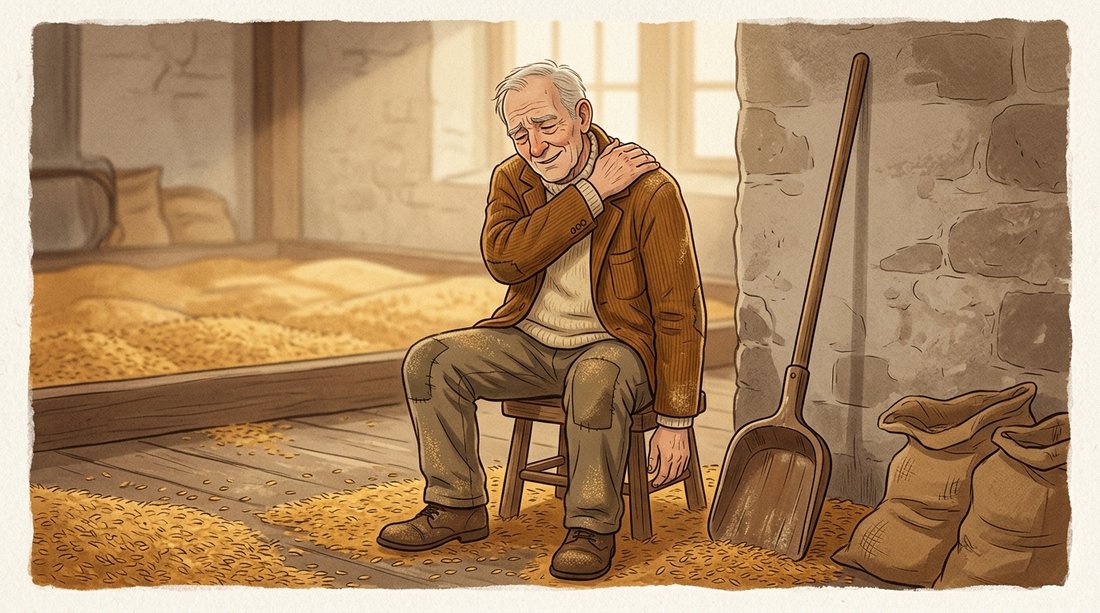
Monkey Shoulder isn't just a cute bit of naming. It's a kind of tribute to the old maltmen whose shoulders were ruined turning the malt. In a sense, it's a name that remembers the most labor-intensive work, hidden behind the glamour of distillation and maturation.
One bottle made by three distilleriesWhy three monkeys?
Monkey Shoulder is a blended malt whisky introduced by William Grant & Sons in 2005. "Blended malt" means it mixes only malt whiskies from several distilleries, without any grain whisky. At launch, it was an easy-drinking yet high-quality malt of a kind not common on the market, and it captured bartenders' hearts in an instant.

The three brass monkeys perched on the bottle's shoulder symbolize precisely these three malts. It's said to have originally been made from the malts of William Grant's three Speyside distilleries — Balvenie, Glenfiddich, and Kininvie. The exact recipe today is undisclosed, but the smooth, malty character with a touch of fruit remains the same.
· Type — Blended malt (blending only malt whiskies)
· Producer — William Grant & Sons (launched 2005)
· Home — Speyside, Scotland
· 3 monkeys — symbolizing the three malts
How to enjoy itWhy bartenders loved it
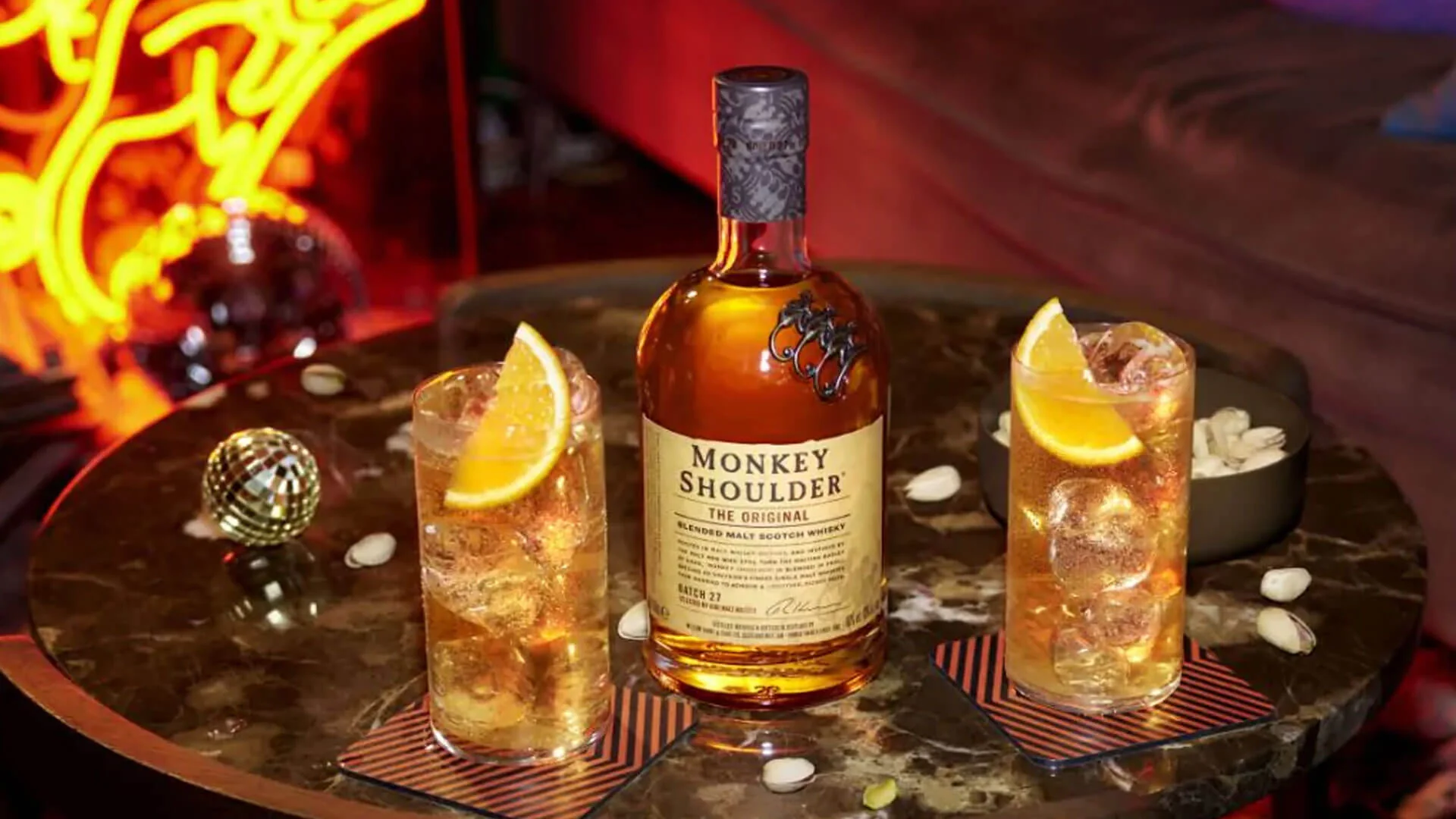
Monkey Shoulder is famous for the approachability of being "delicious however you drink it." With no heavy peat and no difficult quirks, it's especially good for beginners.
Light
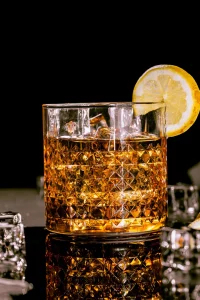
- On the rocks — a single cube
- Highball — soda water + lemon
- For your first encounter with whisky
Proper
- Neat — the aroma as it is
- A cocktail base for the Old Fashioned and more
- Vanilla, honey, orange flavors
The next time you're handed a glass of Monkey Shoulder, give the three monkeys on the bottle's shoulder a little pat. Held within are the stooped shoulders of the people who turned the barley before every dawn, and the hundreds of years of handiwork that woke a single grain of barley into whisky.
#MonkeyShoulder#WhiskyStory#FloorMalting#Malt#BlendedMalt#Speyside#WhiskyBasics
🥃
댓글 0
첫 댓글을 남겨보세요.