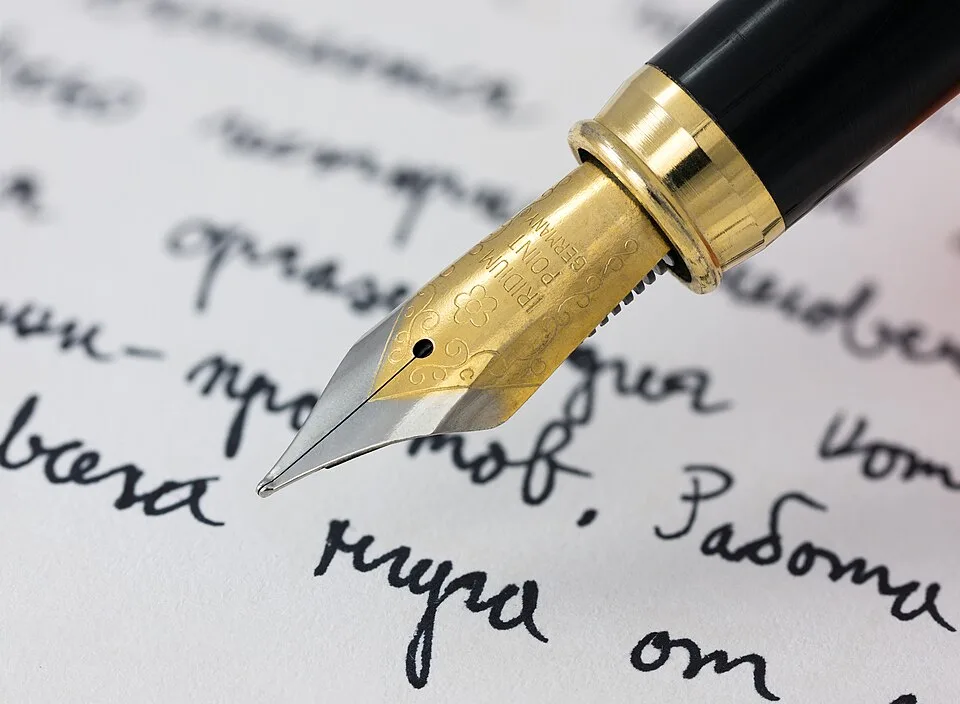
Japan is one of the great fountain-pen nations, with a manufacturing tradition deep enough to earn the title. In particular, the "big three" makers — PILOT, SAILOR, and PLATINUM — are loved by enthusiasts around the world, with broad lineups that run from entry-level pens costing a few hundred yen all the way up to premium models in the tens of thousands.
In this article, we've rounded up eight representative pens widely regarded in Japan as teiban (perennial steady sellers), arranged from the Japanese user's perspective in order of beginner → premium. It's organized to be useful whether you're choosing your "very first pen" or hunting for your next one. Each model image is shown with its source, taken from the brand's official website.
Japan's Three Great Fountain-Pen Makers
Renowned for a smooth writing feel and a knack for innovation. PILOT created the world's first knock-action "Capless" pen, and is also the maker behind the popular "Iroshizuku" ink.
Acclaimed for its nib research and vast range of ink colors (its "local" regional inks). The writing feel is calm yet has a touch of springiness.
Its strength is the Slip & Seal mechanism, which keeps the ink from drying out once the cap is closed. Popular with people who like a crisp, firm line.
From Beginner to Premium: 8 Pens Beloved in Japan
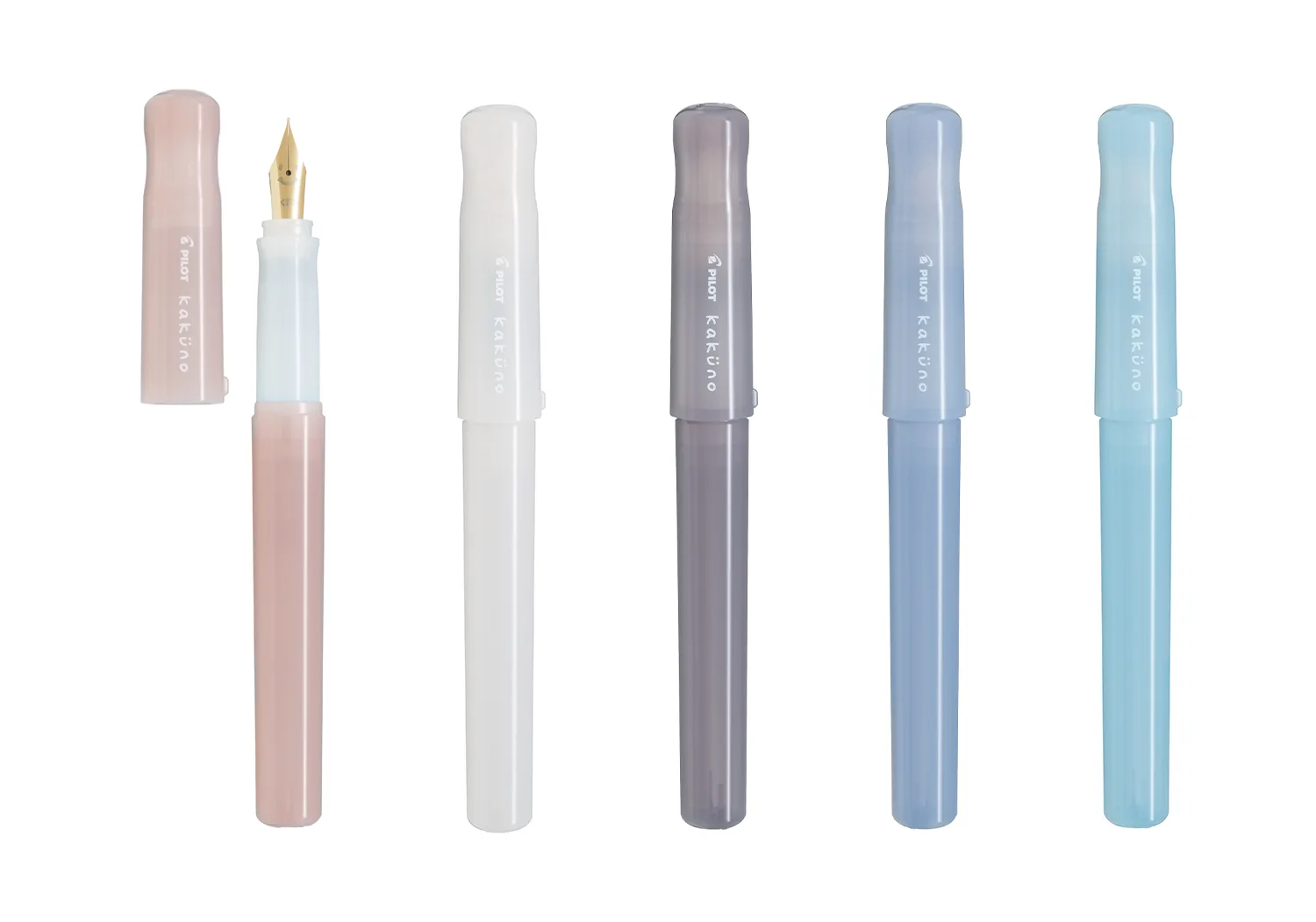
A smiley face engraved on the nib makes it intuitive to tell which way is up, and the hexagonal barrel keeps it from rolling off your desk. The triangular grip encourages a natural hold, making it ideal for children and beginners. The name comes from the Japanese "kakou" (let's write). The nib is steel, but it retains that signature PILOT smoothness.
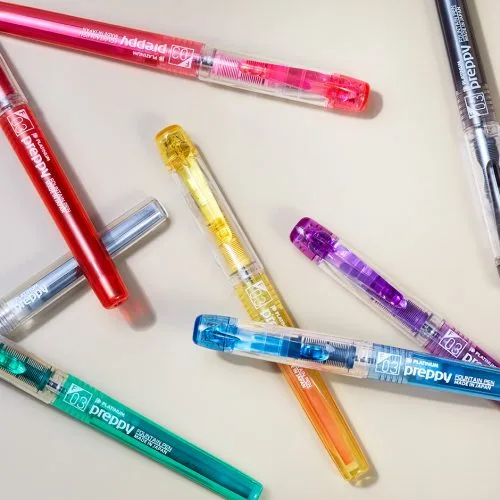
It carries the same Slip & Seal mechanism as the higher-end #3776, so it's ready to write even after sitting unused for several days. With a wide choice of colors and nib widths, and converter compatibility, its rock-bottom price also makes it a favorite as a "test pen" for trying out many ink colors. (Note that the cap hinge is on the weaker side and can crack if handled roughly.)
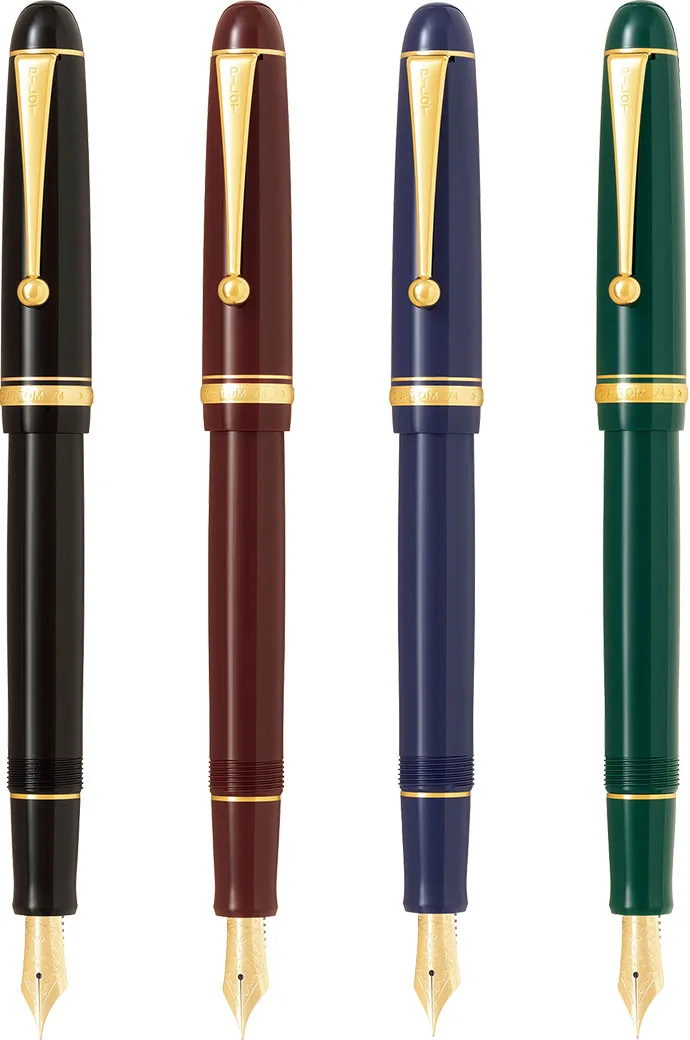
The foundational model of PILOT's "Custom" series, which debuted in 1992. It offers the soft writing feel of a No. 5, 14K gold nib, a light weight of about 17g, and a long barrel (overall length about 143mm) that stays balanced even without posting the cap. Together with the similarly priced #3776 and Profit, it's perennially compared as one of the "big three" entry gold-nib pens.
The model number 3776 comes from the height of Mt. Fuji (3,776m). Thanks to its screw-cap Slip & Seal mechanism, keeping the cap closed can stop the ink from drying out for up to about two years — especially great for occasional users. Its signatures are the heart-shaped breather hole and the 14K nib engraved with a silhouette of Mt. Fuji, and the writing feel is on the crisp, firm side.

Called "Profit" in Japan and "1911" overseas. It's a cigar-shaped classic that feels like the very origin of Sailor, founded in 1911. Its big draws are the 14K nib's calm yet pleasantly springy writing feel, and its excellent pairing with the vast range of ink colors that Sailor excels at.
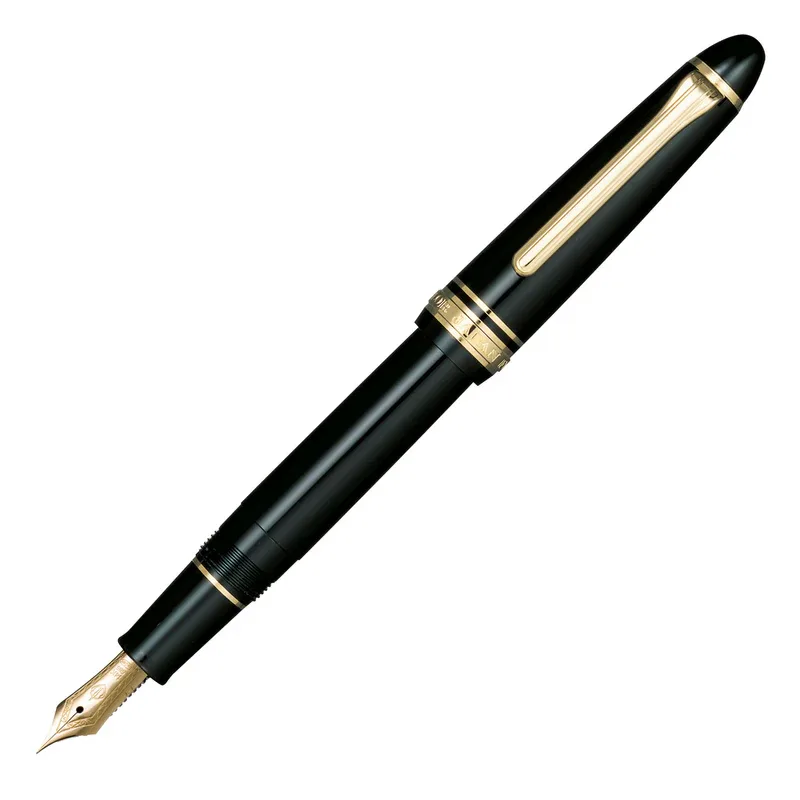
Launched in 2003. Where the 1911 has a round cigar shape, the Pro Gear has a flat top with an anchor mark on the cap crown. The higher-end Standard carries a large 21K nib, while the Slim uses 14K. With its well-judged balance and refined design, it's broadly loved as a workhorse everyday pen.

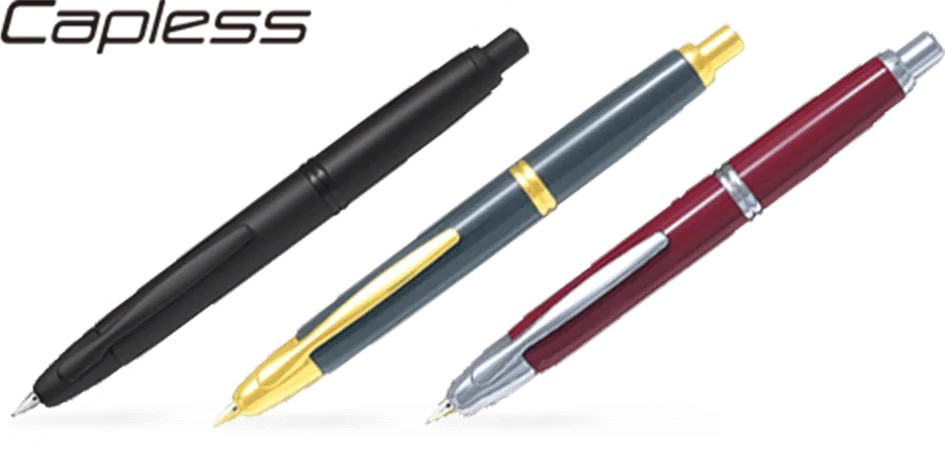
The world's first knock-action (retractable-nib) fountain pen, introduced in 1963. Click once like a ballpoint and the nib extends; when retracted, a shutter mechanism seals the nib to prevent drying. Its unusual design places the clip on the nib side, so opinions are divided — but for people who take frequent notes it's overwhelmingly convenient. It uses an 18K / special-alloy nib, and there are many spin-off models such as the Decimo and Fermo.
Launched in 2000. In Japan, where cartridges are the norm, it rarely adopts a plunger-type (P-type) filling mechanism, letting you draw in a large 1.5ml capacity at once — ideal for prolific writers. Add the rich writing feel of its No. 15, 14K nib and the appeal of a clear barrel that lets you see the ink, and it's counted among PILOT's flagship-class pens.

Comparison Table at a Glance
| Model | Maker | Nib | Filling | Approx. price |
|---|---|---|---|---|
| Kakuno | Pilot | Steel | Cartridge / converter | About ¥1,100 |
| Preppy | Platinum | Steel | Cartridge / converter | About ¥300–500 |
| Custom 74 | Pilot | 14K | Cartridge / converter | About ¥11,000 |
| #3776 Century | Platinum | 14K | Cartridge / converter | About ¥11,000 |
| Profit (1911) | Sailor | 14K | Cartridge / converter | About ¥22,000 |
| Pro Gear | Sailor | 21K / 14K | Cartridge / converter | From around ¥70,000 (gold) |
| Capless | Pilot | 18K, etc. | Cartridge / converter | From about ¥13,200 |
| Custom 823 | Pilot | 14K | Plunger (filling) type | About ¥33,000 |
※ Prices are rough figures based on Japanese list prices (tax included) and may vary by season, exchange rate, and retailer.
Tips for Choosing (Even for Japanese Users)
- Read nib widths as one step finer. Japanese nibs generally run about one step finer than European ones. If you normally use a European F, choosing a Japanese M is a safe approach.
- Go with each maker's signature ink line. PILOT's "Iroshizuku" and Sailor's rich color range (its regional inks) are especially popular with beginners.
- If possible, test-write before buying. We recommend writing for yourself at specialty shops like Nagasawa (Kobe) or Itoya (Ginza) to find the nib that fits your hand.



댓글 0
첫 댓글을 남겨보세요.