Renting a car in Japan isn't simply a matter of choosing a way to get around. Yellow-plate kei cars, lightweight roadsters, flat-engine AWD machines, and JDM sports cars that are hard to see in Korea actually become part of your travel route. Even on the same coastal road, the memory changes depending on which car you drive. Do you want to slip easily through narrow alleys, drive reassuringly over Hokkaido's snow, or grip the wheel of a dream car for just one day? With that in mind, I've picked ten unique rental cars worth trying at least once in Japan.
First, check this — a Korean license alone won't let you drive
For a short-term traveler to drive in Japan, you generally need to prepare your Korean driver's license, your passport, and an International Driving Permit in the Geneva Convention format (the booklet type) together. An English-language driver's license and an International Driving Permit are different documents. The International Driving Permit must be issued before you leave the country, and there's a limit on the period you can drive in Japan counted from your entry date, so if your trip is long, be sure to check the official guidance.
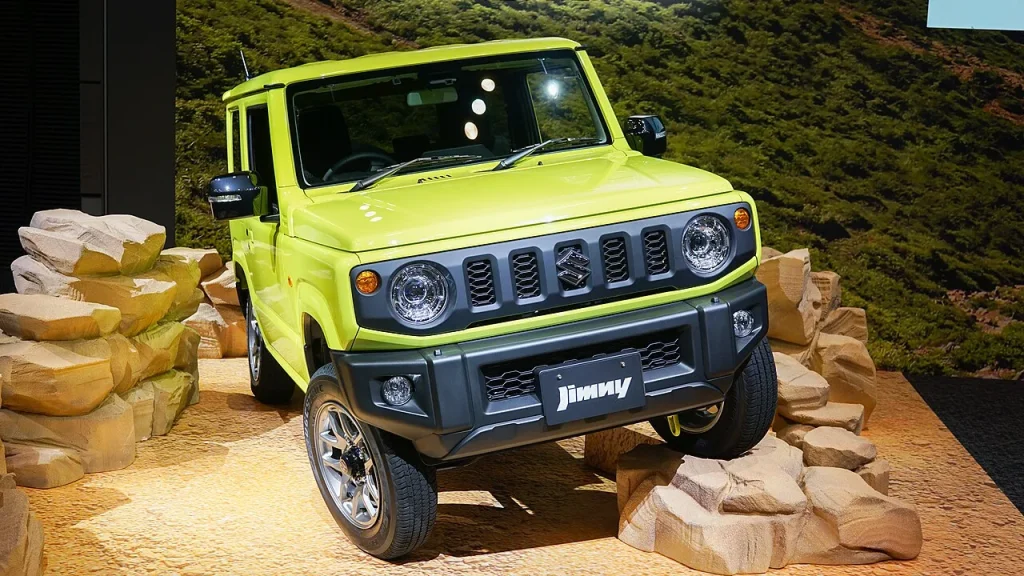
Suzuki Jimny
A genuine four-wheel drive packed into a kei-car size

The Jimny isn't a cute car because it's small — it's a sharper off-roader precisely because it's small. The kei-spec JB64 uses a 660cc engine, but with its ladder frame and part-time 4WD, the structure is quite serious. With its boxy body and high view, it's an especially good match for places where the scenery opens up wide — the Irabu Bridge on Miyakojima, Hokkaido's country roads, Okinawa's coastal routes.
That said, renting a Jimny doesn't mean you can immediately tear up any mountain trail you like. Ordinary rental agreements often restrict driving on unpaved roads or off-road. If you have dirt roads in mind, you should look for a specialist shop that explicitly allows off-road driving. If you want a slightly roomier, more relaxed car, the 1.5L Jimny Sierra is also a good choice.
Subaru Flat (Boxer) Engines
Forester · Outback · Levorg — the cars you remember most when the weather turns rough

The fun of renting a Subaru in Japan lies in feel rather than figures. The low, stable motion created by the flat engine lying on its side and the symmetrical AWD. The cars travelers are most likely to actually encounter are SUVs and wagons like the Forester, Outback, Levorg, and Crosstrek rather than sports models like the WRX. And that, in fact, suits travel well.
When it rains or the snow piles up, Subaru's strengths become even clearer. In regions like Hokkaido where the roads are long and the weather is highly variable, the generous ground clearance, stable AWD, and snow-assist modes of the Forester and Outback feel reassuring. The Levorg and Layback have a more passenger-car feel, which is good for long stretches of paved road, but if you're thinking about deep snow, the SUV lineup gives more peace of mind.

A point that comes up often in reviews
The reviews from people who rented a Forester or Outback in Hokkaido are mostly similar. "Not fast" comes second to "not nervous." It's repeatedly mentioned that the car stays composed in heavy rain, slushy melting snow, and on long mountain passes, and that the family is less tense in the back seats.
Of course, four-wheel drive isn't a cure-all. Studless tires, controlling your speed, and keeping your distance come first. It's better to see Subaru as a choice that adds a little more peace of mind on top of those basics.
Nissan GT-R · Skyline GT-R
The wheel you've wanted to grip at least once

The GT-R is the most unabashed dream car on a Japanese rental list. The R35 is Nissan's iconic car, combining a 3.8L V6 twin-turbo with four-wheel drive. Even without knowing its circuit records or peak output, the low-crouched body and thick torque alone give you the sense that "today is no ordinary rental."

The R34 Skyline GT-R is even more special. Its RB26 inline-six twin-turbo, the iconic status built by films and games, and a rarity that now makes it hard to see even in Japan, all overlap. There are sports-car specialist rental shops in Tokyo and Hakone that handle the R32, R34, and R35, but stock and conditions change all the time.
Toyota GR Yaris · GR86
Cars that let you taste a motorsport feel on the road

The GR Yaris isn't an ordinary Yaris dressed up a little. It's a three-door hatchback born with rally regulations in mind, with a 1.6L three-cylinder turbo and four-wheel drive bound tightly into a small body. The feeling of the car changing direction lightly on a narrow mountain road is this car's essence.

The GR86 offers fun of a slightly different kind. An FR coupe with a 2.4L boxer engine up front driving the rear wheels. Its appeal is balance and attitude control rather than a power contest. On roads where the corners keep coming, like Hakone or Izu, there's a pleasure in reading with your fingertips how the car moves, even without putting on much speed.
Mazda Roadster (MX-5)
Jinba ittai with the top down

The Mazda Roadster isn't so much a fast car as a car that teaches you the joy of driving. It's light, the body is small, and the roof opens. So when you drive a coastal road, the wind, the engine note, and the feel of the tires reading the road all come in at once. Mazda's phrase jinba ittai ("horse and rider as one") didn't come out of nowhere.
Its rental accessibility is good too. It shows up relatively often at sports-car specialist rentals and some regional rental shops, and it pairs especially well with wide-open-sky roads like the Izu Peninsula, Aso, and around Hokkaido's national parks. But since the trunk is small and it's a two-seater, it suits a one-day drive course more than being the main car for an entire trip.
Honda S660 · Daihatsu Copen
A genre found only in Japan: the kei open-top sports car

The S660 and Copen come closest to the most "local" sports car on a Japanese rental trip. After all, they're cars that cram an open top, a low body, and a small engine into the 660cc kei spec. The S660's midship layout gives a strong sense of the driver sitting at the car's center, while the Copen's electric hardtop and charming design give it a slightly brighter character.
Neither is a car that persuades you with numbers. Instead, on Japan's narrow roads, at low speeds, and in short corners, they offer a density that a big car can't. The mere fact that this is a genre hard to experience in Korea is reason enough to rent one.
Honda S2000 · NSX
The dream garage of a JDM kid

The S2000 is one of the cars Honda made in its most Honda-like way. A high-revving naturally aspirated engine, a short shift feel, the honest motion of a front-engine rear-drive roadster. Its appeal isn't a car that pushes with turbo power, but a character that comes alive more and more as the revs climb.

The first-generation NSX is a legend of a different grain. An aluminum body, a midship engine, and the idea of "a supercar you can drive every day." Honda's attitude — aiming at Ferrari while trying to make the car easy to handle — still feels fresh today. Cars like these are heavily affected by the number in stock and maintenance schedules even at specialist shops, so rather than building your trip's central itinerary around them, it's more realistic to plan your route around the dates they're available.
Minivans · Kei Campers
A car-camping trip: drive, eat, and rest right where you are

In Japan, the shachuhaku (車中泊) culture of sleeping inside your car is fairly deeply rooted. So the camper rental options are diverse too. From the low-cost kei camper, to the "van-con" built from a converted minivan, to the "cab-con" with a living space mounted on a truck, you can choose to match your group size and route.
The advantage of a camper is that you have to change accommodation less, and that you can set the rhythm of your trip yourself. It's especially appealing in regions like Hokkaido where the travel distances are long and the natural scenery is wide. But car-camping doesn't mean "you can sleep anywhere." It's safer to decide in advance on bases like RV parks, auto-camping grounds, and rest areas where overnight stays are allowed.
Toyota Alphard · Vellfire
The king of minivans, a lounge on the move

Sometimes, on a trip, your passengers' comfort matters more than driving fun. That's when the Alphard and Vellfire are the answer. Thanks to the spacious second row, quiet interior, and smooth ride, the time spent moving from the airport to your lodging, or from a hot-spring town to the next city, becomes less tiring. That's exactly why they're so often used as VIP and shuttle vehicles in Japan.
For family trips, itineraries with your parents along, and golf or ski trips with lots of luggage, a minivan like this can be a far better choice than a sports car. The driver has to mind the large body and tight parking lots, but the satisfaction of the back-seat passengers is assured.
Japanese Kei Cars (N-BOX · Hustler)
The most Japanese everyday life: the yellow license plate

Flashy cars aren't the only special ones. The most Japanese rental experience in Japan might actually be a yellow-plate kei car. The 660cc spec, the small body, the high interior, and the low running costs. Because it's a lifestyle car that evolved to fit Japan's road environment, its strengths show up immediately in narrow alleys and small parking lots.

The N-BOX has an interior so tall and roomy it's hard to believe it's a kei car. The Hustler has the impression of a little SUV, and pairs well with light outdoor trips. If your travel distances aren't long and you're a group of about two or three, it can be the most sensible choice. Driving Japan's "ordinary car" itself becomes a scene of the trip.
What you absolutely should know before renting
① Driving qualifications · documents
- Prepare the basic three: the International Driving Permit (booklet type) + your Korean driver's license + your passport. If even one of the three is missing on site, the rental can be refused.
- Japan goes by the International Driving Permit in the Geneva Convention format. An English-language driver's license cannot substitute for an International Driving Permit.
- Don't confuse the validity periods. The validity of the International Driving Permit itself and the period you can drive after entering Japan must be checked separately. For long-term residents, the conditions can differ.
② Roads · driving habits
- Left-hand traffic · right-hand drive: at first, keep reminding yourself that "the center line is on my right." Mistakes happen often when returning to your lane after a turn.
- A stop sign means a complete stop. At a tomare (止まれ) sign or a flashing red signal, bring your wheels to a firm stop and then check your surroundings.
- Pedestrians have priority, and seat belts in all seats are standard. If you're traveling with children, it's good to check the child-seat requirements in advance too.
③ Insurance · booking
- Check the CDW (collision damage waiver) and NOC. If there's an accident, beyond the repair cost there can be a charge in the nature of compensation for lost business (NOC). Read the coverage scope and your deductible first.
- Sports cars come with tighter terms. Age, license history, deposit, mileage limits, and pre-return inspection standards are often stricter than for an ordinary rental.
- Popular models sell out fast. Cars with a clear purpose — the Jimny, the Roadster, the GT-R, campers — are best searched for the moment your schedule is set.
A good rental car makes a trip easier, but sometimes it changes the very expression of the trip. Drive a Jimny and the smell of the roadside earth comes closer; drive a Roadster and the sound of the wind becomes clearer than the itinerary; drive a kei car and Japan's everyday life comes a little nearer. Once you've decided which road you'll drive on this trip, pick the one car that suits that road.
Driving-prep references
Photo sources: Wikimedia Commons. Suzuki Jimny · Honda S660 · Honda NSX · Toyota Alphard · Honda N-BOX · Suzuki Hustler ⓒ TTTNIS · 先従隗始 (CC0) / Subaru Forester ⓒ Dinkun Chen, Subaru Outback ⓒ Alexander Migl, Nissan GT-R ⓒ Dinkun Chen, Skyline GT-R R34 ⓒ Calreyn88, Toyota GR Yaris ⓒ Alexander Migl, Mazda MX-5 ⓒ Benlisquare, Honda S2000 ⓒ Mohammed Hamad (CC BY-SA 4.0) / Toyota GR86 ⓒ Charles (CC BY 2.0) / camping car (Public domain). Prices and rental terms can vary by company and season, so check again when booking.
댓글 0
첫 댓글을 남겨보세요.