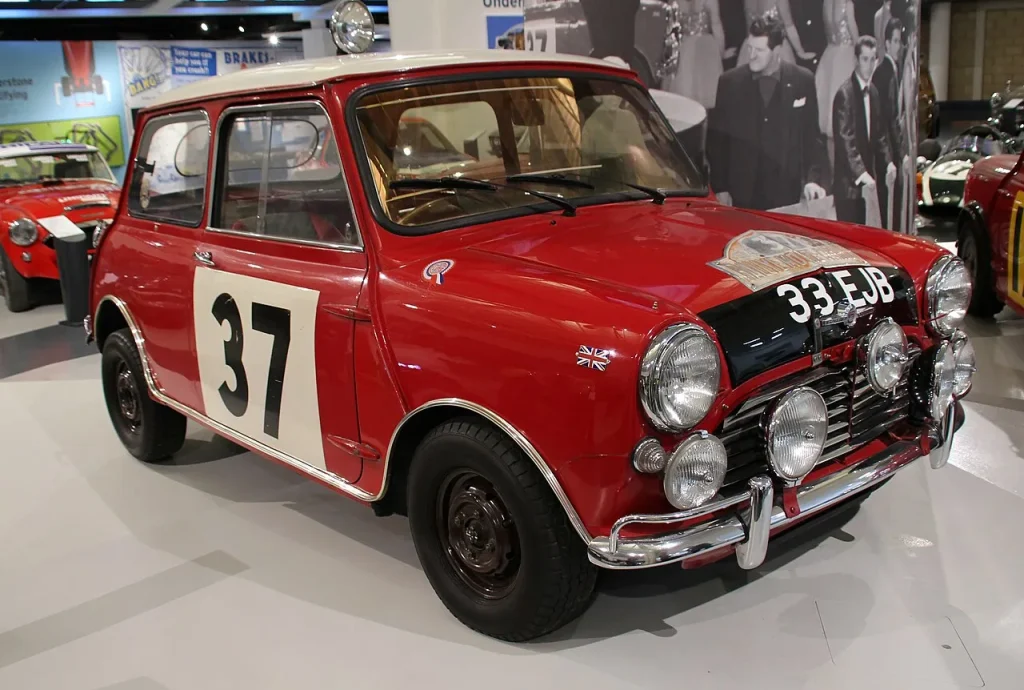
The MINI isn't famous simply for being small. It has endured because it's a car that pushed space, humor, agility, and cultural symbolism to the limit within a tiny body. Born in 1959 amid Britain's fuel crisis, this three-meter car beat the heavyweights of the Monte Carlo Rally, passed through cinema and street culture, and was reborn as the premium small car of the BMW era. The MINI's six-plus decades ultimately lead to a single question: is being small really a limitation, or a pressure to build more cleverly?
CHAPTER 01An Invention Born of Crisis
After the Suez Crisis of 1956, Britain faced a fuel shortage. The mindset of an era that comfortably drove big cars suddenly looked dated, and a small, efficient car became an urgent need. Leonard Lord, head of BMC (the British Motor Corporation), handed engineer Alec Issigonis a simple but difficult task: build a small car that could carry four adults, sip fuel, and come at a price an ordinary person could afford.
Issigonis was a Greek-British engineer born in Smyrna, today's Izmir. The anecdotes — that he failed his math exams several times, that he once said "pure mathematics is the enemy of every truly creative man" — make him look like an eccentric genius. But what mattered more in the MINI wasn't eccentricity, it was tenacity. He didn't stop at making a small car small; he set out to fit a large interior inside a small exterior.
His solution was quite bold by the standards of the time. He mounted the engine transversely and had it drive the front wheels. He pushed all four wheels out toward the corners of the body. The space gained that way was given back to people and luggage. It's a familiar grammar in today's front-wheel-drive small cars, but back then it was a design that forced people to rethink the basic layout of the automobile.

The result was a car that fit four adults and their luggage inside a box just over three meters long. The goal of devoting most of the body's volume to the cabin was realized as actual structure. To save costs, the door hinges and weld seams were left exposed on the outside, and instead of conventional metal springs it used Alex Moulton's rubber-cone suspension. The anecdote that the door bins were sized to fit the ingredients of the dry martini Issigonis loved shows just how much the MINI combined practicality with a sense of play.
On August 26, 1959, the car appeared simultaneously under two names: the Austin Seven and the Morris Mini-Minor. Front-wheel drive, a transverse engine, small wheels at the corners, short overhangs. These four ingredients came close to becoming the standard for small-car design that followed. That's why the MINI is less a merely cute car than an invention that changed the benchmark for automotive packaging.
The Classic Mini, by the Numbers
- Debut
- August 26, 1959 (BMC, UK)
- Designer
- Alec Issigonis
- Layout
- Transverse engine · front-wheel drive · 10-inch wheels
- Production run
- 1959–2000 (about 41 years)
- Total built
- About 5.3 million — a long-lived model that defines British automotive history
CHAPTER 02The Go-Kart Feel, and John Cooper
Issigonis's MINI was originally a thrifty city car. But one man who drove this little car saw an entirely different possibility: John Cooper, who led an F1 team. He immediately recognized the agility created by the MINI's short wheelbase, low center of gravity, and wheels planted at all four corners. He saw that it could be not an economy car, but a car that made you grin in the corners.
BMC's management was skeptical at first. But Cooper pushed to add a stronger engine, better brakes, and a sharper chassis setup to the MINI. That's how the Austin Seven Cooper and Morris Mini Cooper arrived in 1961, soon followed by the even stronger Cooper S. The 'go-kart feel' that MINI fans still talk about was created at exactly this point.
If Issigonis was the man who stripped away the excess, Cooper was the man who filled the resulting space with the joy of driving. Their personalities were different, but in the end they completed each other. The MINI turned from a cheap means of transport into "a car you wanted to drive on purpose," proving that even a small car could be seriously fun.
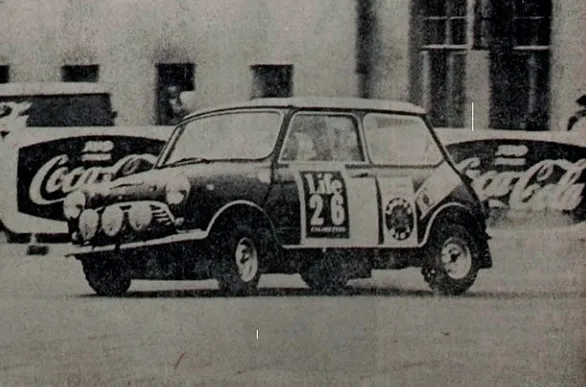
"It was just a small family saloon, but technically it had clear strengths." — Paddy Hopkirk
CHAPTER 03The David of Monte Carlo
The stage where the MINI's legend was written most dramatically was the Monte Carlo Rally. In January 1964, a red Mini Cooper S climbed the snow- and ice-covered Alpine roads. Its rivals were far larger and more powerful cars like the Ford Falcon and the Mercedes-Benz 300 SE. Judged by displacement and power alone, it wasn't a fight the MINI was likely to win.
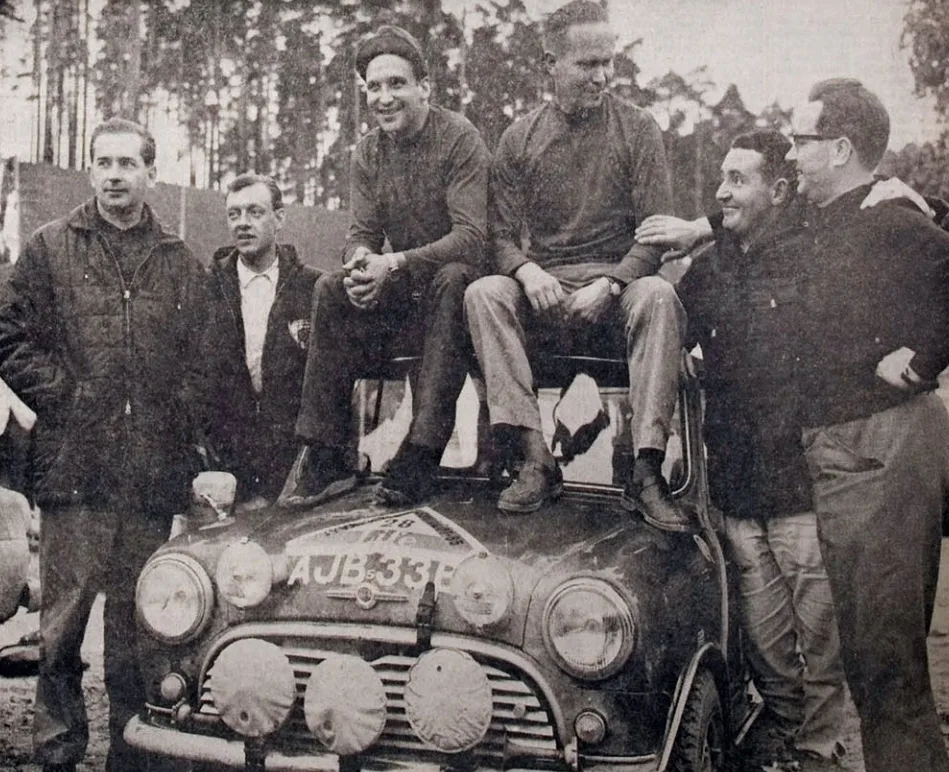
But a rally isn't a contest decided by numbers alone. A light body, front-wheel drive, and a short body turned into strengths on the snow. The MINI found a rhythm on the narrow, slippery mountain sections that the big cars had lost, and Paddy Hopkirk and co-driver Henry Liddon finally took the overall victory. The image of a small car beating big cars became a perfect brand story in itself.
This success didn't end as a one-off. In 1965 Timo Mäkinen, and in 1967 Rauno Aaltonen, again reached the top at Monte Carlo. In 1966 the MINIs swept the leading positions only to be disqualified over an auxiliary-lamp regulation dispute, but that incident only grew the public's support for the MINI. It was a victory that may have disappeared from the result sheet, yet remained all the clearer in people's memory.
The Mini's Monte Carlo Rally Victories
- 1964
- Paddy Hopkirk · Henry Liddon (first overall win, car number #37)
- 1965
- Timo Mäkinen · Paul Easter
- 1966
- Swept the leading places, then disqualified for an auxiliary-lamp rule violation
- 1967
- Rauno Aaltonen · Henry Liddon (third win overall)
CHAPTER 04Screen and Street: A Car That Became Culture
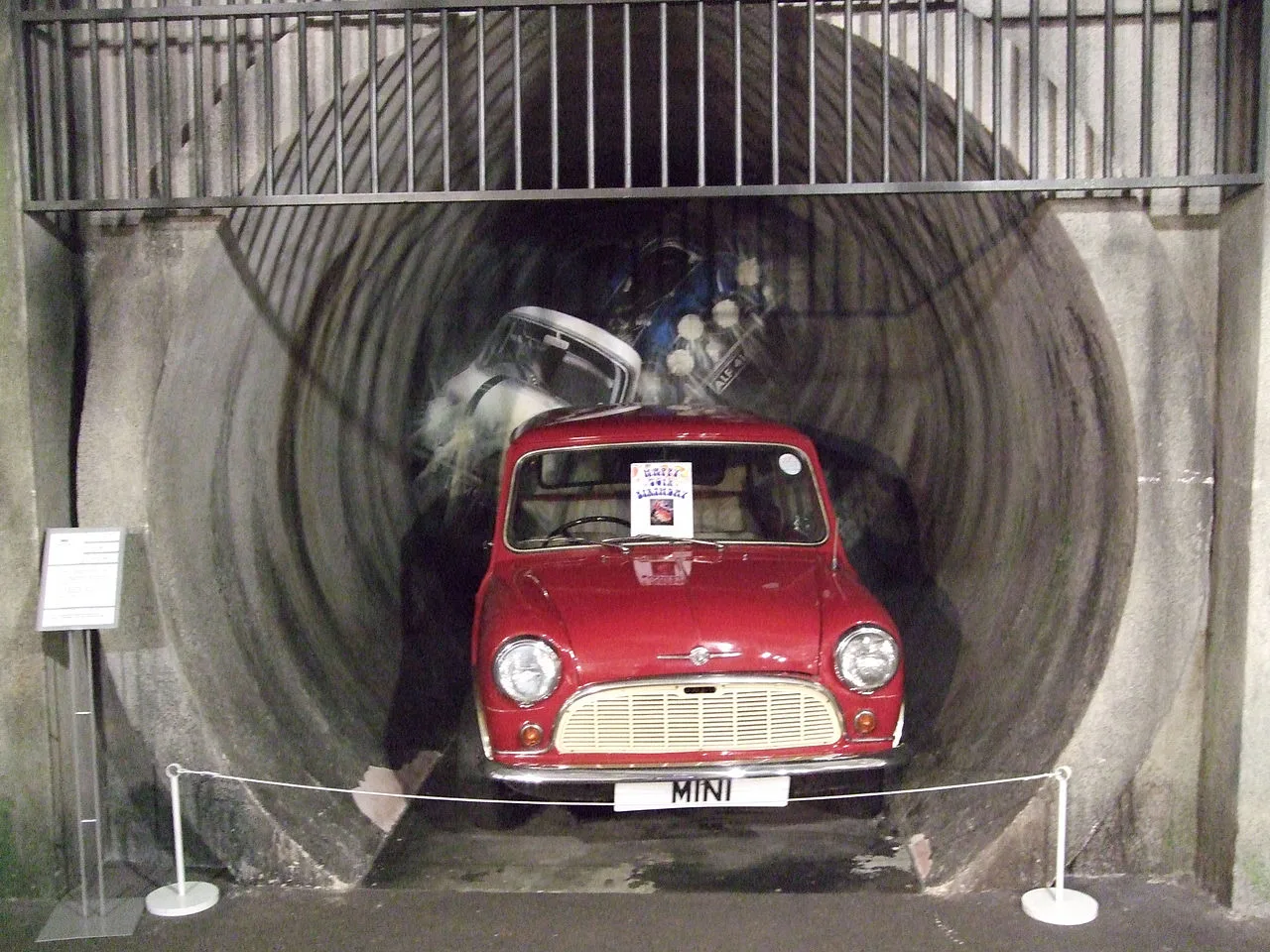
What makes the MINI special can't be explained by performance alone. It exerted even greater power off the track. In the 1969 film The Italian Job, three MINIs raced across staircases, tunnels, and rooftops, transforming the whole rhythm of the movie. The very fact that the star of the car chase was not a big muscle car but a little MINI captures the character of this car vividly.
Mr. Bean's lime-green MINI became part of the character, and in 1960s London the MINI was both the worker's wheels and the celebrity's plaything. David Bowie wrapping a classic MINI in chrome for the brand's 40th anniversary belongs in the same vein. The MINI was neither a car kept distant by its price nor one casually consumed because it was cheap. It was a rare object that anyone could recognize, yet each person could love differently.
CHAPTER 05The Vanished Mini, and BMW
In October 2000, the last classic MINI left the production line. About 5.3 million cars over 41 years. The final car, a red Cooper Sport, was driven out by the singer Lulu herself. The scene was received not as a simple discontinuation announcement, but as the closing of an era in British popular culture.
The next chapter opened in Germany. BMW gained the MINI brand when it acquired the Rover Group in 1994. Afterward, while winding down most of the Rover business, it kept the MINI alone. Rather than simply making a small car cheaply, it saw that it could turn the MINI into a premium small car by adding design, feel, and a personalized experience.

Previewed as a concept in 1997, the new MINI was unveiled at the 2000 Paris Motor Show and entered series production at the Oxford plant on April 26, 2001. Frank Stephenson, who led the design, kept only the essential impression of the classic MINI and translated the rest into modern form. Round headlamps, short front and rear overhangs, wheels pushed out to the edges of the body, a stance planted firmly. Anyone could see it was a MINI, yet it was no longer the car of 1959.
At first there were doubts about a "small, expensive car." But the modern MINI found its place faster than expected. People began to read not mere thrift but taste and identity in a small car. That's also why the MINI was able to survive as an independent brand within the BMW Group. The MINI was a car that didn't compete on size but was remembered for how it felt.
"We wanted the first impression to be 'this can only be a MINI.'" — Frank Stephenson, designer of the modern MINI
CHAPTER 06The Mini of Today
Since 2024, the MINI has been reorganized into a new generation of family. The 3-door and 5-door Cooper, the Convertible, the larger Countryman, and the new electric crossover Aceman form the current core of the MINI. The Aceman in particular is an electric car positioned between the Cooper and the Countryman — a model in which, after the Clubman disappeared, the MINI reinterpreted space and electrification anew.
The changes inside are big too. A round OLED screen reminiscent of the classic MINI's central instrument cluster sits at the center, buttons are reduced, and textile finishes and the digital experience come to the fore. The MINI explains this with the design language "Charismatic Simplicity." The point is simple: pare away the decoration, but keep the face that looks distinctly MINI.
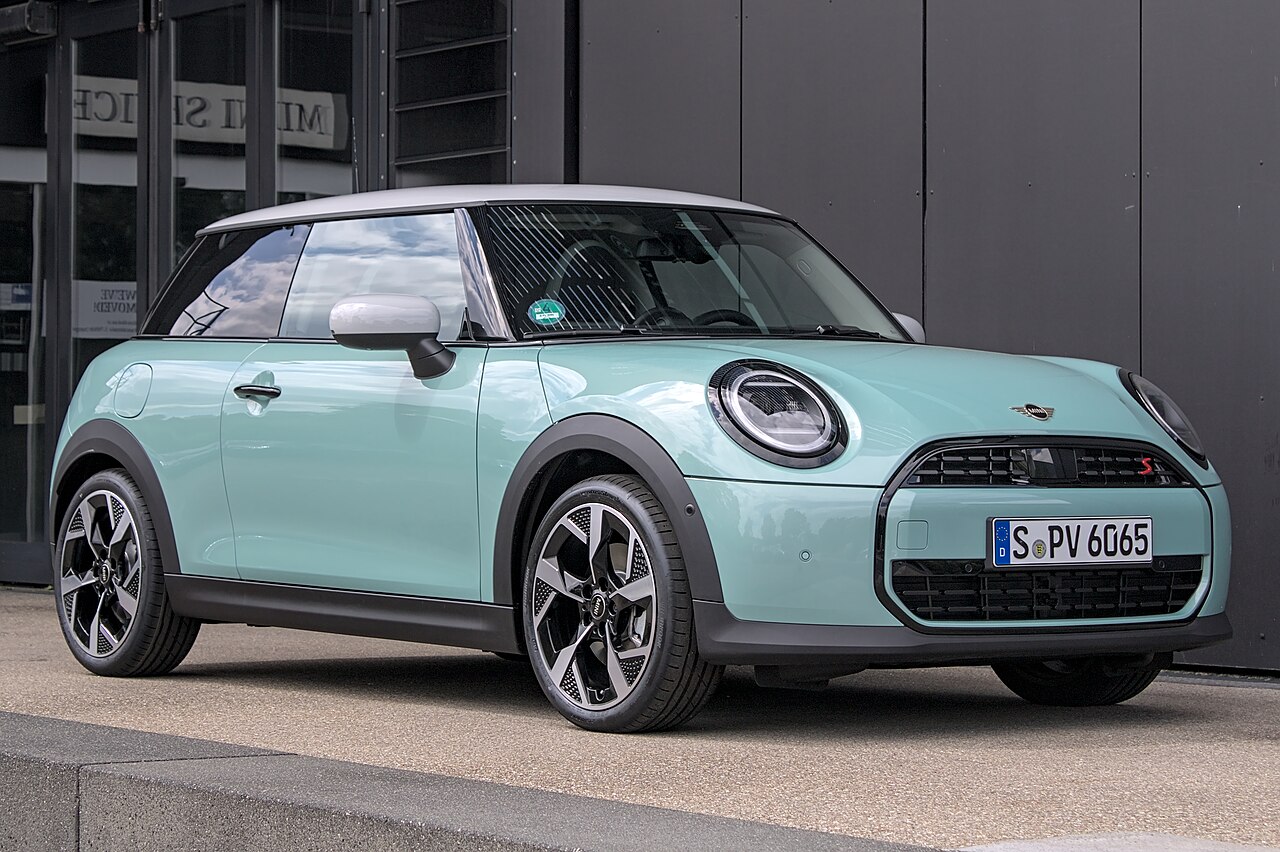
The powertrain can no longer be described in a single direction. Depending on the market and the model, turbocharged gasoline and electric motors run in parallel. The electric lineup has clearly expanded — the Cooper E/SE, the Countryman E/SE ALL4, the Aceman E/SE — but at the same time, in some markets the combustion-engine Cooper and JCW continue to play important roles. The direction toward electrification is clear, but the actual pace of transition is being adjusted to suit demand and production plans market by market.

2026 is the year the modern MINI turns 25. So it's only natural that the MINI has recently been bringing back the memory of Monte Carlo. The '1965 Victory Edition', honoring the 1965 win, borrows the memory of Chili Red with white accents and a race number to dress the current Cooper S, JCW, and electric JCW in heritage. Rather than simply repeating the past, it's a way of laying the story the MINI has long preserved back onto the cars on sale today.
TIMELINEThe Mini Timeline at a Glance
| Year | Event |
|---|---|
| 1959 | The classic MINI debuts, designed by Alec Issigonis (Austin Seven · Morris Mini-Minor) |
| 1961 | The high-performance Mini Cooper appears via John Cooper's hand (later the Cooper S) |
| 1964 | Paddy Hopkirk takes the first overall Monte Carlo Rally win — the small car's revolt |
| 1965 | Timo Mäkinen wins Monte Carlo for the second year running |
| 1966 | Sweeps the leading places, then is disqualified for an auxiliary-lamp rule violation (controversy) |
| 1967 | Rauno Aaltonen takes a third overall Monte Carlo win |
| 1969 | The film 'The Italian Job' is released — the MINI becomes a pop-culture icon |
| 1994 | BMW secures the MINI brand in the course of acquiring the Rover Group |
| 2000 | The last classic MINI is built — ending about 41 years of production |
| 2001 | Series production of the modern MINI (R50) begins at the Oxford plant — the start of the premium small car |
| 2024 | The new MINI family is rolled out in earnest — Cooper · Countryman · Aceman, gasoline and electric in parallel |
| 2026 | The modern MINI's 25th anniversary — heritage and electrification carry the brand's narrative on together |
EPILOGUEWhat the Small Car Has Protected
The MINI's appeal has never lain simply in its size. A design that reinvented space amid crisis, the nerve to beat strong cars with a weak one, a character that moved lightly across class and taste. All of it is compressed inside that small body. That's why the MINI is less a "small car" than "a car that knows how to make things small."
Even as the gasoline engine gives way to the electric motor and the analog instrument cluster gives way to a round OLED screen, what the MINI must not lose is clear. Wheels at the corners, an agility the driver notices right away, an attitude that focuses on what's necessary. To look at a MINI, then, is not to look at the history of one car. It's to look at the history of an idea — making the most fun out of the least.
Sources: BMW Group PressClub's MINI Timeline 2001–2026, The new MINI Aceman, The new MINI Family, official MINI/BMW materials, Wikipedia (Mini / Mini marque / Alec Issigonis), bmwblog.com, motoringfile.com, and others. The images in this article retain the freely licensed (CC / public domain) Wikimedia Commons photos from the original post, with the source and license noted in each caption.

댓글 0
첫 댓글을 남겨보세요.