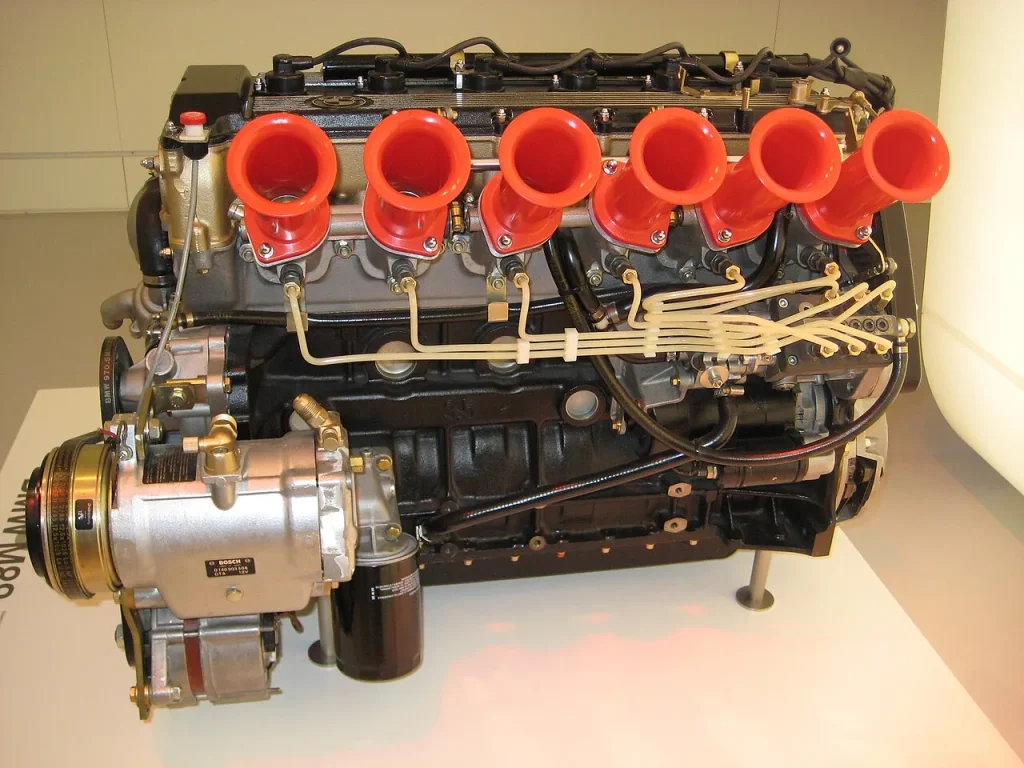
Stand a coin on its edge atop the engine. Start it up and bring the revs up. And yet the coin doesn't fall. This scene, never missing from any talk about the inline-six, isn't an exaggeration but a result of physics. The reason BMW has held on to this layout for nearly 90 years, and the reason enthusiasts cherish it under the name Silky Six, lies right inside that unshakable spin.
When you picture BMW these days, the kidney grille, rear-wheel drive, or the M badge might cross your mind first. But the brand's true backbone is the six cylinders laid out lengthwise beneath the bonnet. From a small 1.2-liter to becoming the heart of the Supra, the inline-six has survived as BMW's very identity. Today we take a look at how this engine erases the shudder, and at which legendary engines have carried that lineage forward.
Why it doesn't shakeWhy the Six Doesn't Shake
Most engine vibration arises when the pistons reverse direction up and down. The inertial force at the instant they stop and turn back spreads into the body and becomes noise and shudder. A four-cylinder trembling finely at idle, or a V6 having its characteristically coarse texture, both come from failing to erase this inertial force completely.
The inline-six solves this problem through structure itself. The six cylinders are bound into three pairs — 1 and 6, 2 and 5, 3 and 4 — with each pair moving in the same phase while the three pairs spin offset by 120° each. As a result, the engine becomes mirror-symmetrical front to back. The inertial force that cylinder 1 generates is caught precisely, as if in a mirror, by the distant cylinder 6, and the same goes for 2-5 and 3-4. The shaking forces and the twisting forces cancel one another out before they can add up.
In technical terms this is called the complete cancellation of first- and second-order inertial forces. The front three cylinders and the rear three move in pairs with a 360° phase offset, erasing the side-to-side shaking force (first-order balance), and as the crank throws are arranged across three planes 120° apart, even the finer shudder (second-order balance) converges to zero all the way up through sixth-order vibration. Even among sixes, the V6 cannot reach this perfect first-order balance. Here lies the secret to why the inline-six spins smoothly without an auxiliary balance shaft.
With no vibration, it can spin cleanly to higher revs. Smoothness is itself a higher rev limit and headroom for power.
A 90-year lineageA Lineage Carried On for 90 Years
BMW's bond with the inline-six goes back to 1933. The first production six, the M78, was fitted to the BMW 303, with a displacement of 1.2 liters and an output of just 30 horsepower. After that, as displacement grew, it spread into pre-war sedans and sport models like the 315, 319, 326, and 327. The numbers may look modest, but the layout settled on here became the brand's skeleton for the 90 years that followed.
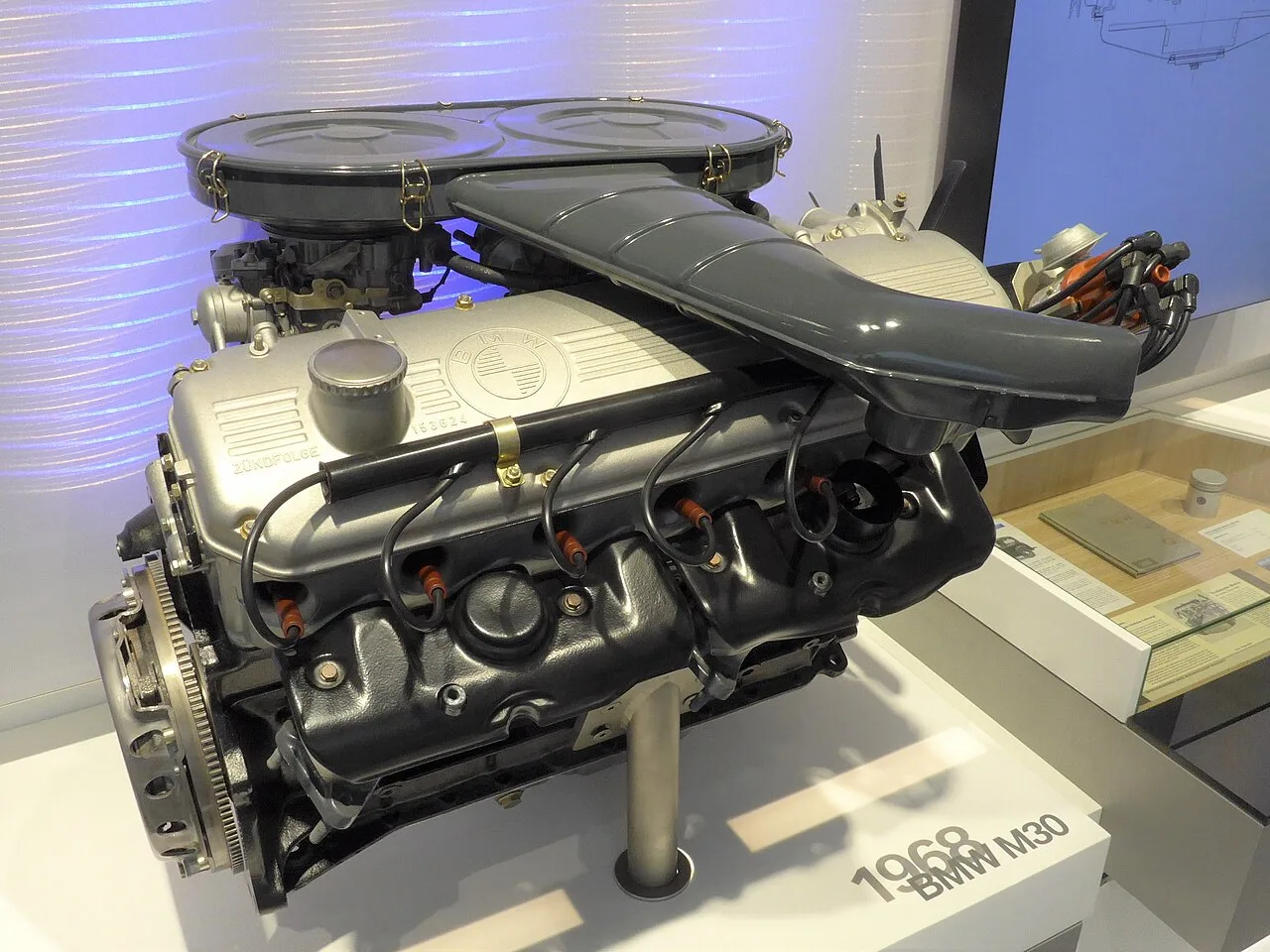
The force that brought post-war BMW back to life was the M30 of 1968. This engine, which enthusiasts call the Big Six, was built for a remarkable 24 years and went into the 7 Series, the 6 Series coupé, and the 5 Series alike. It was also the starting point where BMW imprinted the formula "six cylinders = smoothness" onto the market.
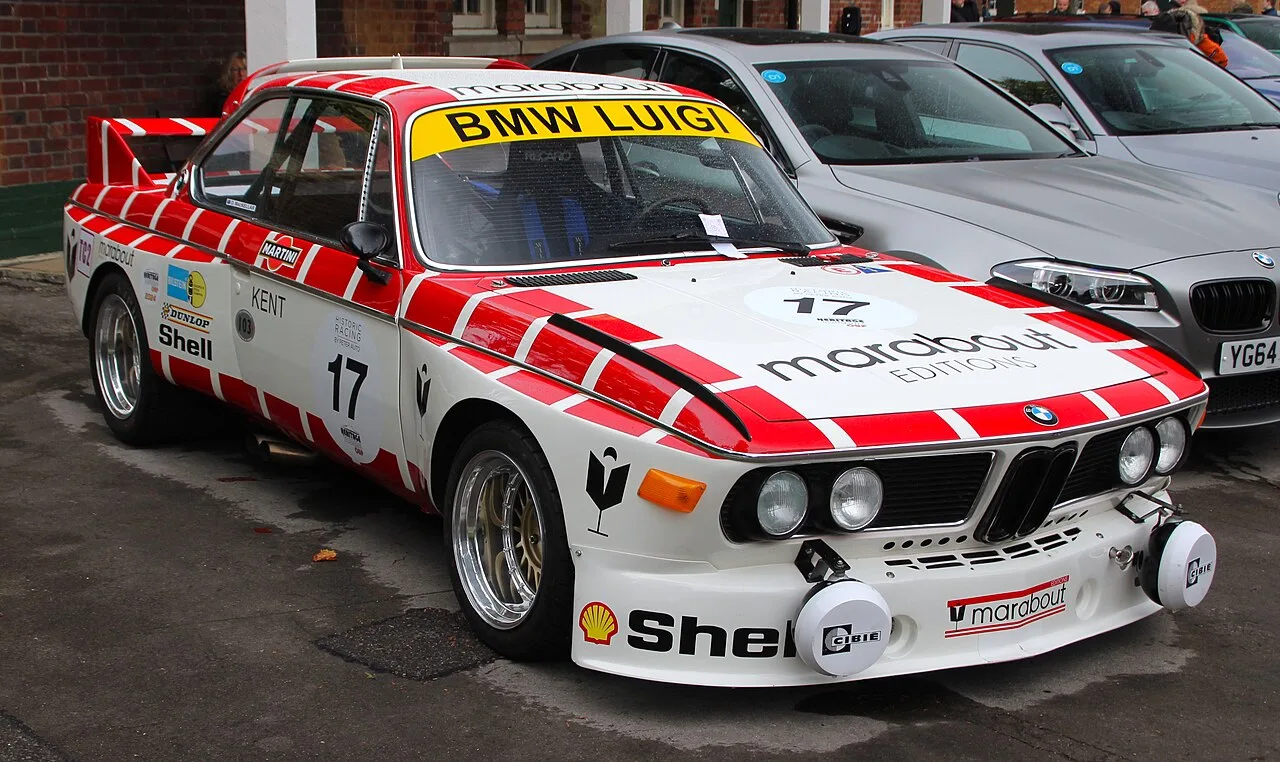
M88 — Becoming the Heart of a Supercar
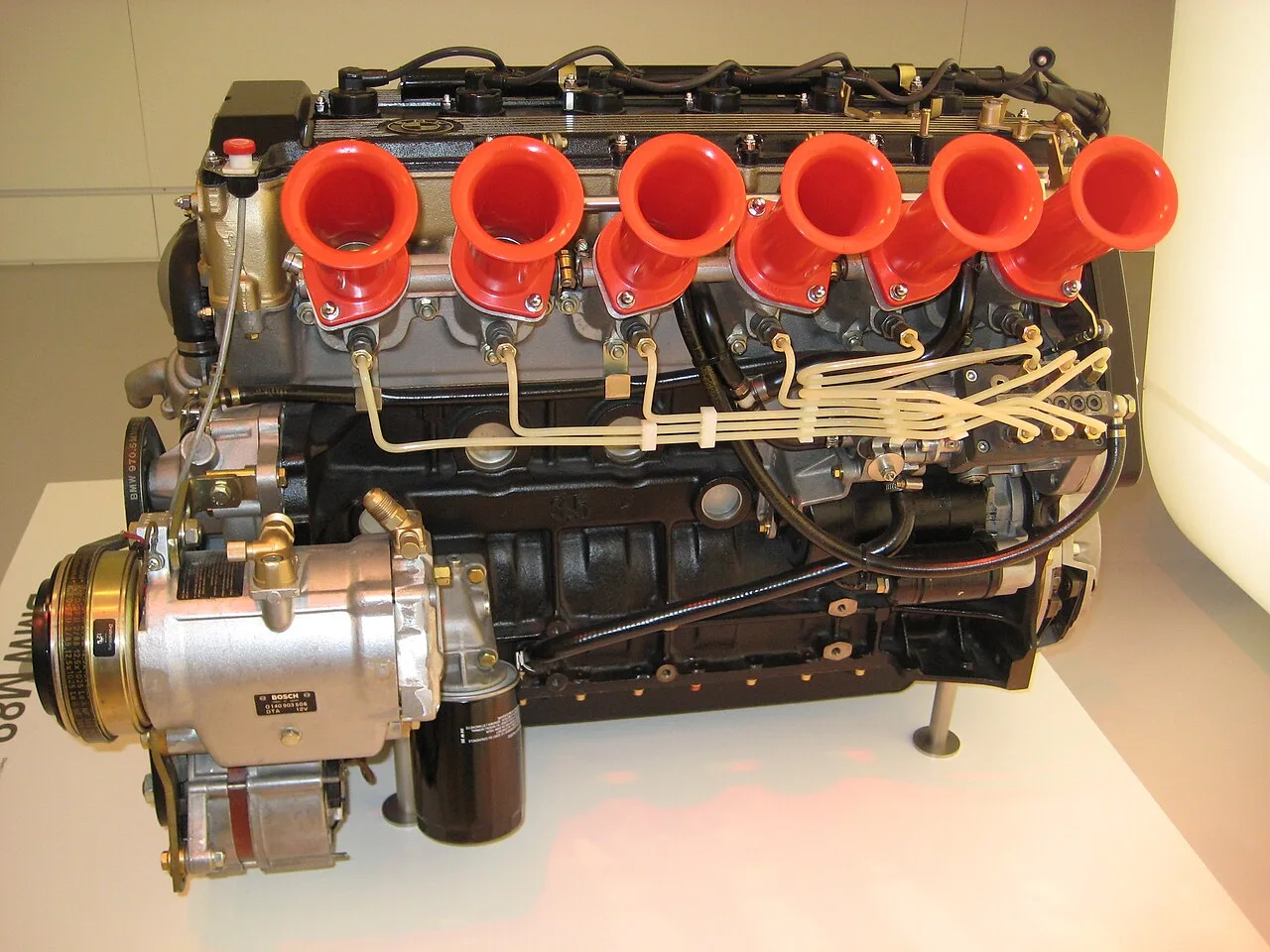
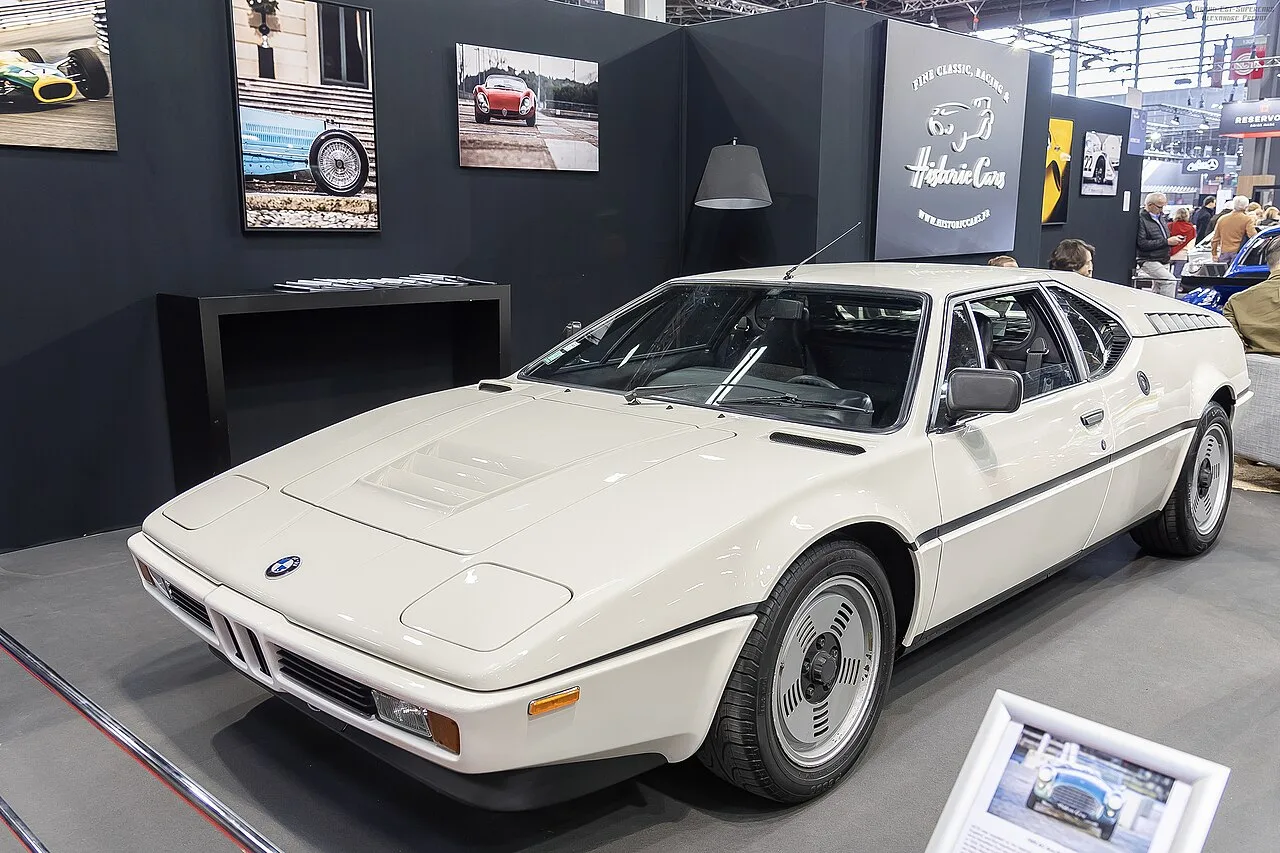
Built on the M30 block but topped with a DOHC 4-valve head, the M88 (1978–1989) was the heart of the M1, BMW's only mid-engined supercar. With its elaborate setup of individual throttle bodies for each cylinder, it pulled 277 horsepower at 6,500 rpm, and it later evolved into the M88/3, which went into the E28 M5 and the E24 M635CSi and climbed to as much as 315 horsepower. This bloodline, carried on into the later S38, deserves to be called the archetype of the "M Division inline-six."
S54 — The Pinnacle of High-Revving Natural Aspiration
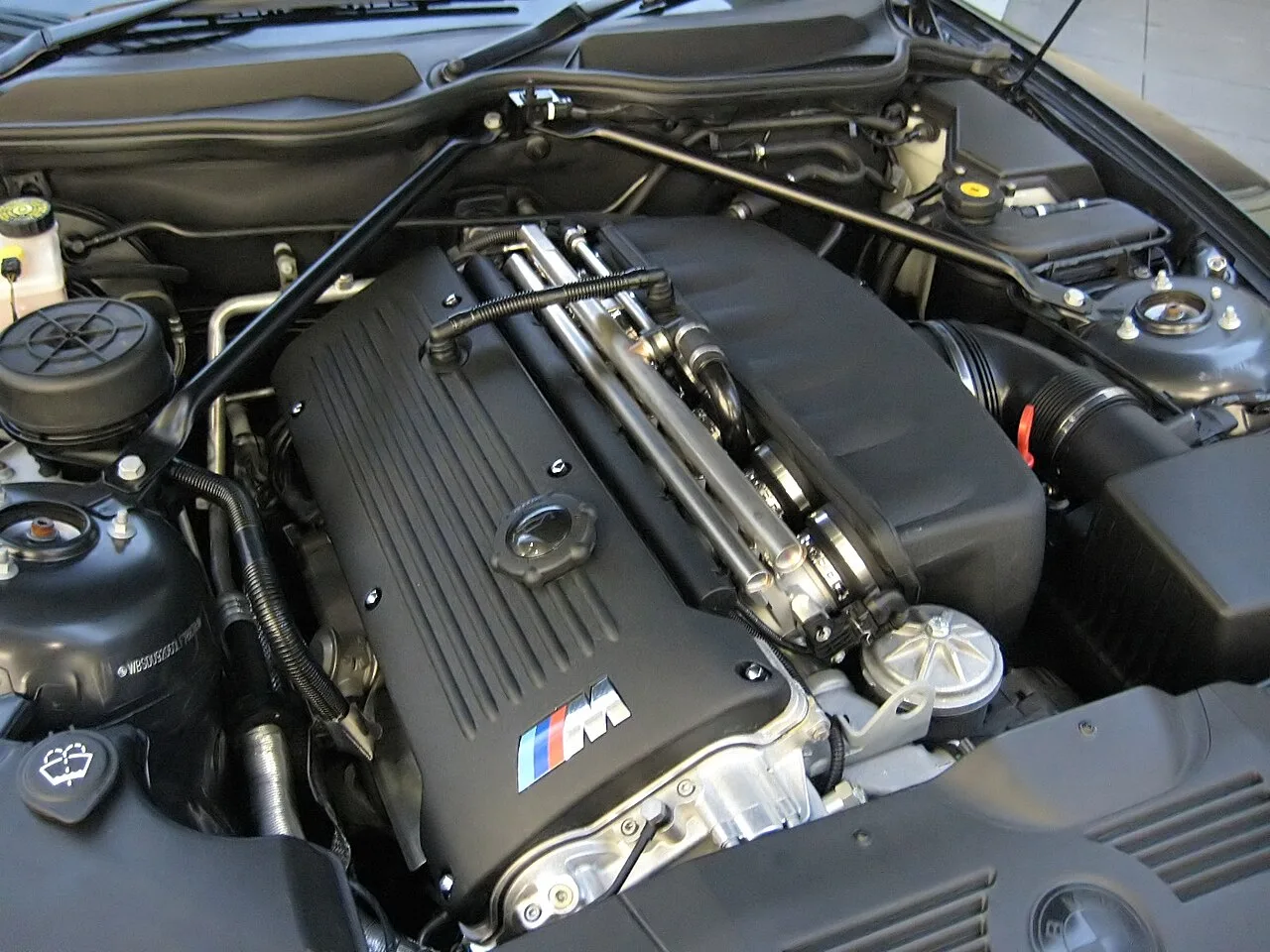
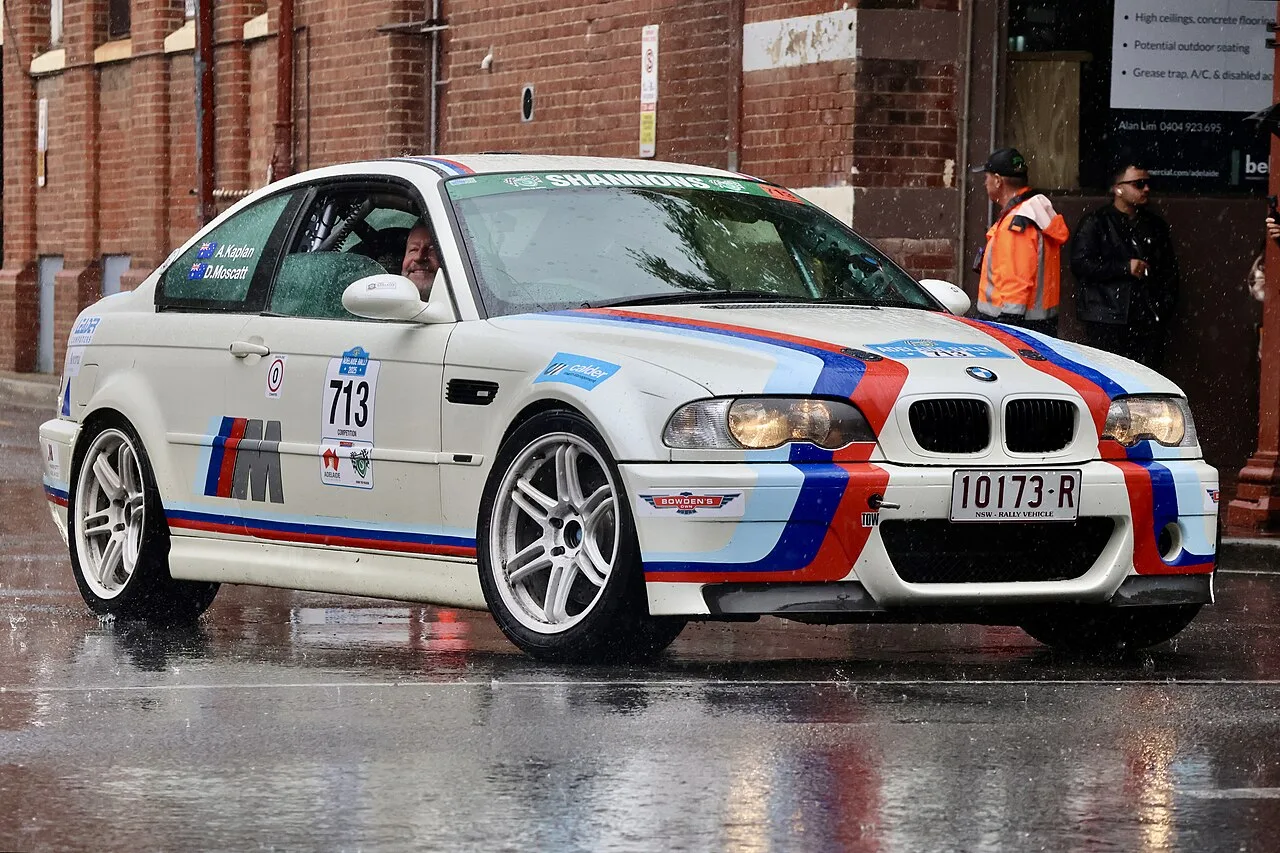
Before turbos became the everyday norm, BMW conjured up its thrills through revs alone, without compressing the intake. The 3.2-liter S54 fitted to the E46 M3 is the height of that. The texture of its revs, climbing without hesitation to around 8,000 rpm, is still spoken of today as the textbook for naturally aspirated sixes. It's an engine remembered for its 'feel' rather than its numbers, one that crowned the end of an era.
N54 · B58 — The Six of the Turbo Era
In 2006 the N54 arrived and the current shifted. As BMW's first production twin-turbo gasoline six, it laid the thick torque of forced induction over the smoothness of natural aspiration. That said, the minor reliability gremlins typical of the early turbo generation remained as homework, and the N55 that followed refined them with a single twin-scroll turbo.
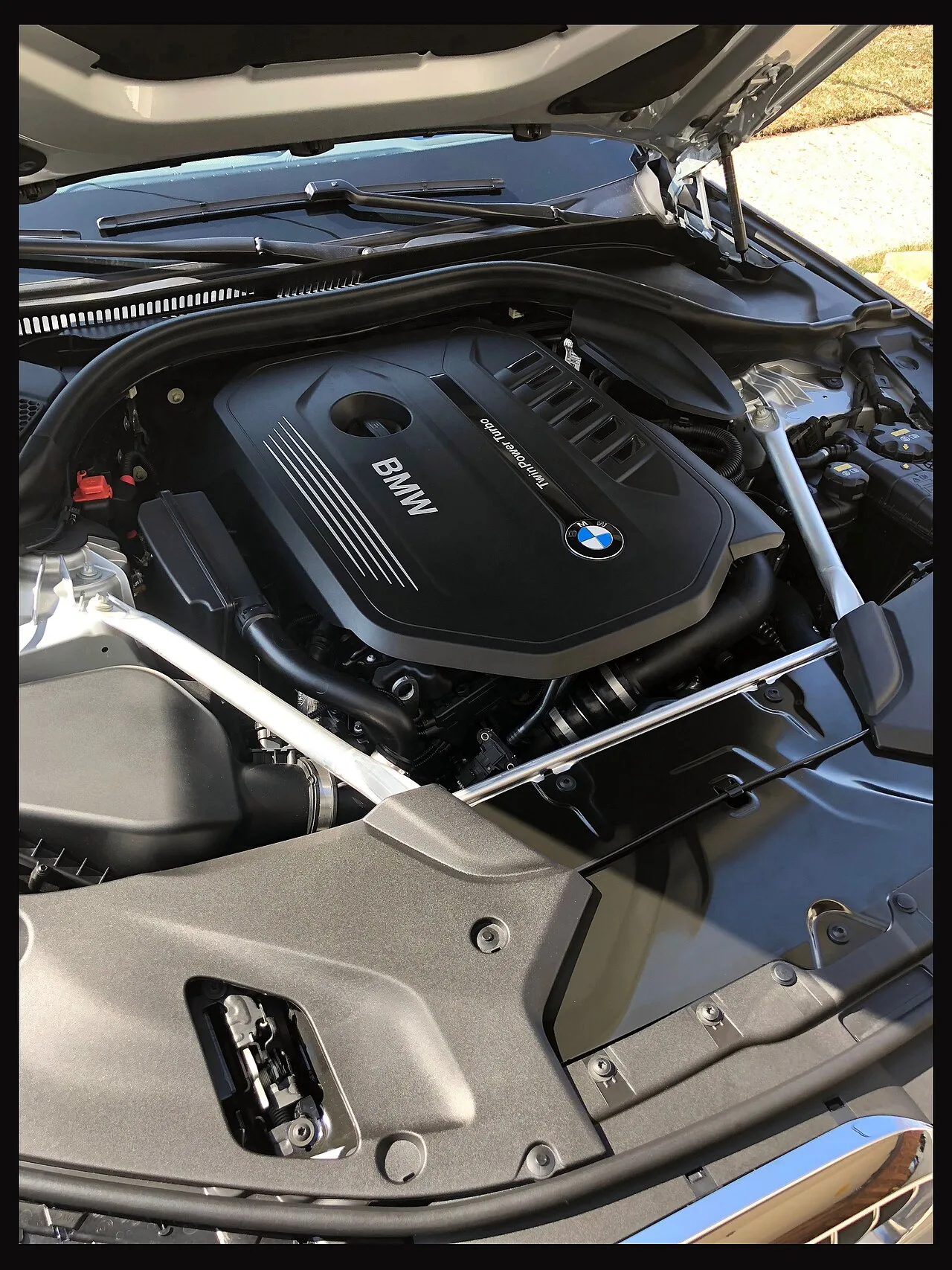
And then in 2015, the definitive modern BMW six, the B58, arrived. Thanks to being designed with generous headroom from the start, it has a rare balance: thick torque comes out at low revs while it still spins cleanly to the redline. Its completeness is proven by its repeated appearances on Wards Auto's "10 Best Engines," and by the fact that Toyota borrowed this engine when reviving the Supra. Britain's Morgan Plus Six also chose the B58 for its heart.

Why not a V6?Why Inline Rather Than a V6?
Curiously, BMW has never once built a V6. A company that has tackled the flat-twin, the inline-three and -four, the V8 and V10, the V12, and even a V16, left the V6 alone of all things. Even the legendary V12 S70/2 made for the McLaren F1 is, when you look closely, a structure of two inline-sixes joined together.
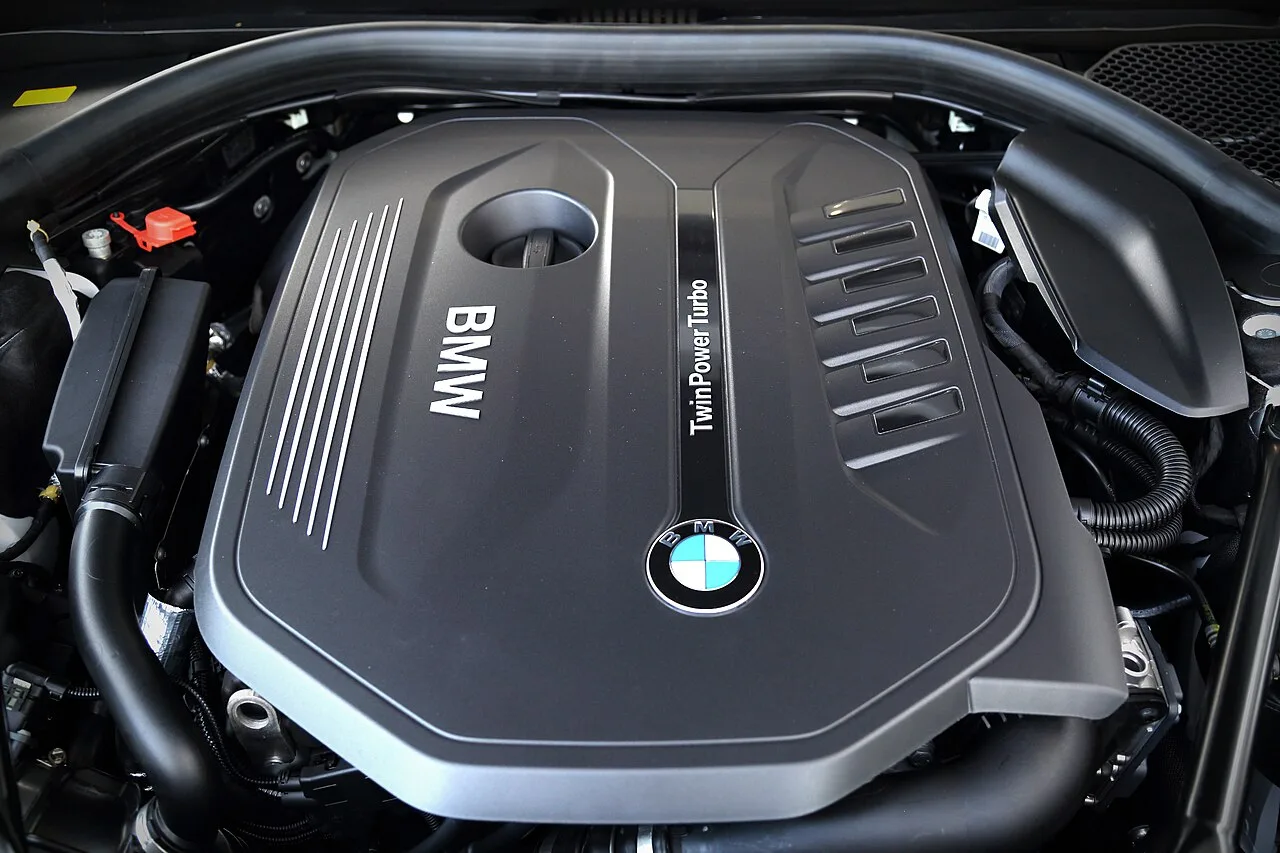
That isn't to say the inline-six is all-purpose. Lining the cylinders up in a single row makes it long, taking up a lot of space under the bonnet. From the 1970s to the 2000s, most manufacturers switched over to the V6 precisely because of this 'packaging.' A short, compact V6 suited front-wheel-drive small cars better.
So Couldn't You Just Balance a V6?
Here a good question arises. In a V6, too, the two banks splay apart and move facing each other, so if you design it so the pushing force of one side is caught by the other, couldn't you erase the shudder just like an inline-six? It's actually a question engineers have wrestled with for over a hundred years, and it's half true.
Engine shudder splits broadly into two. One is the force with which the reciprocating pistons shake the car up and down and side to side; the other is the twisting force that, because those forces arise at different positions, makes the engine nod back and forth. What makes the inline-six special is that both become zero. Because it's mirror-symmetrical front to back, both the shaking force and the twisting force cleanly cancel among themselves.
The V6 only gets halfway here. With the two banks facing each other left and right, the shaking force is canceled to some degree. But because the cylinders of the two banks are offset front and back along the crankshaft, the force that fails to cancel remains as a twisting force that makes the engine nod. Left-right symmetry alone can't catch this nodding. On top of that, for a six to fire evenly the bank angle would need to be a clean 120°, but then the engine becomes too wide to fit in the car. So most are made as 90° V6s that share parts with V8s, and because of this offset angle even the firing intervals turn uneven.
So the solution V6 engineers reach for is exactly that idea we just recalled. They add one more counterweight shaft that spins opposite to the engine — a balance shaft — to forcibly cancel the remaining nod. Sometimes they twist the crankpins slightly to even out the firing intervals. In other words, balance is built in afterward.
The V6 has to have its balance built in; the inline-six is born with it.
This single line contains the entire difference between the two layouts. The inline-six needs not even one balance shaft. The very arrangement of standing the cylinders in a single row is already a perfect mirror symmetry, so it's born with a 'free balance' that costs no money, no weight, and no friction. The V6, by contrast, has to take the trouble of adding counterweights and twisting the crank just to barely approach a similar quietness.
And yet recently the current is swinging back. Jaguar Land Rover abandoned the V6 and returned to the inline-six, and Mercedes chose the same path. Ironically, the justification for the return is also packaging. With modular design it's easy to share parts with the four-cylinder, and above all that quietness, which a V6 can't imitate, becomes a premium weapon. The very logic that once pushed the inline-six out is now calling it back in.
The feel that remainsWhat Remains Beyond the Numbers
Look only at the spec sheet and these days even a four-cylinder turbo puts out plenty of power. The reason for insisting on a six all the same comes down to the sensation transmitted through your fingertips and your back. As the tachometer needle slides toward the redline, that smoothness of swelling up in a single breath, without a shudder. That texture, like metal turning along its grain instead of the exhaust note bursting coarsely. The old story about the coin not falling is, in truth, closer to a metaphor for that sense of connection the driver feels through the wheel.
Now that electrification is rushing in fast, the internal-combustion inline-six is clearly entering its twilight. But as long as an engine like the B58 is still spoken of as a great one, and as long as BMW has reaffirmed its commitment to the internal combustion engine, the story of the Silky Six will go on a little longer. The next time you have occasion to start a six-cylinder BMW, I'd suggest slowly bringing the revs up. You'll come to know, faster than words, what kind of sensation the smoothness 90 years has crafted really is.

댓글 0
첫 댓글을 남겨보세요.