
While preparing for a trip to Hokkaido, I found myself looking at Nikka whisky again. A little over an hour west of Sapporo, in the small town of Yoichi nestled between the sea and the mountains, sits a distillery that built one pillar of Japanese whisky. This article follows the notes that Masataka Taketsuru carried home from Scotland, the coal fire of Yoichi, and the reason Miyagikyo was added.
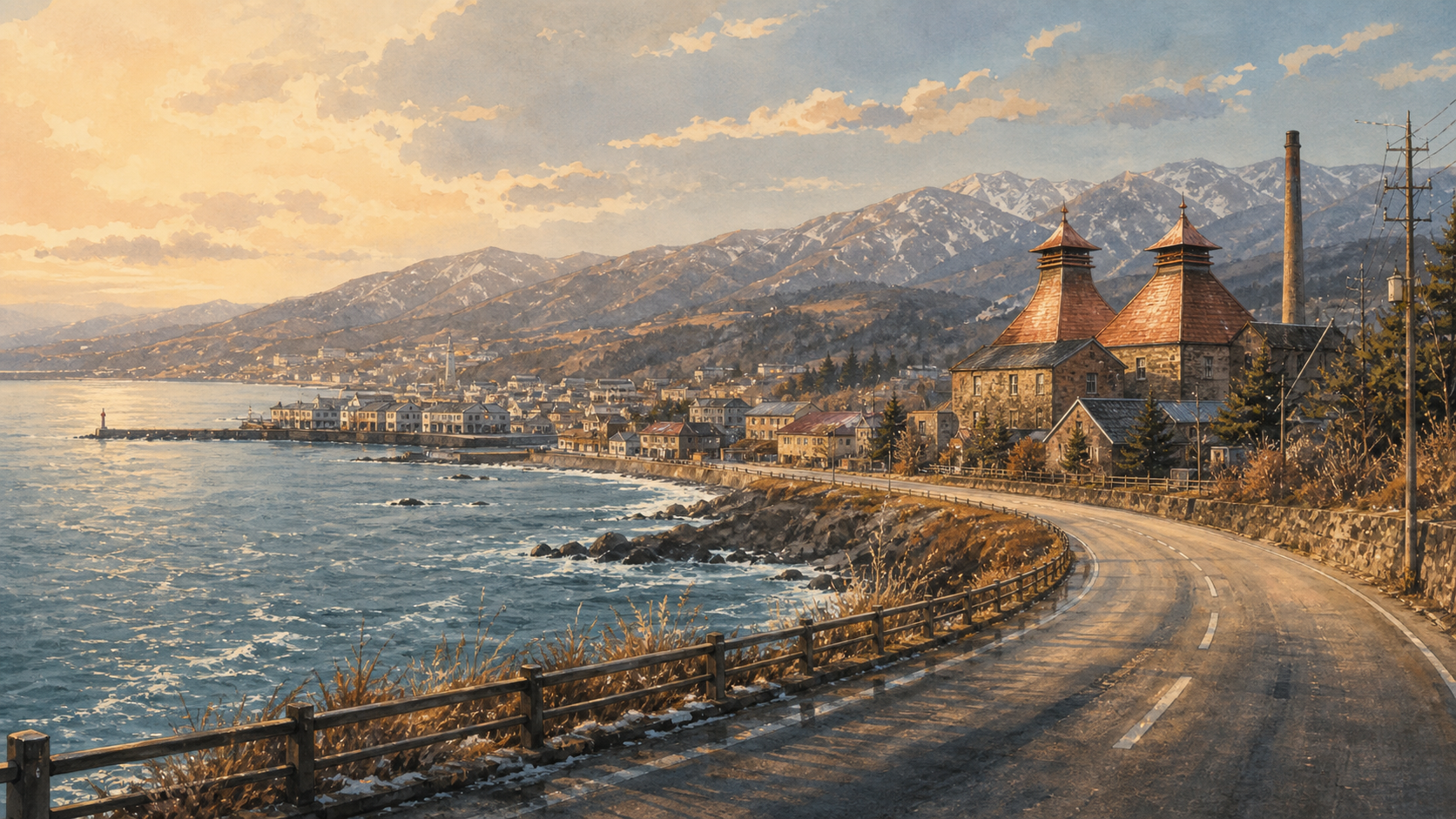
When you arrive in Yoichi (余市), the scenery speaks first in place of any explanation. Red-roofed stone buildings, a cold sea breeze, low-lying humid air, and the presence of a chimney. The whisky here is not simply an imitation of Scotch made in Japan; it's closer to the result of replanting the principles learned in Scotland into a single Japanese landscape.

Masataka Taketsuru, the Father of Japanese Whisky竹鶴政孝 · Rita and the Taketsuru Notes
Masataka Taketsuru was born into a family of sake brewers in Hiroshima. He was the son of a house that made alcohol, but what captured his heart was Western spirits. In 1918, to learn whisky properly, he set off for Scotland, studying chemistry at university while learning the production process on the floor of a distillery.
The records he left were later called the Taketsuru Notes. They were notes packed with detail — not only the structure of the still, malting, fermentation and distillation, and maturation, but even the particulars of running a distillery. Nikka's starting point was the distillery built in Yoichi in 1934, but before that there were the notes that one young man had written down in Scotland.
Rita, whom he met there, is also impossible to leave out of the Nikka story. The Scottish woman Rita became Taketsuru's partner and crossed over to Japan, supporting his dream even in an unfamiliar land. What the NHK drama Massan (マッサン) portrayed was precisely the true story of these two.
I want Japanese people
to drink real whisky.
Why Yoichi, of All PlacesIn Search of Conditions Resembling Scotland
Taketsuru looked all over Japan for land suited to whisky. There were places close to markets and places with easy logistics, but the spot he ultimately chose was Yoichi in Hokkaido. It looks like a romantic choice, but the reasons were quite practical. A cool climate, clear water, humid air, a sea breeze, and the conditions to obtain raw materials and fuel at the time all came together.
Why Yoichi Suited Whisky
Cool climateClear waterHumid airCold sea breezeBarley and peatCoal fuel
Saying that Yoichi calls Scotland to mind is not merely a metaphor about scenery. Whisky is not a spirit made inside the still alone; it's a spirit crafted together by water and air, the humidity and temperature of the warehouse, and time. Yoichi was Taketsuru's answer to finding those conditions within Japan.
The Three Things That Made Yoichi's FlavorEnvironment, the Coal Fire, and the Still
Before a whisky is finished, it goes through the process of sprouting barley, mashing, fermenting, distilling, and maturing in oak casks. But what to remember from this article isn't the details of every step, but rather the differences that made Yoichi distinctly Yoichi.
- The cold coastal environment: cold, humid air guides maturation slowly.
- Direct coal-fired distillation: intense heat and skilled fire control create a heavy, savory impression.
- Straight-head pot stills: along with a downward lyne arm, they leave behind more weighty components.
The Coal Fire and Copper StillA Stubbornness That Has Become Rarer Today
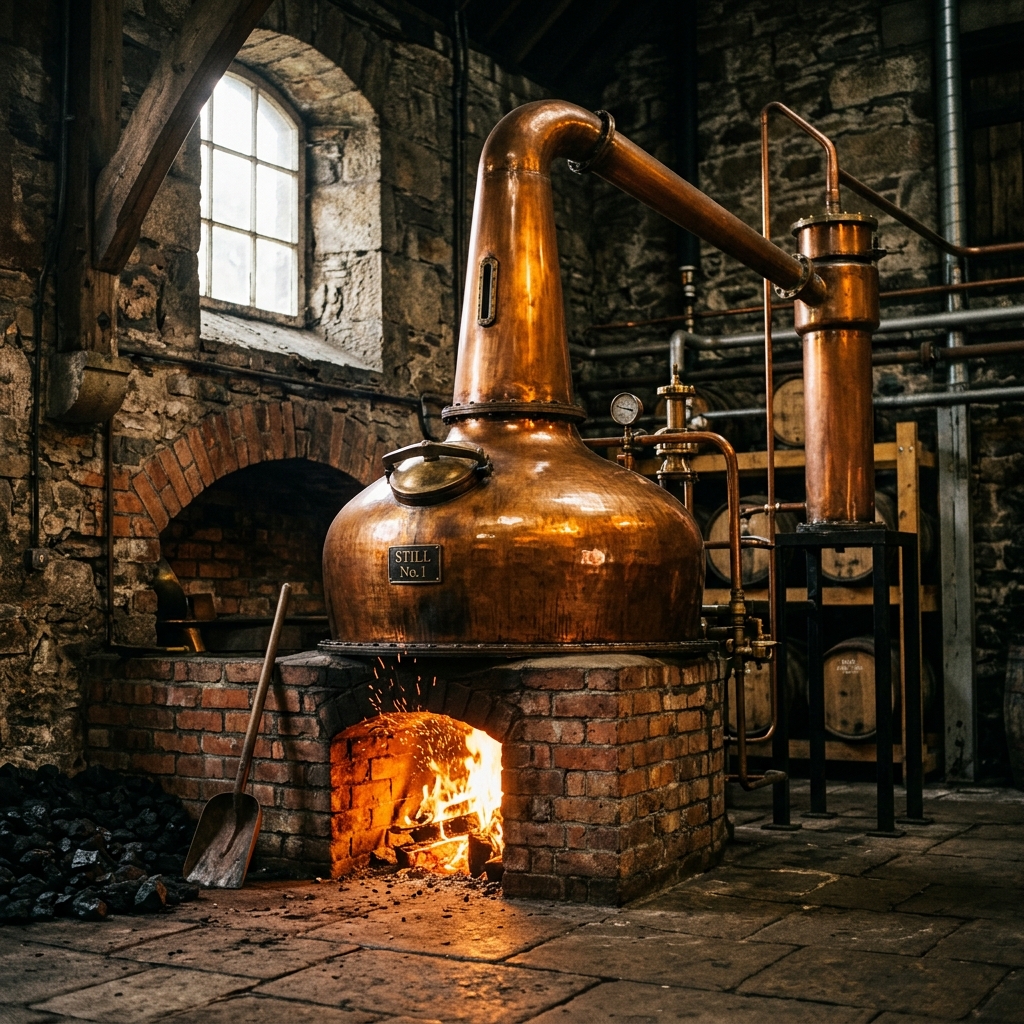
The heart of Yoichi is direct coal-fired distillation. Many distilleries today use efficient steam heating, but Yoichi carries on the founding-era method, heating the bottom of the still directly with a coal fire. The bottom temperature rises above 1,000 degrees, and a person must constantly adjust the amount of coal and the intensity of the fire.
This method is cumbersome. In terms of efficiency alone, the modern method is far easier. But the intense direct fire leaves a heavy texture and a savory impression in the spirit. Yoichi's distinctive powerful malt character comes precisely from this inconvenient method.
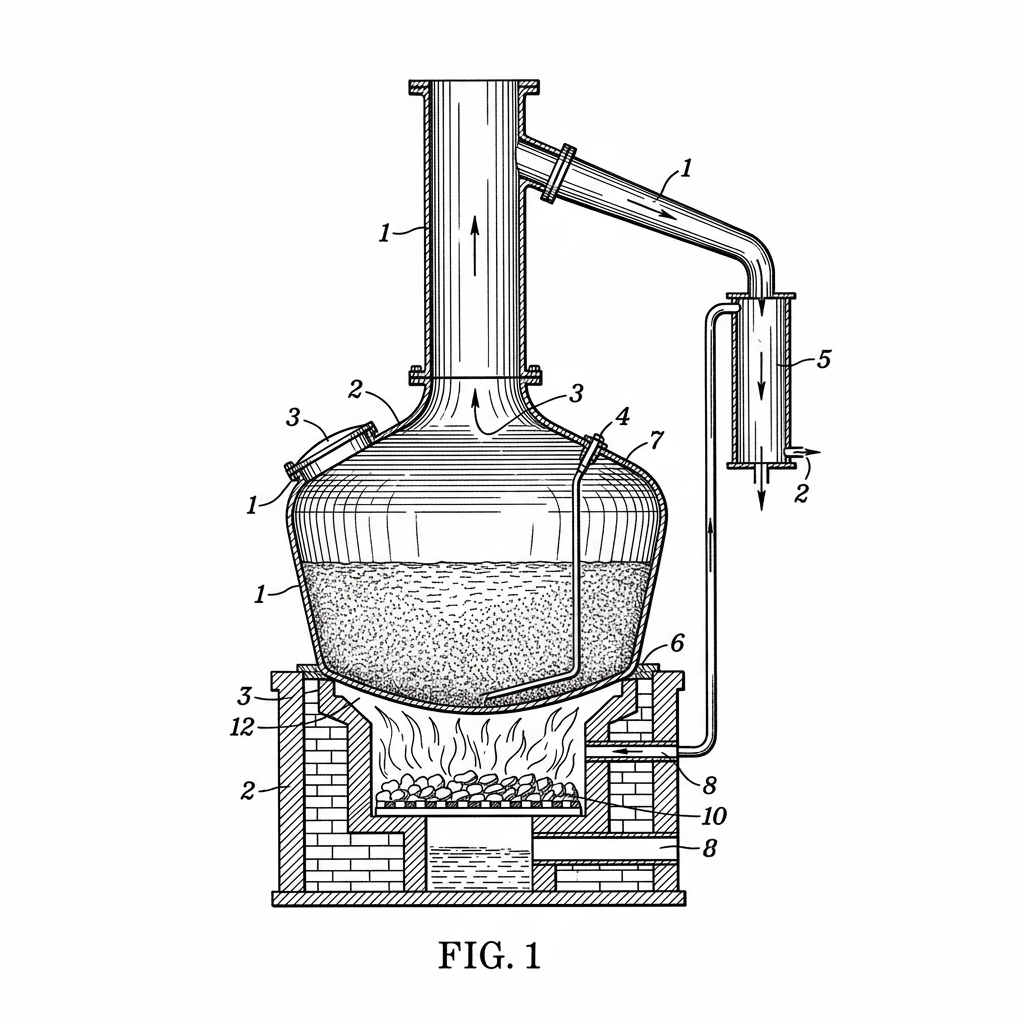
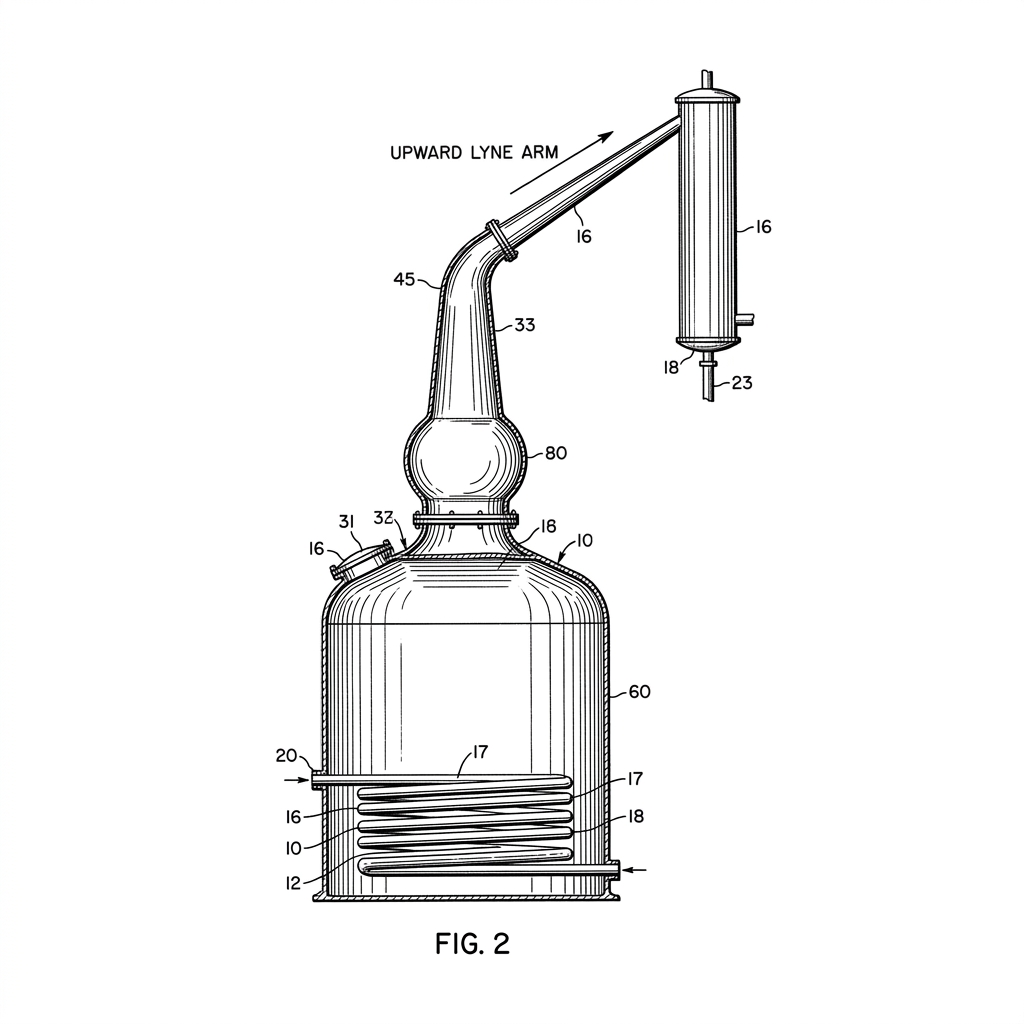
The flow in which heavy vapor falls back into the pot during distillation, and only the lighter components carry over, is called reflux. Yoichi's straight head and downward lyne arm relatively reduce this reflux, letting heavier, more complex components carry over. That's why Yoichi malt is heavy rather than delicate, and powerful rather than smooth.
The reason for using a copper pot still matters too. Copper serves to reduce the harsh sulfur compounds produced during fermentation. When direct coal firing, a straight neck, and a downward-pointing lyne arm overlap with that, Yoichi's distinctive sense of weight is created.

Nikka Was Completed When Miyagikyo Was AddedA Spirit Different from Yoichi Was Needed
Nikka has another important distillery. It's Miyagikyo (宮城峡), built in 1969 between the forest and valleys of Sendai. The reason Taketsuru built a second distillery was not only to increase production. It was to obtain a malt with a different character from Yoichi and broaden the scope of blending.
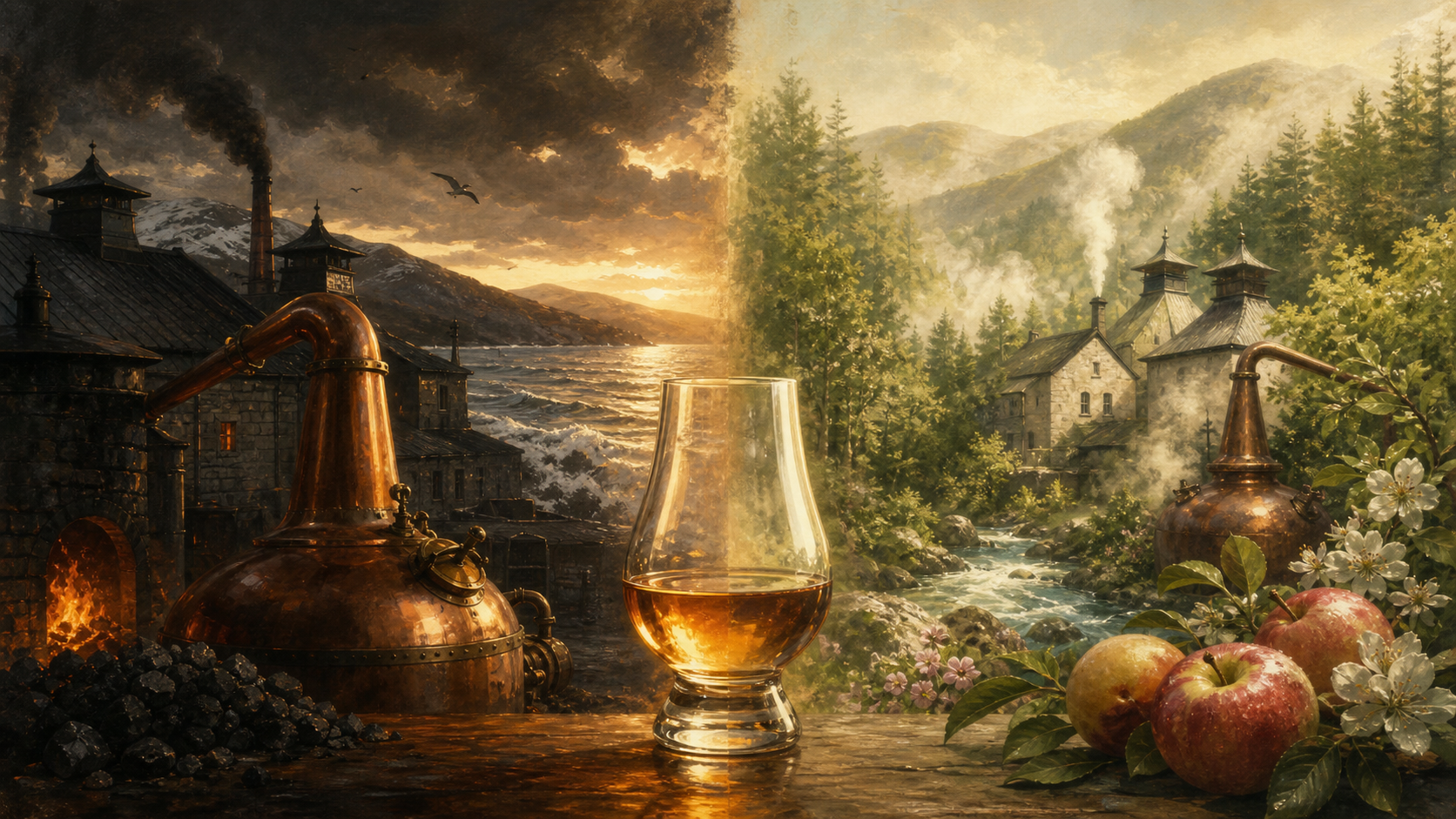
Yoichi 余市
- Direct coal-fired distillation
- Straight neck · downward lyne arm
- Low reflux
- Heavy, smoky, savory
- Highland-style power
Miyagikyo 宮城峡
- Steam distillation
- Bulge type · upward lyne arm
- High reflux
- Floral, fruity, smooth
- Lowland-style delicacy
| Item | Yoichi | Miyagikyo |
|---|---|---|
| Location | Hokkaido coast, cold and humid air | A valley with forest and two rivers west of Sendai |
| Heating method | Direct coal firing | Steam distillation at about 130 degrees |
| Still features | Straight head, downward lyne arm | Bulge type, upward lyne arm |
| Flavor impression | Heavy, smoky, and savory | Bright, fruity, and smooth |
| Role in blending | The power that anchors the center | The delicacy that broadens the balance |
This is why blended whiskies like Super Nikka, Taketsuru, and Black Nikka don't lean to just one side. Yoichi builds the frame, and Miyagikyo spreads out the texture. It takes two different distilleries for that signature Nikka balance to be completed.
Tasting Points to Read in a Single SipWhat to Remember Before Visiting the Distillery
If you visit the Yoichi Distillery, the tour and tasting lineup can vary by season, so it's best to check the official guidance first. That said, no matter which glass you drink, the order in which you observe it is similar. Look at the color, smell the aroma, and slowly roll a single sip around your mouth.
It's fine even if you don't know much about whisky. In fact, if it's your first time, the difference between the two distilleries may come through even more clearly. Yoichi speaks with power, and Miyagikyo explains with aroma.
Wrapping Up: The Story That Stays in a GlassFrom One Notebook to Two Distilleries
A single glass of Nikka whisky has many spans of time layered within it. Taketsuru's notes written down in Scotland, Rita who believed in that dream, the coal fire of Yoichi in Hokkaido, and the clear water of Miyagikyo in the forests of Sendai. This is why an amber glass becomes more than just a drink and becomes a story.
The next time you drink Nikka, I hope you'll look beyond just the name on the bottle and picture which distillery's texture is hidden inside. Is it the flavor of a heavy fire, or the soft aroma of a forest valley? A single glass might be read a little more slowly, a little more deeply.
Sources ReferencedCentered on Official Materials
- Nikka Whisky · Yoichi Distillery, Hokkaido
- Nikka Whisky · Miyagikyo Distillery, Sendai
- Nikka Whisky · Masataka Taketsuru Story
🥃

댓글 0
첫 댓글을 남겨보세요.