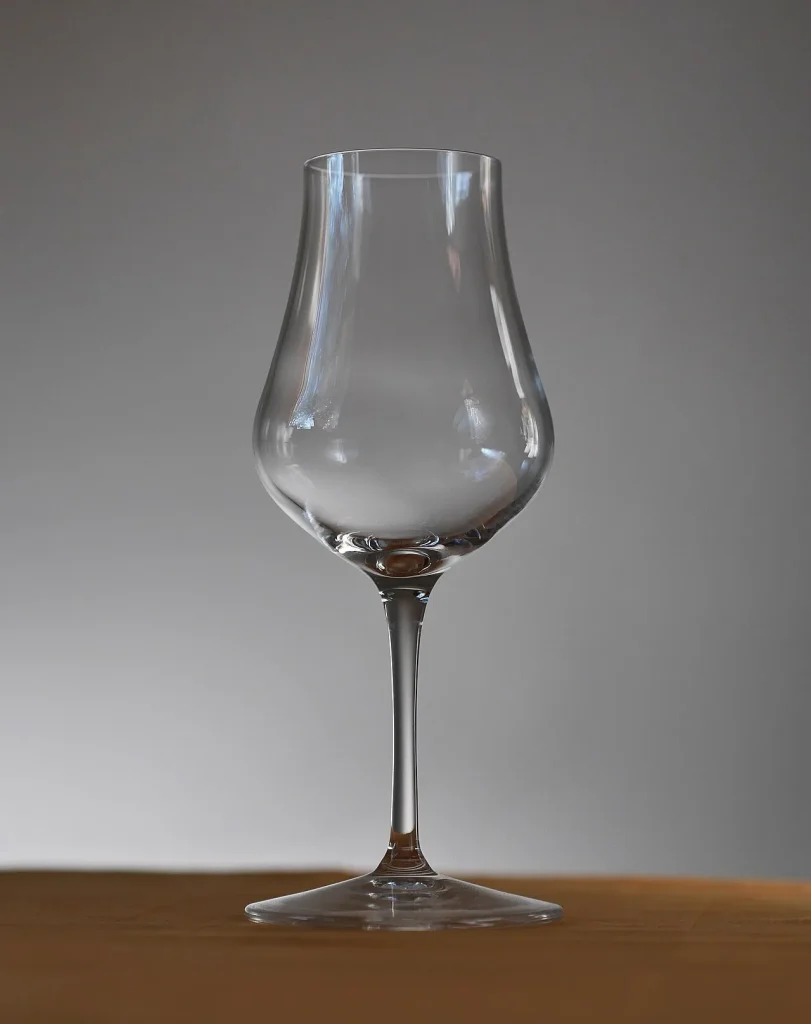
When you buy a whisky, the disappointment doesn't come from the price tag — it comes from the gap between expectation and the actual taste. An expensive bottle isn't always satisfying, and a cheap bottle isn't necessarily bland. So a score is less a correct answer that replaces your own taste than a first filter that lowers the odds of a miss. For this article, I picked seven whiskies that have consistently earned good marks from reputable review outlets and enthusiast communities — bottles that are relatively easy to find in Korea and make a strong case for the money.

First, it's better to read scores like this
Whisky scores are dangerous when you take the number alone. Some outlets prize blind tasting and overall craftsmanship; some communities reflect the average taste of countless users. The real value of a bottle lies not in a single score, but in the strengths that show up repeatedly across multiple sources.
The three reference axes used in this article
Whisky Advocate — A specialist outlet well known for its 100-point reviews and annual top lists. It often mentions not just craftsmanship but also price band and market accessibility, which makes it useful when shortlisting value candidates.
Whiskybase — A large database where ratings and reviews recorded directly by enthusiasts accumulate. For bottles with big batch variation in particular, it helps to read the trend here.
Connosr and specialist blogs — Supplementary material gathering community ratings, personal reviews, and comparative tasting notes. They're good for reading context like "why do people keep rebuying this bottle" rather than the average of the numbers.
Conversely, I never treated the score from a single source as an absolute standard. In particular, sources that are highly influential but have drawn controversy over their evaluation method and wording — like Jim Murray's Whisky Bible — were referenced only supplementarily, at the level of their award history. Prices fluctuate with Korea's 2026 retail, duty-free, and parallel-import situation, so it's safer to read the figures below as a "rough felt price."
1Nikka From the Barrel
Nikka From the Barrel · Japanese blended · 51.4%


This is the bottle that comes to mind first in any conversation about value whisky. Nikka tightly blends its Yoichi and Miyagikyo malts with grain whisky, then bottles it at 51.4%. The small square bottle looks lightweight, but pour it into a glass and the density is far richer than you'd expect.
The nose opens with orange peel, vanilla, chocolate, and the firm feel of oak. On the palate, a butterscotch-like sweetness rises together with the power of the grain, and the elasticity that comes from the proof is unmistakable. It's good neat, but a few drops of water open the aroma up one more notch.
2Aberlour A'bunadh
Aberlour A'bunadh · Speyside · sherry cask strength


A'bunadh is a bottle that the phrase "sherry bomb" suits well. It's matured in oloroso sherry casks and bottled at cask strength without chill filtration. The fact that the proof and impression shift slightly from batch to batch is part of this bottle's fun.
Raisin, dried plum, dark chocolate, nuts, and leather aromas stack up thickly. The first sip is strong, but hold it slowly and the sweetness and texture come alive behind the high proof. Finding your own concentration by adding water bit by bit is part of the pleasure too.
3Ardbeg 10
Ardbeg 10 · Islay · 46% · non-chill-filtered


If you're curious about heavily peated whisky, Ardbeg 10 is a door worth passing through once rather than avoiding. It has Islay's strong impression of smoke, tar, and iodine, but citrus notes like lemon and lime rise alongside it, so it finishes more clearly than you might think.
On the palate, smoked malt, pepper, espresso, and dark chocolate overlap. Thanks to the 46% proof and the non-chill-filtered texture, it doesn't scatter like water, and a center remains even behind the intense aroma. If you dislike peat it'll be hard going, but if you love peat the satisfaction for the price is very high.
4Talisker 10
Talisker 10 · Isle of Skye · 45.8%


Talisker 10 doesn't push as roughly as an Islay, yet it clearly shows the sea breeze and smoke characteristic of island whiskies. Salty minerality, dried fruit, and the spicy peppercorn finish are this bottle's signature.
The texture is surprisingly creamy, and the peat is medium, so it's less demanding. Even someone unfamiliar with smoke has room to feel "this much is fun," and for the experienced it's a bottle that serves as a reference point whenever you drink it.
5Benromach 10
Benromach 10 · Speyside · 43%


Benromach 10 is a bottle that holds up on substance rather than a flashy name. Fitting for a small distillery revived by Gordon & MacPhail, it has an "old-fashioned" texture a little different from the smooth sweetness of today's Speyside.
Gentle peat, sherry sweetness, malt, dark chocolate, and a slightly charred barbecue impression overlap. It's neither overly sweet nor overly smoky, and the small elements lock together firmly. It's the kind that shows its true worth the more you drink it.
6Redbreast 12
Redbreast 12 · Irish single pot still · 40%

Drinking mostly Scotch, it's easy to underrate Irish whiskey. Redbreast 12 is a good bottle for breaking that prejudice. Because it uses the single pot still method with both malted and unmalted barley, it has an oily texture and a richness of grain different from a single malt.
Ripe fruit, nuts, honey, and the sweetness from the sherry cask gather roundly. There's little bite yet it's not thin, smooth yet not flat. It's a bottle that sparks conversation whether a first-timer and a long-time drinker share it together.
7Highland Park 12
Highland Park 12 · Orkney · 40%


Highland Park 12 is a single malt that doesn't lean heavily in any one direction. Orkney's gentle peat, the sweetness of the sherry cask, honey, and citrus are laid out in balance. So it looks unremarkable at first, but once you try to find a replacement in the same price band, it's not easy.
Floral notes, light smoke, and a soft honey flavor carry on comfortably. If you expect heavy peat it can seem tame, but for an everyday bottle that restraint is actually a strength. It works well as a first single malt and as an all-rounder to keep at home.
In short, a score isn't an answer sheet that picks the bottle for you — it's a map that reduces trial and error. The same whisky in the 90s might be too much for your palate, and a bottle in the 80s might be the perfect glass on a given day. Still, a bottle that has survived for a long time across multiple outlets and communities generally has a reason. The seven bottles above are a starting line with low odds of a miss, where that reason is felt even before the price tag.


댓글 0
첫 댓글을 남겨보세요.