
Scotch is Whisky, Irish is Whiskey. That extra 'e' in the spelling isn't just a quirk of habit — it's the pride of a category that was once number one in the world, then nearly vanished, and has since come roaring back faster than any other. Here we lay out the three things that make Irish whiskey distinctly Irish: triple distillation, an unpeated style, and the single pot still.
A fall from the throne, and a resurrection
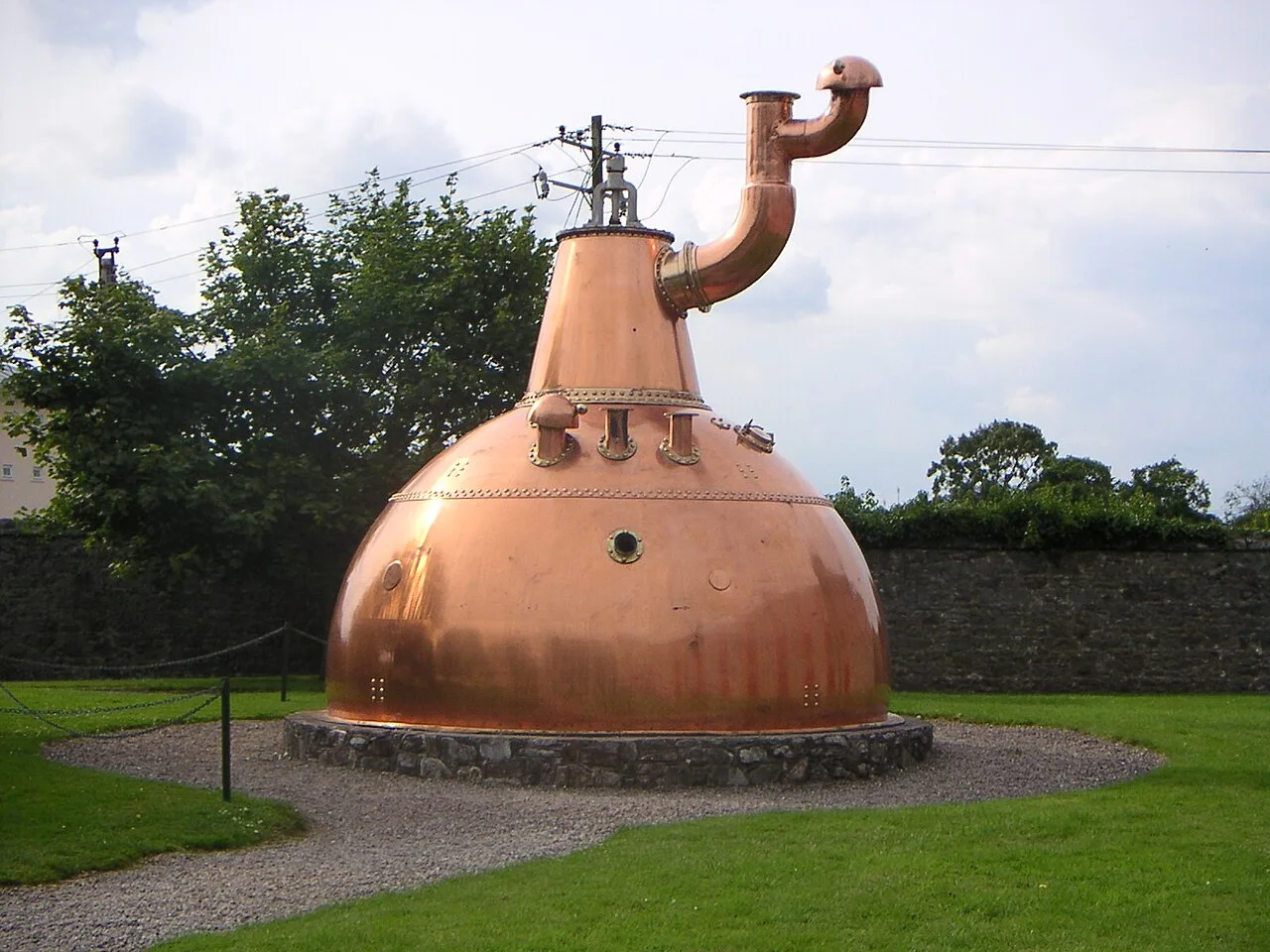
In the 19th century, Irish whiskey was the best-selling whiskey in the world. The great Dublin distilleries treated Scotch as a "cheap imitation." But in the 20th century, the Irish War of Independence, the loss of Commonwealth markets, and American Prohibition landed as one direct hit after another, and the entire industry collapsed. By the late 1960s the surviving distilleries could be counted on one hand, and the remaining companies merged to form what is now Irish Distillers (IDL).
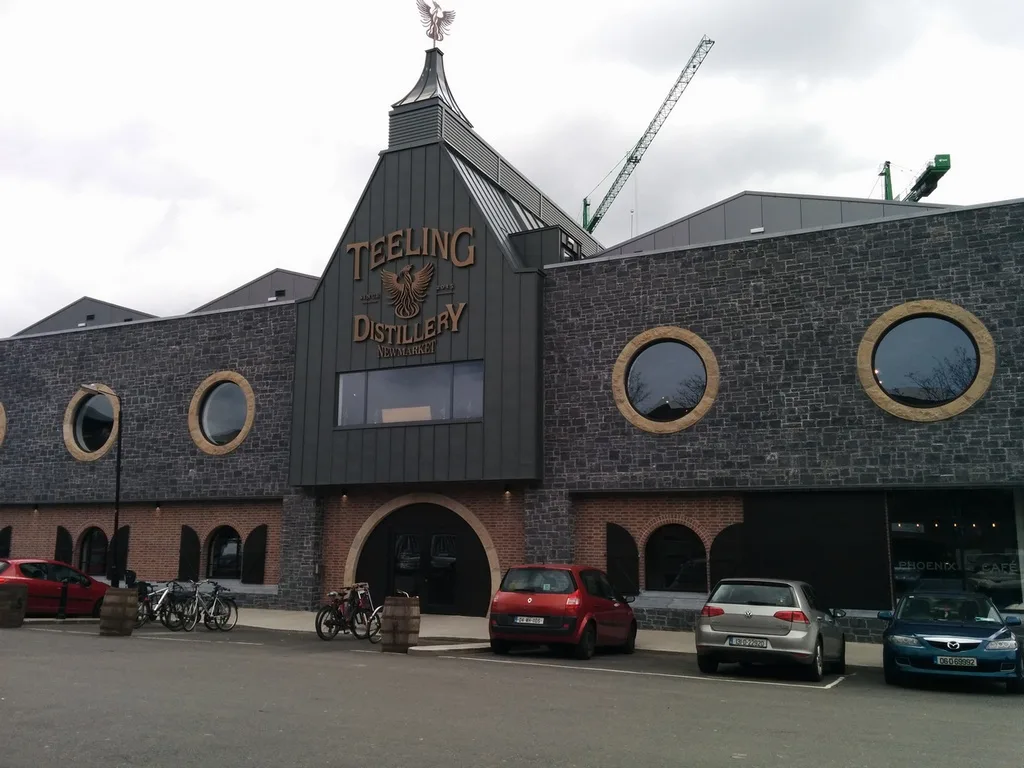
The turnaround began in the 1990s. Built on Jameson's global success, the whole category came back to life, and in the 2010s the number of new craft distilleries — Teeling among them — exploded. From a single-digit count, Ireland now has well over 40 distilleries. It is the most dramatic V-shaped rebound in whiskey history.
Trait ① Triple distillation — the engineering of smoothness
Where Scotch malt whisky is mostly distilled twice, Irish whiskey is traditionally distilled three times — triple distillation. Running the spirit through one more distillation raises the alcohol purity and filters out more of the heavy compounds. The result is a lighter, cleaner texture as smooth as silk. It's also why the floral, grassy, and citrus-tinged esters of the barley itself come through so clearly.
Trait ② Unpeated — malt without smoke
The peat (turf) smoke that is the signature of Scotch, and especially of Islay whisky, is almost nowhere to be found in Irish whiskey. In Ireland, the malt is traditionally dried not with peat smoke but with clean hot air. As a result, instead of smokiness, the sweetness of the grain, along with honey, vanilla, and fresh fruit flavors, takes center stage. This is exactly why Irish whiskey is so often recommended to beginners.
Trait ③ Single pot still — a style found only in Ireland
The true national treasure of Irish whiskey is the single pot still. Unlike single malt, which uses only malted barley, this style mixes unmalted green barley with malt and distills it in the copper pot stills of a single distillery. When Britain levied a tax on malt (the Malt Tax) in the late 18th century, distillers blended in unmalted barley to dodge the duty — and that workaround hardened into a style all its own.
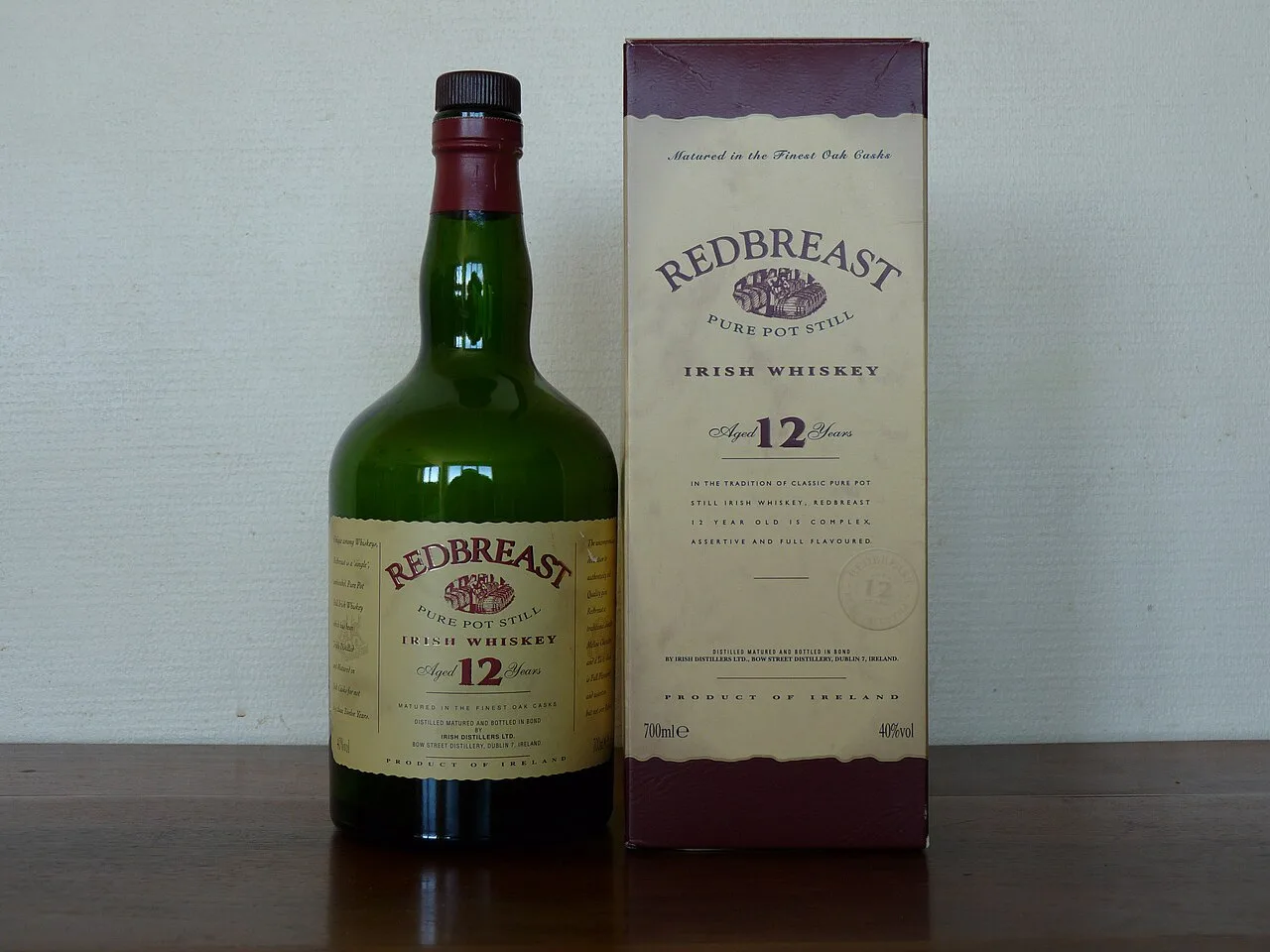
The distinctive personality of this style comes straight from that unmalted barley. A spiciness that lightly grips the tongue, an oily, creamy texture, the green freshness of crisp apple and grain — this flavor, often called "pot still character," cannot be replicated by any other whiskey in the world. Redbreast, Green Spot, and Powers are the leading lights of this lineage.
How the law defines Irish whiskey
Irish whiskey is a name protected under the EU's Geographical Indication (GI). The key conditions are as follows. It must be distilled and matured on the island of Ireland (including Northern Ireland); it must be made from cereal grain fermented with yeast; the spirit must be distilled to an alcohol strength of no more than 94.8%; and it must be matured for at least three years in wooden casks of 700 liters or less. The only permitted additives are water and caramel coloring (E150a).
| Style | Definition and character |
|---|---|
| Single Malt | 100% malted barley distilled in pot stills at a single distillery. Smooth, sweet malt character. Bushmills 10, 16, and 21 are the standard-bearers. |
| Single Pot Still | A mix of malt + green barley distilled in the pot stills of a single distillery. Ireland's own style. Spicy and creamy. Redbreast, Green Spot. |
| Single Grain | Corn, wheat, and the like distilled in a continuous column still. Light, sweet, with vanilla notes. Teeling Single Grain, Greenore. |
| Blended | A mix of the styles above. The overwhelming majority of the category's sales. Jameson, Bushmills Original, Tullamore D.E.W. |
Which bottle should you start with?
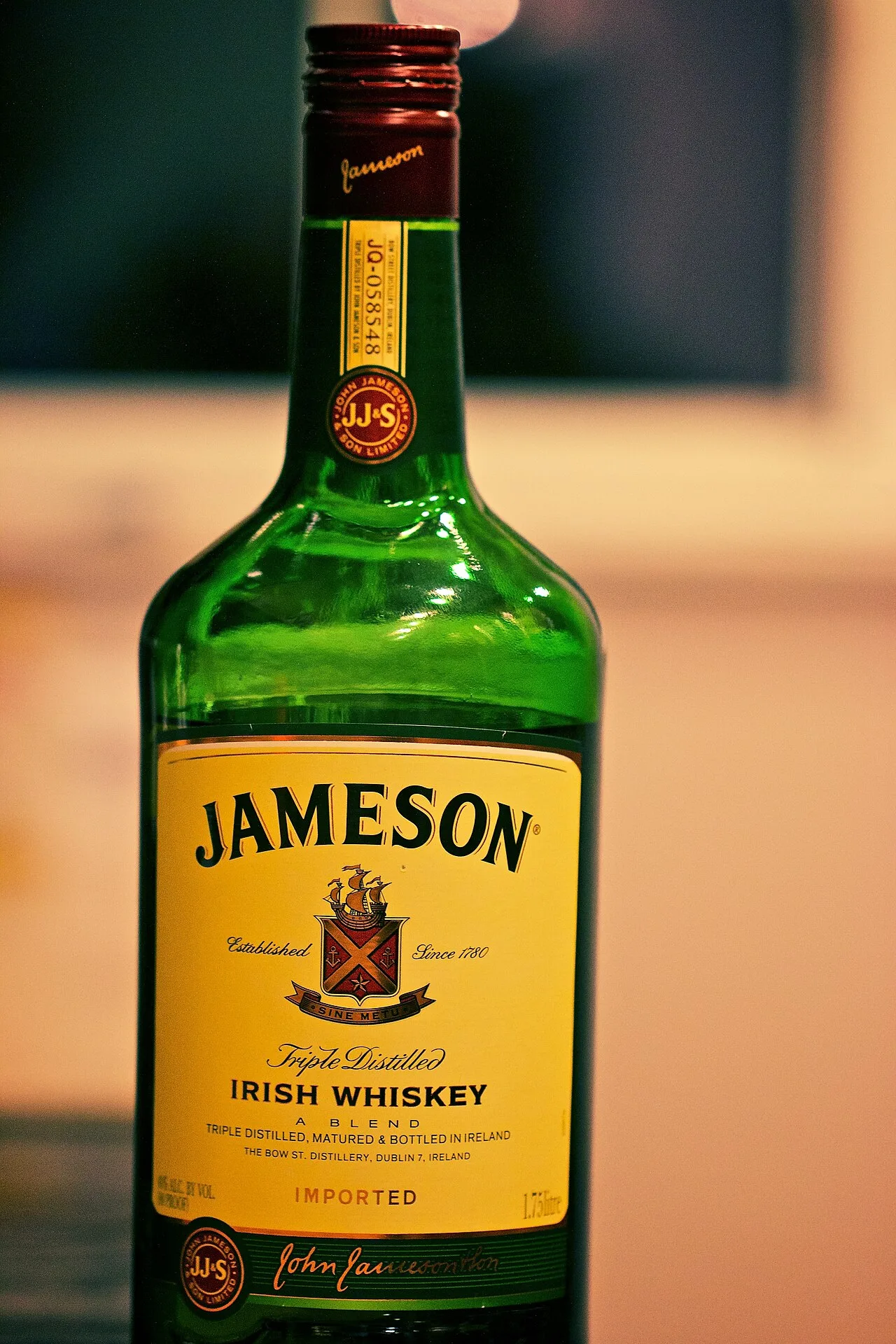
BlendedJameson
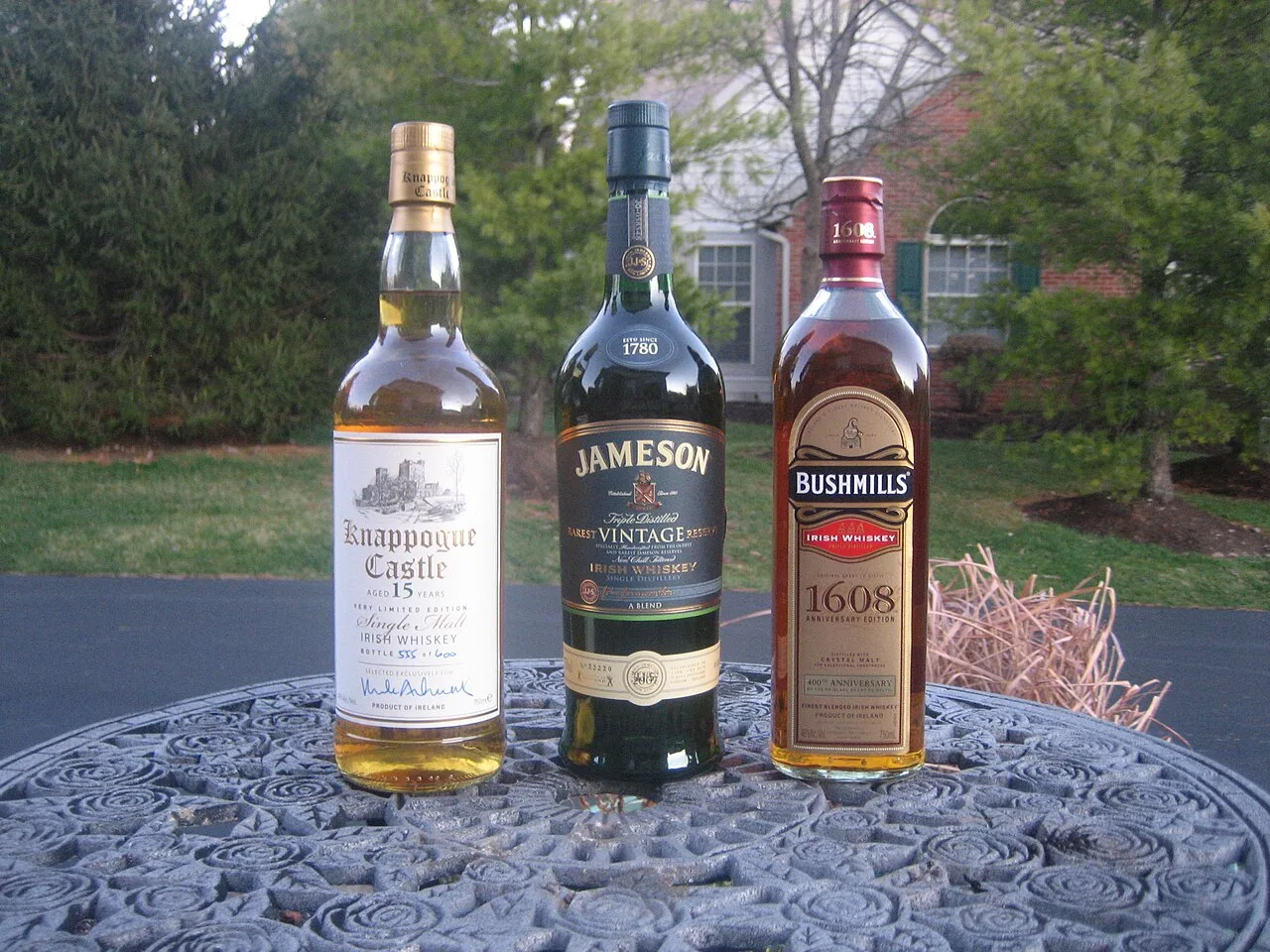
The chief architect of the Irish revival and the best-selling Irish whiskey in the world. A blend of pot still and grain spirit, it balances honey, nuts, and a light spice. Whether in a highball, mixed with ginger ale, or neat, it works wherever you put it.
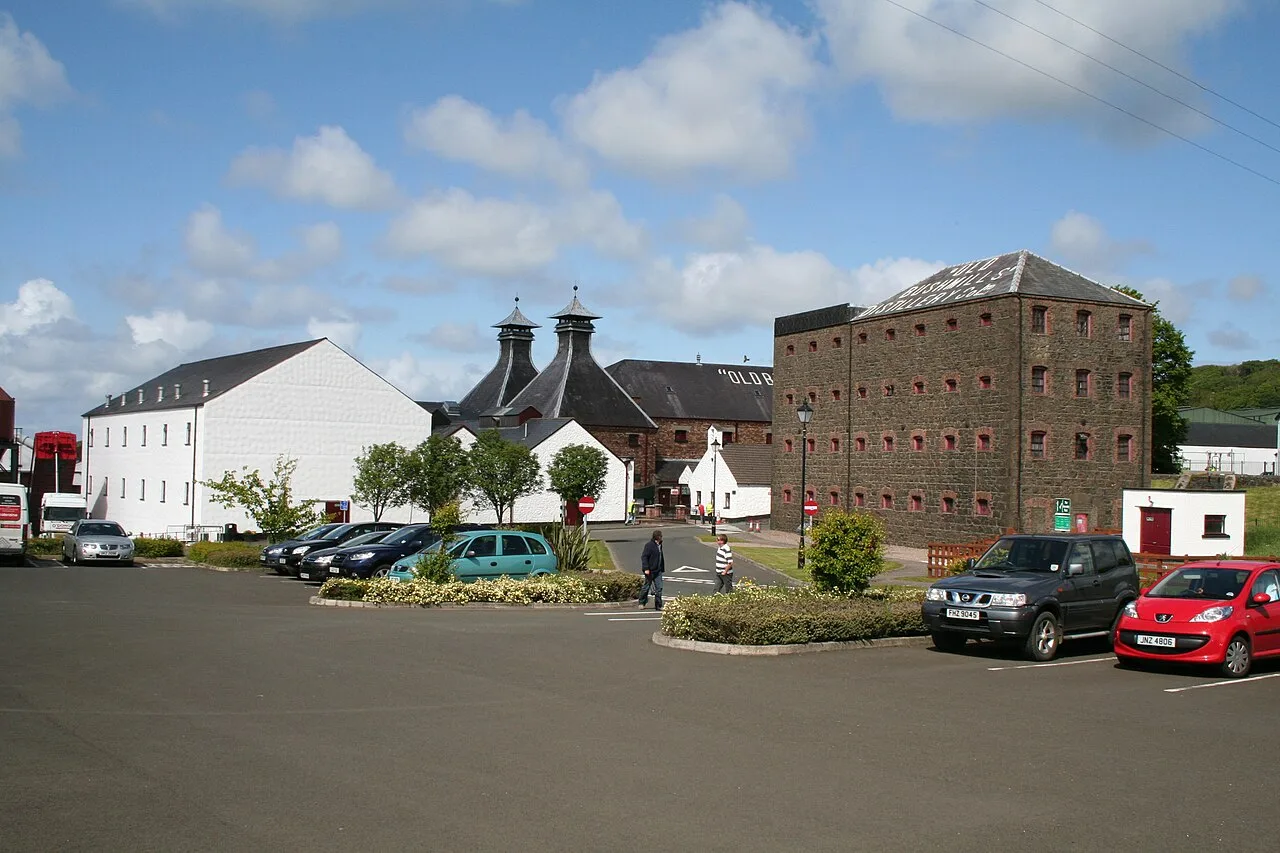
Single MaltBushmills
Set in Antrim in Northern Ireland, it received its license in 1608 and is one of the oldest whiskey distilleries in the world. It holds to the principle of no green barley — 100% malt plus triple distillation — and its Black Bush and 10, 16, and 21 single malt lines stand out for the fruit character of their sherry casks.
Pot StillRedbreast 12 Year Old
The answer that comes up most often to the question, "If you had to name just one bottle that captures the essence of Irish whiskey." A single pot still made at Midleton, it layers pot still's distinctive spice and oily texture over the dried-fruit, Christmas-cake flavor of sherry.
Single GrainTeeling
The front-runner of the new generation, opened in central Dublin in 2015. It's eager to experiment with casks — wine-cask-matured single grain, rum-cask-finished small batch, and more. Light and fruity, it makes a fine first glass for the whiskey novice too.
"If Scotch is the spirit of earth and smoke,
Irish is the spirit of barley and silk."
In summary — smoothness is not a weakness
The smoothness of Irish whiskey is often misread as "weak character," but the reality is exactly the opposite. On the clean canvas created by triple distillation, the sweetness of unpeated malt and the world's only single pot still style are painted in. For the beginner it is the friendliest of entrances; for the enthusiast it is a deep vertical world leading on to Redbreast and Midleton Very Rare. There's a reason a spirit that once nearly disappeared is now the hottest category around.
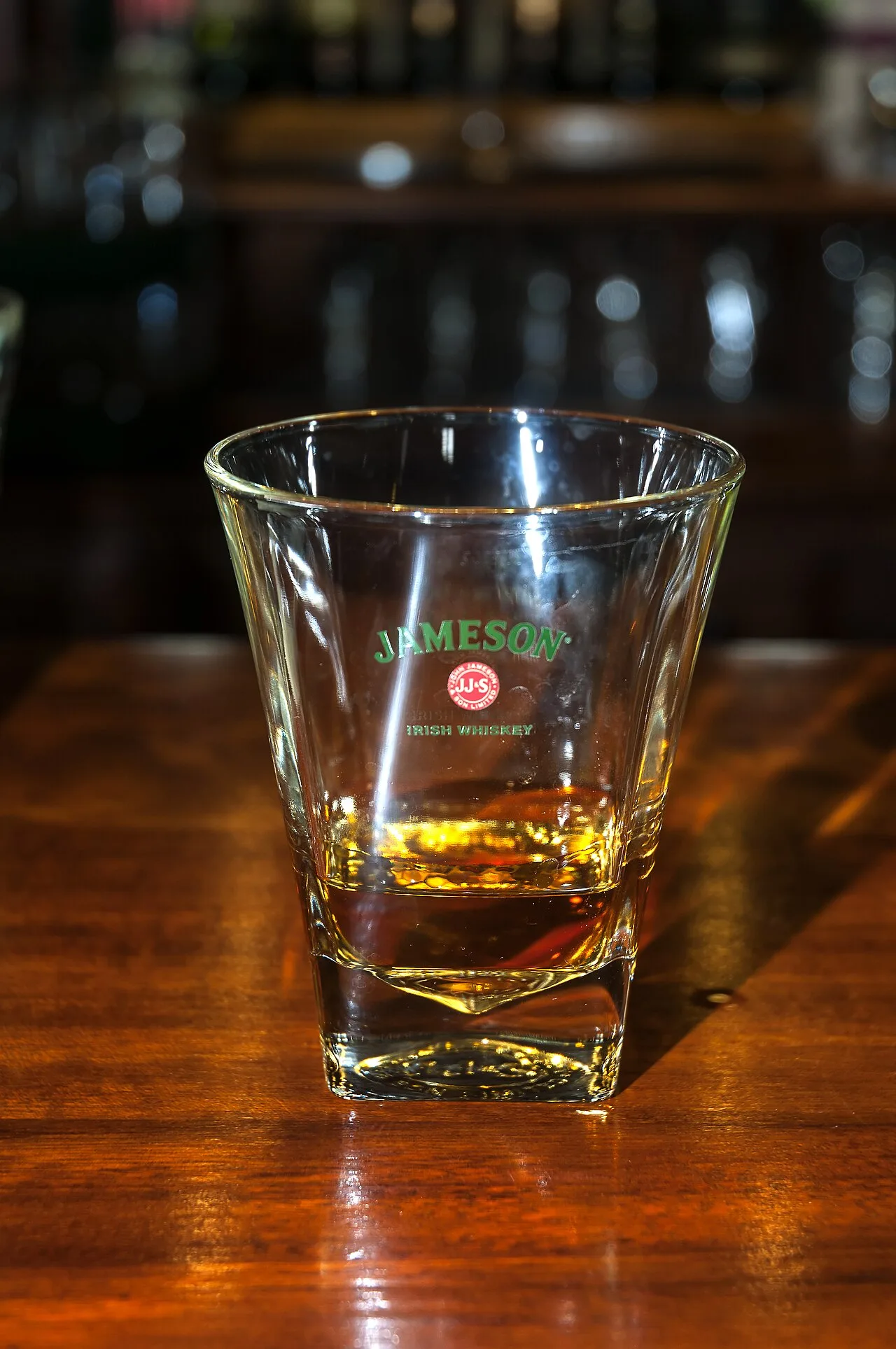
Irish whiskey, one step further
We've put together tasting notes for the four introductory bottles featured in this post, along with a cocktail to enjoy with Irish whiskey, all in Ggomggomhan notes.

댓글 0
첫 댓글을 남겨보세요.