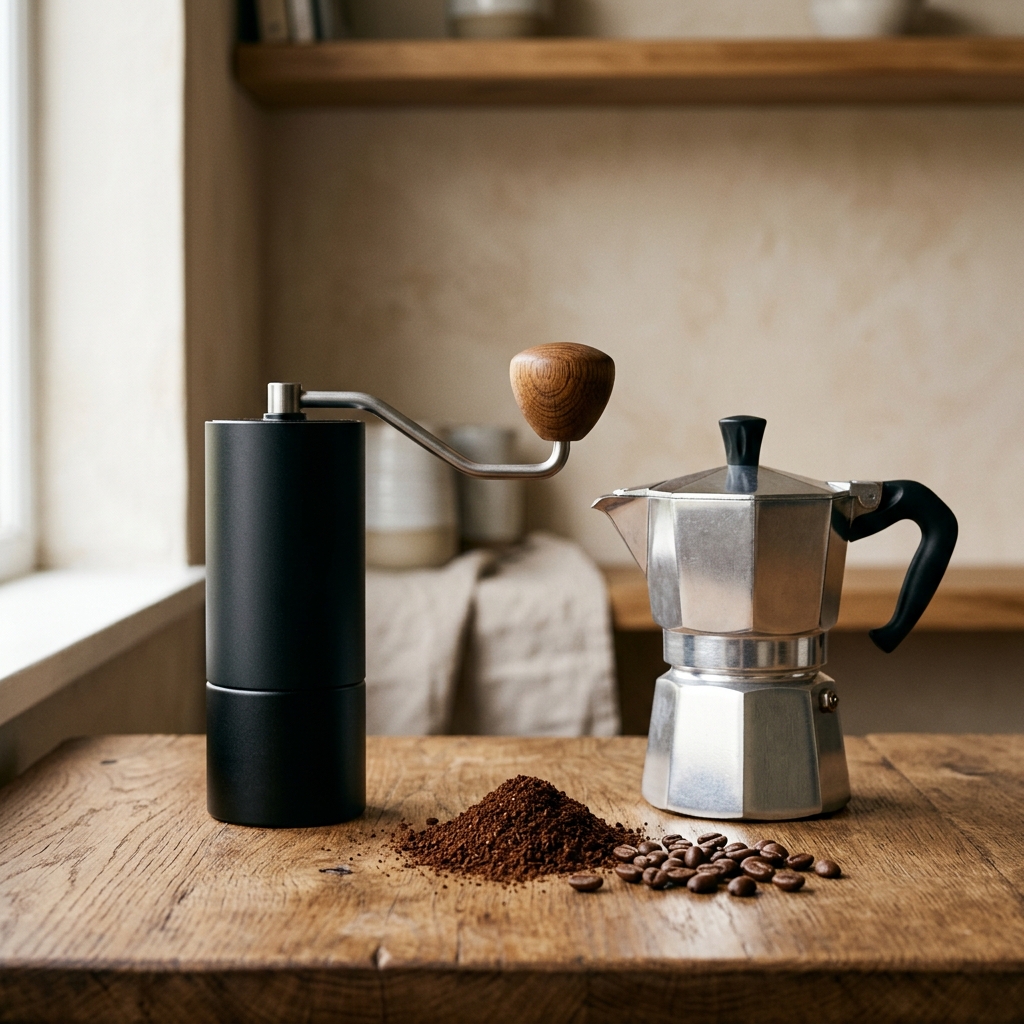
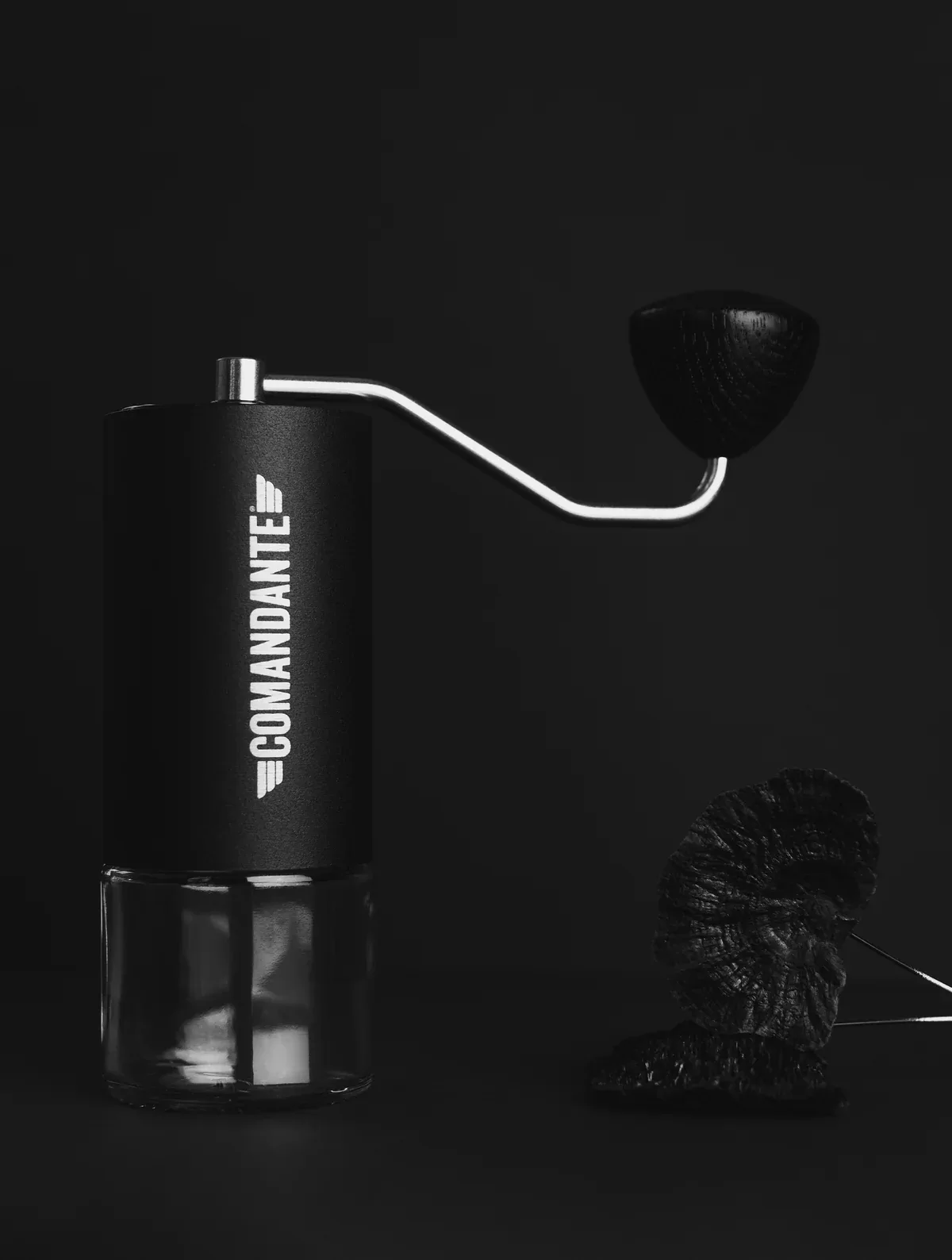
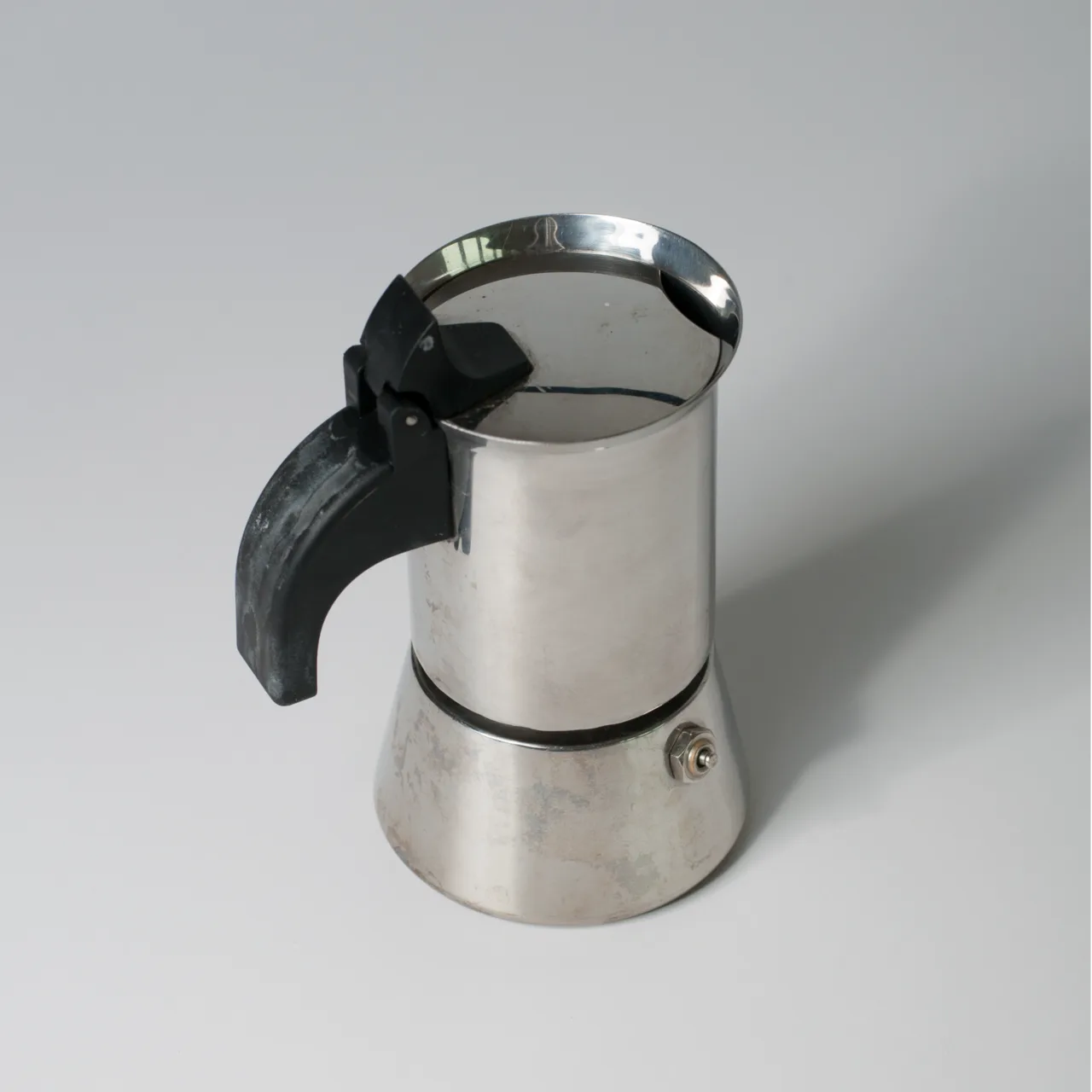
The Comandante C40 is widely considered the de facto standard among hand grinders. When you use it to brew with a moka pot, the two questions that trip people up most often are "how many clicks should I set?" and "which beans work best?" This article pulls together data from international reviews along with tasting notes recorded as I shifted the grind one click at a time.
Why the Comandante C40 in particular?
The Comandante C40 is a German hand grinder fitted with a 39mm conical Nitro Blade burr, and it grinds so uniformly that international outlets routinely call it "the gold standard of hand grinders." In a method like the moka pot, where extraction is short and under pressure, fewer fines and a more even particle distribution mean less bitterness and off-flavors — and that is exactly where the C40 shines.
On the flip side, the burr is small, so grinding isn't especially fast, and the price isn't trivial either. Even so, the reason you so often hear "buy it once and use it for life" comes down to this uniformity.
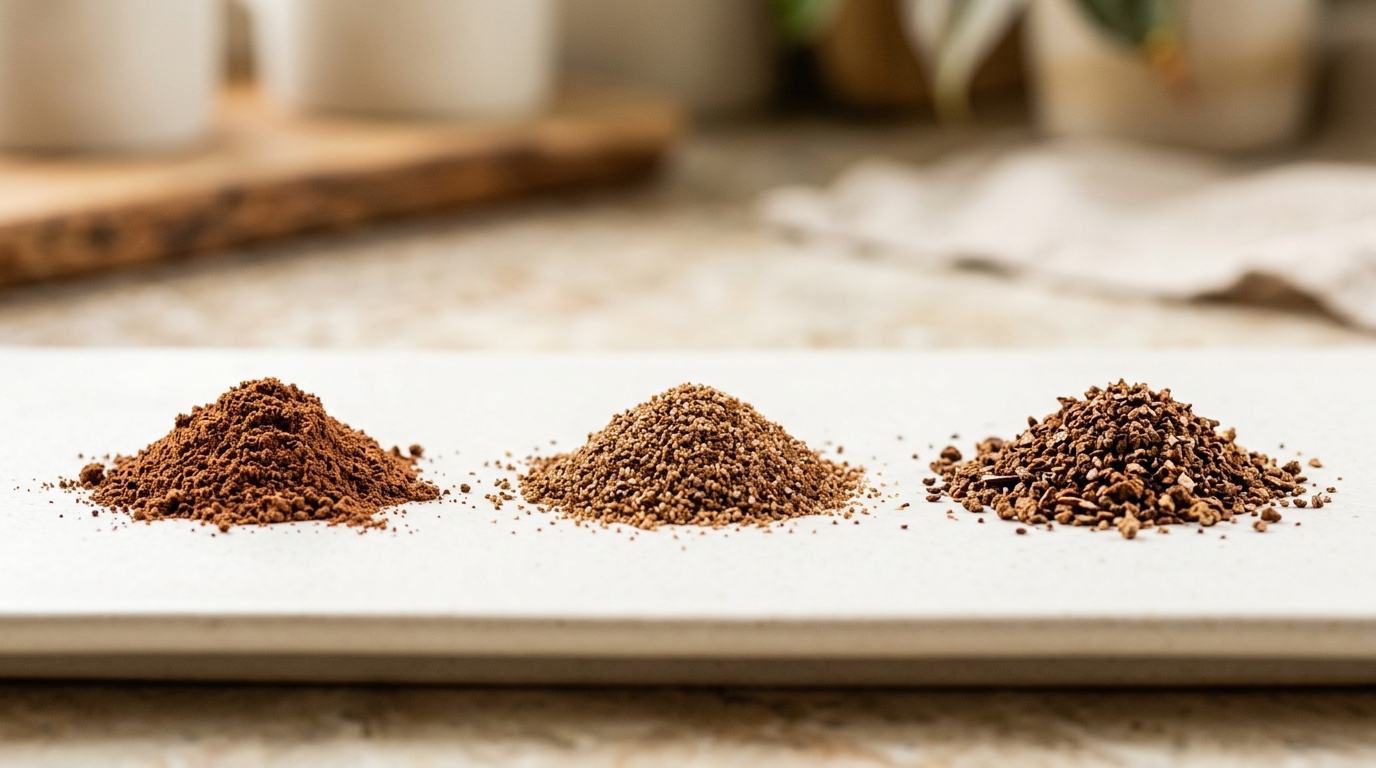
The right grind for a moka pot: "fine sand (table salt)"
The ideal grind for a moka pot is medium to medium-fine. Coarser than espresso but finer than drip — when you rub it between your fingers, the benchmark texture is table salt / fine sand, not flour or powder. In microns, this is roughly 360–660µm, with somewhere around ~650µm generally considered ideal.
Too fine, and the basket clogs, pressure builds excessively, and you get over-extraction (bitter, burnt notes). Too coarse, and the water rushes through too quickly, leaving you with a weak, overly sour cup.
C40 click numbers (based on international charts)
With a hand grinder like the Comandante, you set the grind by turning the knob (dial) beneath the burr. You tighten clockwise until the point where the burrs touch — "Click Zero" — then count clicks as you back it off, which lets you reproduce the same setting every time. The more you loosen it (the higher the click count), the coarser the grind.
Combining Comandante's official recommendations with international reviews and grind charts, the moka pot range generally looks like the following. The C40 MK4's grind range itself is a wide 0–1090µm, and each click moves it about 25–30µm, leaving plenty of room for fine-tuning within that band.
| Source | Recommended moka pot clicks (from Click Zero) |
|---|---|
| Comandante official recommendation | 12 – 18 clicks |
| Coffee Chronicler chart (MK3) | 12 – 15 clicks |
| Homegrounds review measurements | Found that setting it slightly finer than recommended worked better |
In short, take 13–15 clicks as your starting point, then fine-tune one click at a time while watching the body, bitterness, and acidity you taste — that's the fastest approach.
Bean pairing: the roast matters as much as the grind
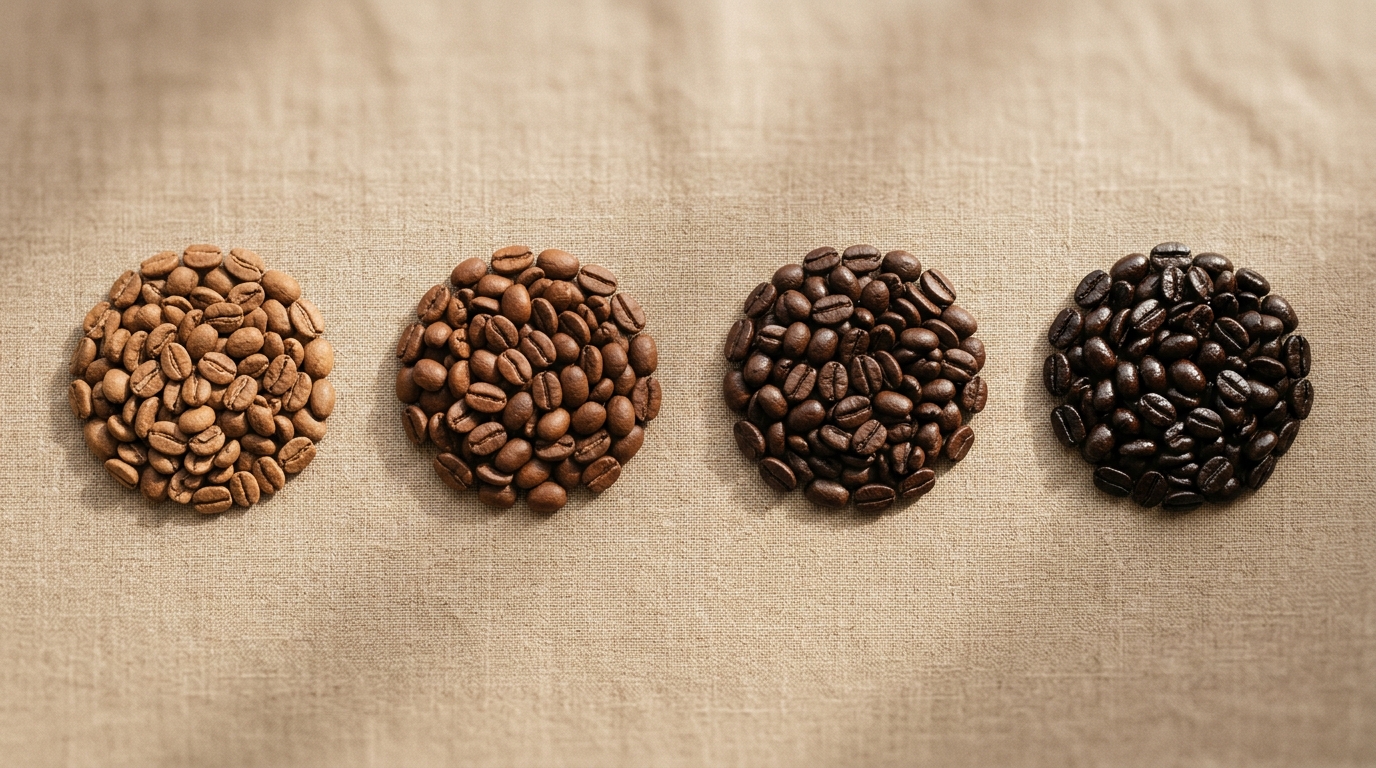
Surprisingly, many people fixate only on grind and ratio, but another axis that defines moka pot flavor is the roast level. Because the moka pot extracts short and hard under steam pressure, the same bean yields a richer, more concentrated cup than filter drip would.
Medium to medium-dark is the safe answer
The range international guides recommend most often is medium to medium-dark. Sweetness in the chocolate, nut, and caramel families balances nicely against the moka pot's strong extraction. Beans with low acidity and moderate body, like Colombia Supremo or Brazil Santos, are a reliably good match.
Dark roast — coarser + low heat
If you want a rich Italian-style cup, the kind of brew you'd have on a Roman morning, the standard play is a medium-dark to dark blend with some robusta mixed in (Lavazza, Illy, and Bialetti are the leading brands that roast and blend specifically for the moka pot). That said, dark roasts carry more bitter compounds, so the key is to lower the heat by one notch. Brew over high heat and burnt notes come up easily.
Light roast — one click finer
Light roasts are dense, so at the same click count they tend to under-extract. Setting them about one click finer than standard lets acidity like jasmine and citrus come through cleanly. Keep in mind, though, that since the moka pot pulls a strong shot to begin with, it's hard to fully capture the delicacy that's distinctive to light roasts.
C40 click corrections by roast (for moka pot)
· Medium (baseline): 13–15 clicks
· Light: −1 click from baseline (finer)
· Dark: +1 to 2 clicks from baseline (coarser) + low heat
Tasting notes recorded as I changed the grind myself
The numbers above are just a starting point; in the end, the value that suits your beans, your moka pot, and your burner only emerges when you turn the dial one click at a time and write down the taste. So I kept tasting notes tracking how body, bitterness, and acidity shift as you move between 11 / 13 / 15 / 18 clicks, and how the corrections change for light and dark roasts.
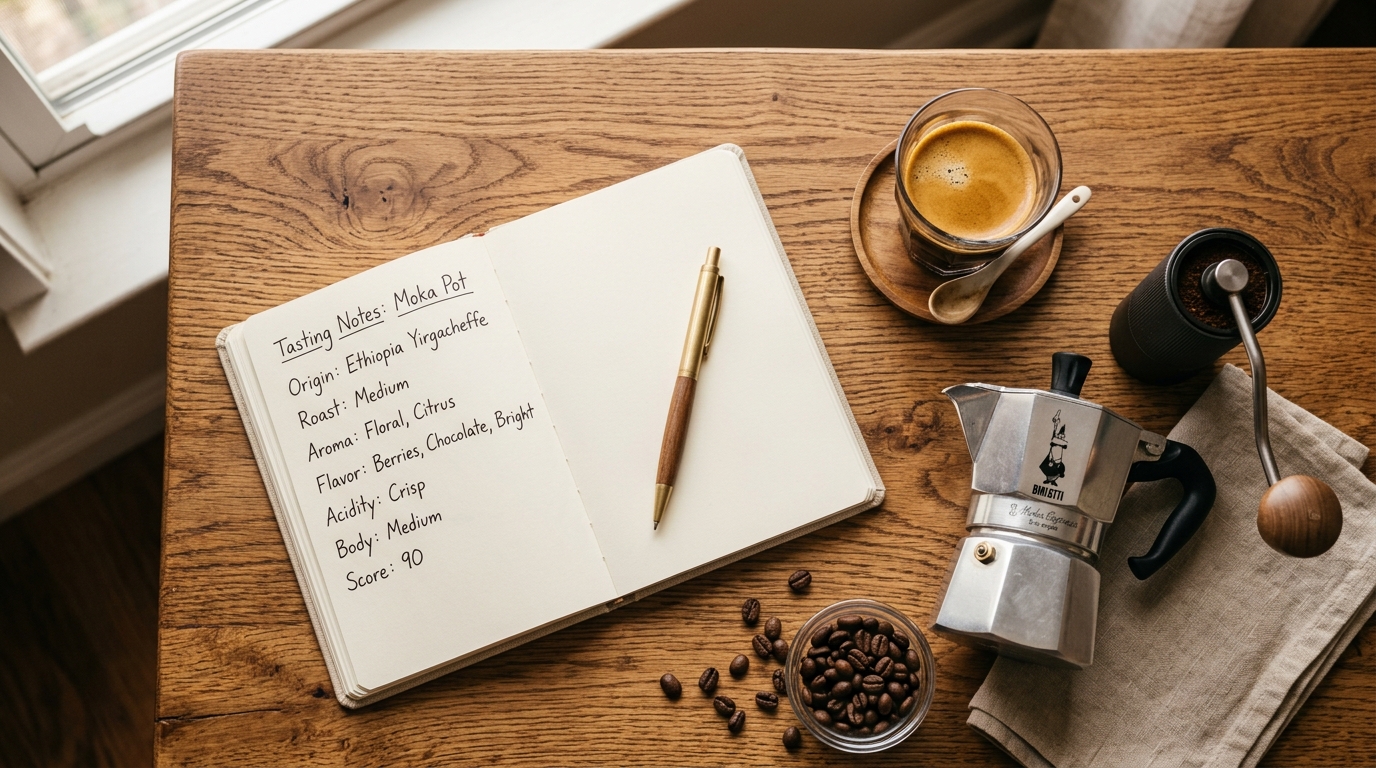
☕ View the grind-by-grind taste log
This is a hands-on tasting record laying out the extraction results by click and the corrections by roast. Follow it directly when you dial in.
Comandante C40 × Moka Pot grind-by-grind taste log →Closing tips
Grind right before brewing (to preserve aroma), and each time, just fill the basket level — never tamp. The habit of moving the grind one click at a time and recording that day's taste is the fastest way to recoup the cost of an expensive grinder.


댓글 0
첫 댓글을 남겨보세요.