
Instead of pressing ripe grapes right away, you let them rest and dry for several months. As the moisture leaves them, the wrinkled grapes concentrate their sugar, aroma, and pigments within. This "withering" is called Appassimento in Italian, and the most famous wine born from it is Amarone.
What Is Appassimento?
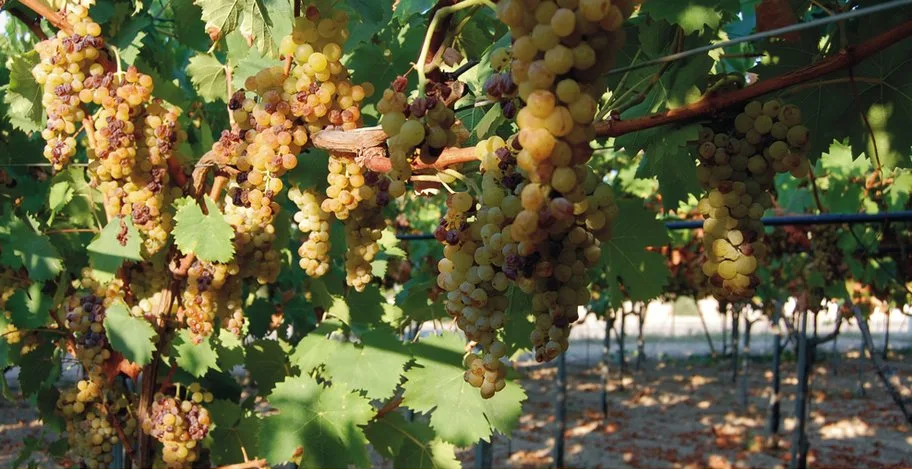
Appassimento comes from the Italian word appassire, meaning "to wither or dry," and it's a winemaking technique that partially dries harvested grapes to concentrate the components in the juice. It's not simply drying them in the sun — it's a delicate process carried out slowly in a well-ventilated drying room, all while keeping mold at bay.
Its roots run very deep. The tradition of making wine from dried grapes goes back well over 2,000 years — far enough that the ancient Roman naturalist Pliny recorded "passum," a sweet wine made from sun-dried grapes. The place where this technique was refined most exquisitely is the Valpolicella region near Verona, in the Veneto in northeastern Italy.
How It's Made — A Wait of Over 100 Days
The heart of appassimento is "slowness." The rough flow goes like this.
- ① Harvest and selection — In September and October, the clusters are harvested by hand. Only healthy clusters whose berries aren't too tightly packed should be chosen, so that air can flow well and the risk of mold is reduced.
- ② Into the drying room (fruttaio) — Traditionally on bamboo mats called "arele," and these days in wooden or plastic boxes, the grapes are spread in a single layer and placed in a well-ventilated drying room.
- ③ 100–120 days of drying — Amarone is usually dried for 100 to 120 days. In this process, the grapes lose about 35–45% of their weight (for Corvina).
- ④ Pressing and fermentation — They're pressed in winter and enter a long, cool fermentation (up to 30–50 days). With little moisture, fermentation proceeds slowly.
- ⑤ Aging — They're aged in oak for a minimum of 2 years (4 years for Riserva) before release.


What Changes When They Dry?
While drying, something more than simple "concentration" happens inside the grapes.
- Sugar concentration — As moisture leaves, the sugar grows more intense, leading to a high alcohol content after fermentation (Amarone is usually 15–16%).
- A shift in acidity — The sharp malic acid partly breaks down while the softer tartaric acid remains, giving an overall rounder, smoother acidity.
- Concentration of skin components — As the skin-to-juice ratio rises, tannins, pigments, and polyphenols intensify, and as the tannins polymerize, the texture becomes notably smoother.
That's why appassimento wines come to have a broad, weighty flavor that is "intense but not rough."

Three Wines Born From Appassimento
From the same Valpolicella, from the same dried grapes, three completely different wines emerge by varying only the fermentation method.
The HeadlinerAmarone della Valpolicella (Amarone)
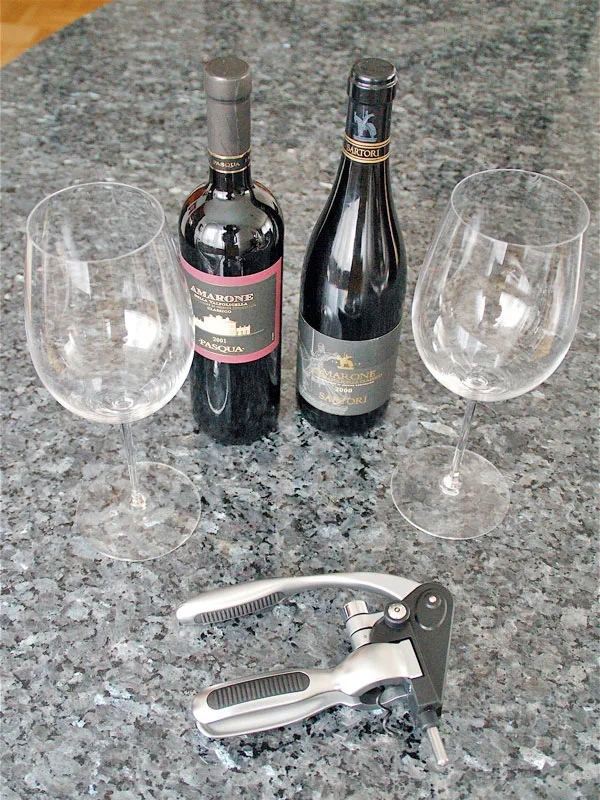
This is a dry red in which the dried grapes are fermented all the way through, converting almost all the sugar into alcohol. The name itself means "the Great Bitter" — a name given to distinguish it from its sweet sibling, Recioto. Interestingly, the story goes that Amarone was originally born "by accident" while making Recioto, when the fermentation ran on too long. Its DOC designation came in 1990, and its promotion to the top tier, DOCG, in 2009.
Recioto della Valpolicella (Recioto)
This is a sweet wine in which fermentation is stopped partway to leave residual sugar. In fact it's the older, more traditional wine of this region, enjoyed for the concentrated sweetness of the dried grapes just as it is. There's also a sparkling (spumante) version.
The Sensible ChoiceRipasso (Ripasso)
This is a wine made by "re-passing" (ri-passo) an ordinary Valpolicella over the grape skins left from pressing Amarone or Recioto, triggering a second fermentation. With deeper body, color, and aroma, it's called "baby Amarone," letting you taste Amarone-like flavor at a lighter price point.
| Category | Amarone | Recioto | Ripasso |
|---|---|---|---|
| Style | Dry full-bodied | Sweet | Medium to full-bodied |
| Fermentation | Fermented to the end | Stopped early (residual sugar) | Re-fermented over skins |
| Alcohol | about 15–16% | 12%+ | in the 13–14% range |
| In a word | The region's "king" | The oldest original | A great-value entry point |


Tasting Notes & Food Pairing
Aroma and taste — A deep ruby-to-garnet color, with dried cherry, plum, fig, and raisin; dark chocolate, cocoa, and espresso; spices like cinnamon and pepper; and a slightly bitter almond finish. It's characterized by the silky, weighty texture that glycerol creates.
What pairs well — Grilled lamb and beef, rich stews, risotto all'Amarone, and long-aged hard cheeses. The sweet Recioto is a fantastic match with desserts like dark chocolate, panettone, and biscotti.
Appassimento Beyond Valpolicella
After Amarone's success, this technique spread across Italy. In southern Puglia and Salento they make a soft, full "appassimento" from Primitivo (Zinfandel) and Negroamaro; Lombardy's Sforzato di Valtellina uses Nebbiolo; and Tuscany's Vin Santo is made by drying white grapes. That said, unless a wine is made within Valpolicella's DOCG regulations, it can't use the name "Amarone."

In Closing
Appassimento is, in the end, the art of putting "time" into wine. You wait over 100 days for something that could be done in a few days, and choose concentration even at the cost of giving up nearly half the weight. The next time you have the chance to drink a glass of Amarone, try to picture, beyond that deep garnet color, the centuries of waiting and the wind of the Verona hills that dwell within it.
※ Image sources for this post: Wikimedia Commons (see the links in each photo caption). Freely licensed images are embedded as external links. Some illustrations and photos are our own original images.
If reading this made you curious about Amarone's homeland — we've laid out a 4-night, 5-day Verona and Valpolicella itinerary touring the drying rooms (fruttaio) of Masi, Allegrini, Tommasi, and Bertani, complete with maps.
🍷 See the Appassimento Winery Tour Itinerary
댓글 0
첫 댓글을 남겨보세요.